
A2 Science
A2 Ghee vs Cultured Ghee: Are They the Same Thing?
On this page
- Navigating the world of traditional Indian superfoods can of
- Defining A2 Ghee clarifies its specific attribute related to
- Understanding Cultured Ghee involves appreciating its unique
- The primary distinction between A2 ghee and cultured ghee li
- Tracing the historical roots of traditional ghee making reve
- The Bilona method of ghee preparation, central to our Bilona
- Modern nutritional science offers insights into why A2 prote
- The fermentation aspect of cultured ghee brings its own set
Navigating the world of traditional Indian superfoods can often lead to intriguing questions, with 'A2 Ghee vs Cultured Ghee' being a prominent one. Many consumers, seeking the purest form of this golden elixir, naturally wonder if these terms refer to the same product or if there are subtle, yet significant, differences. Understanding their distinctions is crucial for making informed choices for your health and culinary practices, ensuring you truly get what you pay for.
Defining A2 Ghee clarifies its specific attribute related to the cow's milk protein. A2 ghee is exclusively made from the milk of indigenous Indian cow breeds like Gir, Sahiwal, Rathi, and Kankrej, which produce milk containing only the A2 beta-casein protein. This protein structure is traditionally believed to be easier to digest and less likely to cause discomfort for individuals sensitive to dairy, distinguishing it from the A1 protein found in milk from many cross-bred or Western cattle.
Understanding Cultured Ghee involves appreciating its unique preparation method, which incorporates a fermentation step. Cultured ghee, sometimes referred to as 'curd ghee' or 'dahi ghee', is made from cream or butter that has been churned from cultured milk, essentially curd. This culturing process, akin to making yogurt or dahi, introduces beneficial microbes that predigest some lactose and casein, altering the flavour profile and potentially enhancing its digestibility.
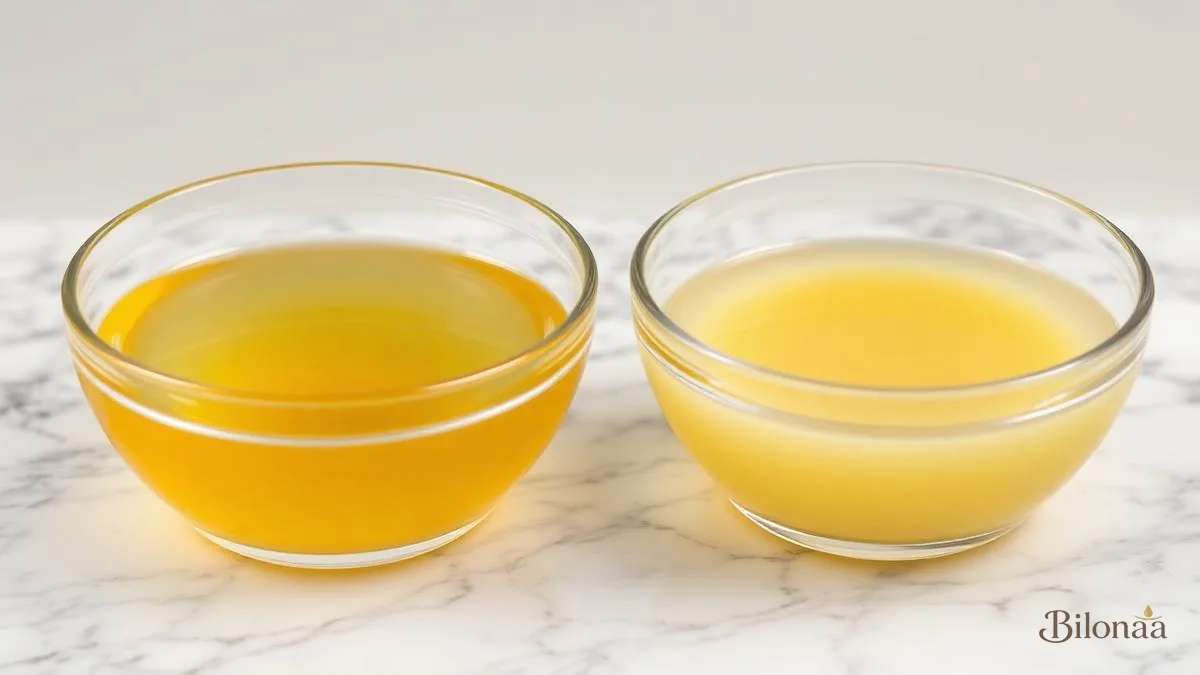
The primary distinction between A2 ghee and cultured ghee lies in whether the focus is on the milk's protein type or the cream's preparation. A2 refers to the genetic makeup of the cow producing the milk, ensuring the absence of the A1 beta-casein protein. Cultured, on the other hand, describes a process where the milk or cream is fermented before being churned into butter and then clarified into ghee, regardless of whether that milk was A1 or A2 originally. Therefore, A2 ghee can be cultured, and cultured ghee can be A2, but they are not inherently the same thing.
Tracing the historical roots of traditional ghee making reveals that most desi ghee was inherently cultured and often from indigenous A2 cows. In ancient India, milk was typically curdled (cultured) to preserve it and then churned into butter, a method still used in the Bilona process. Furthermore, the prominence of indigenous Indian breeds meant that the milk was predominantly A2, so the concept of 'A2' wasn't a distinct category but simply 'ghee' from the cows prominent at that time.
The Bilona method of ghee preparation, central to our Bilonaa philosophy, naturally marries both A2 and cultured aspects. This traditional, artisanal technique involves taking whole A2 cow's milk, converting it into curd, then hand-churning this curd to extract butter. This butter is then slowly heated to produce ghee. This means our Bilonaa ghee is not only from indigenous A2 desi cows but also inherently cultured, offering a pure product with the benefits of both.
Modern nutritional science offers insights into why A2 protein may be preferred by some, although research is ongoing. Studies indicate that the A1 beta-casein protein, upon digestion, can release a peptide called Beta-Casomorphin-7 (BCM-7) that some individuals find problematic. A2 milk, and consequently A2 ghee, in the absence of A1 protein, does not produce BCM-7, which is traditionally believed to be easier on the digestive system for sensitive individuals.
The fermentation aspect of cultured ghee brings its own set of potential benefits, distinct from the A2 protein advantage. The culturing process helps break down some lactose, making cultured ghee potentially more suitable for those with mild lactose sensitivities. Furthermore, the beneficial bacteria introduced during fermentation can enhance the flavour profile of the ghee, contributing to a more complex and sometimes tangier taste, much like good quality Bilonaa ghee.
From an Ayurvedic perspective, both A2 and cultured processes align with ancient wisdom for optimal health. Ayurveda considers ghee from indigenous cows (often A2) as 'Prana' or life-force, promoting digestion (Agni), tissue rejuvenation, and mental clarity. The culturing process is also revered, as it aids in predigestion, making the final ghee lighter and more assimilable for the body, enhancing its therapeutic properties.
Practical applications of A2 and cultured ghee extend beyond just cooking, incorporating into daily wellness routines. Both types can be used for high-heat cooking due to their high smoke point, drizzled over warm grains, incorporated into Ayurvedic remedies like Nasya (nasal drops), or savoured simply for their nourishing properties. The choice often comes down to individual preference for taste and specific physiological needs.
Identifying genuine A2 ghee requires careful attention to sourcing and transparency from brands. Look for certifications or clear statements on packaging guaranteeing the milk comes exclusively from indigenous Indian A2 cow breeds. A reputable brand will be open about their supply chain and the origin of their milk, ensuring no 'milawat' or admixture with A1 milk.
Recognising cultured ghee usually involves understanding the brand's production method or a mention of 'dahi' or 'curd' in its making process. The fermentation step typically imparts a richer, sometimes slightly tangy or nutty flavour compared to ghee made directly from uncultured cream. However, taste can be subjective, so relying on product descriptions and brand integrity is key.
Avoiding common misconceptions is important: not all ghee from Indian cows is A2, if they are cross-bred, and not all A2 ghee is made with the traditional culturing process. Some commercial A2 ghee might be made directly from A2 cream without the curdling step, for speed and efficiency. Similarly, cultured ghee made from A1 milk would not qualify as A2 ghee. Understanding these nuances helps consumers make informed choices.
Storing your precious A2 or cultured ghee correctly ensures its longevity and maintains its purity. Ghee is shelf-stable and does not require refrigeration. It should be kept in an airtight container in a cool, dark place away from direct sunlight and moisture. Proper storage preserves its distinctive aroma, flavour, and therapeutic benefits for many months, ensuring you maximise its value.
Incorporating Bilonaa's A2 Desi Ghee into your daily life is an effortless way to embrace traditional wellness. Our ghee is not just A2; it is meticulously crafted using the Bilona method from the milk of grass-fed, indigenous Bikaneri Rathi cows, renowned for their A2 milk. This means it inherently combines the benefits of A2 protein with the enhanced digestibility and rich flavour profile that comes from being cultured and churned from curd, offering an authentic, holistic experience for true well-being.
For individuals considering the suitability of A2 and cultured ghee, most people can enjoy both, but those with specific sensitivities might lean towards one. If digestive comfort is paramount, A2 ghee might be your first choice. If you appreciate a different flavour profile or mild lactose sensitivity is a concern, the culturing process adds an additional layer of benefit.
Beware of marketing jargon that can be misleading regarding ghee; always scrutinise labels and claims. 'Pure ghee' doesn't automatically mean A2 or Bilona. Look for explicit mentions of 'A2 milk', 'desi cow', 'Bilona method', and 'from curd' to ensure you are getting a product aligned with traditional values and quality standards.
The journey of A2 Ghee vs Cultured Ghee reveals that while distinct, they often converge in traditional, high-quality products like Bilonaa's. The crucial takeaway is to be an informed consumer, understanding that A2 refers to the milk's protein type, and cultured refers to a fermentation step. When seeking the highest quality, look for ghee that proudly embodies both—from indigenous A2 cows, made using the traditional Bilona method, ensuring it's naturally cultured.
Ultimately, the choice between A2 ghee, cultured ghee, or a combination of both, boils down to personal health goals, taste preferences, and a commitment to quality. By understanding the intricate differences and benefits, you can confidently select the ghee that best supports your well-being journey, enriching your diet with this golden elixir from Indian tradition.
"While both offer traditional goodness, their primary distinction lies in the milk protein type versus the pre-culturing of the cream."
Bilonaa Promise
Small-batch, A2 desi-cow, traditional bilona ghee — straight to your kitchen.
100% pure, hand-churned, slow-cooked on a wood fire and packed in glass jars.
FAQs
Quick answers
What is the primary difference between A2 ghee and cultured ghee?
A2 ghee refers to ghee made from milk containing only A2 beta-casein protein, sourced from specific indigenous cow breeds. Cultured ghee, on the other hand, is made from cream or butter that has been fermented (cultured) beforehand, irrespective of the milk's protein type. The former focuses on milk genetics, the latter on a processing step.
Can A2 ghee also be cultured ghee?
Yes, absolutely. In fact, traditionally made A2 ghee, especially through the Bilona method, is inherently cultured. The process of converting A2 cow's milk into curd before churning butter and clarifying it into ghee means it is both A2 and cultured. Bilonaa ghee is an example of this dual benefit.
Is cultured ghee suitable for people with lactose intolerance?
Cultured ghee typically involves a fermentation process which helps break down some of the lactose present in the milk or cream. While ghee itself is very low in lactose, the additional culturing step can make it potentially even more digestible for individuals with mild lactose sensitivities, though it is not a cure for severe intolerance.
Why is the A2 protein important in ghee?
The A2 protein is traditionally believed to be easier to digest for many individuals compared to A1 beta-casein, found in milk from many Western cow breeds. Studies indicate the A1 protein can release a peptide (BCM-7) that some find problematic, making A2 ghee a preferred choice for digestive comfort.
How does the Bilona method relate to A2 and cultured ghee?
The Bilona method is a traditional Indian process that starts by turning whole A2 cow's milk into curd, then hand-churning it to get butter, which is finally slow-cooked into ghee. This ensures that Bilona ghee, like Bilonaa's, is both derived from A2 milk and is naturally cultured, embodying both attributes.
Does cultured ghee taste different from uncultured ghee?
Yes, often it does. The culturing process introduces beneficial microbes that impart a richer, more complex, and sometimes slightly tangy or nutty flavour profile to the ghee, compared to ghee made directly from uncultured cream. This distinct taste is highly valued by connoisseurs of traditional Indian cooking.
How can I ensure I am buying genuine A2 and cultured ghee?
Look for explicit mentions on the product label of 'A2 milk,' 'desi cow,' 'Bilona method,' and 'made from curd' or 'cultured.' Reputable brands will be transparent about their sourcing and traditional processing. Certifications for A2 milk can also provide assurance.
Educational content only — please consult a doctor for medical conditions.
Get gentle ghee notes in your inbox
One thoughtful Ayurveda + kitchen note a week. No spam. Unsubscribe anytime.
Conversation(0)
Share a thought — every comment is read before it appears.