Bilonaa Method
Why Bilonaa Ghee Is Made from Curd, Not Cream
On this page
- Understanding the Bilona method begins with deciphering its
- The historical context of ghee production illuminates why ou
- At the heart of the bilona method lies the crucial 'curd rou
- Contrasting the bilona method with industrial cream-based gh
- The scientific rationale behind preferring ghee from curd is
- Ayurveda provides profound insights into why ghee made from
- The unique flavour profile and aromatic depth of Bilonaa Ghe
- The nutritional benefits of bilona ghee are considerably enh
Understanding the Bilona method begins with deciphering its name and core principle, as 'bilona' itself refers to the specific, traditional churner used, often made of wood. This ancient technique, deeply rooted in Indian culinary and Ayurvedic traditions, distinguishes itself significantly from contemporary, industrial ghee production by prioritising the conversion of whole milk into curd (or dahi) as its foundational step. This primary distinction is not merely an archaic preference but a deliberate choice that underpins the superior quality and unique nutritional profile of ghee produced this way, setting a benchmark for purity and authenticity.
The historical context of ghee production illuminates why our ancestors meticulously developed and preserved the bilona method, long before the advent of centrifuges and modern dairy processing. In ancient India, when refrigeration was non-existent and preserving milk products was crucial, converting milk into curd was a natural and effective way to extend its shelf life. This curd was then traditionally hand-churned to extract butter (makkhan), which was subsequently simmered to yield ghee. This method wasn't just about preservation; it was an integral part of Ayurvedic principles that emphasised the digestive and therapeutic qualities enhanced by fermentation.
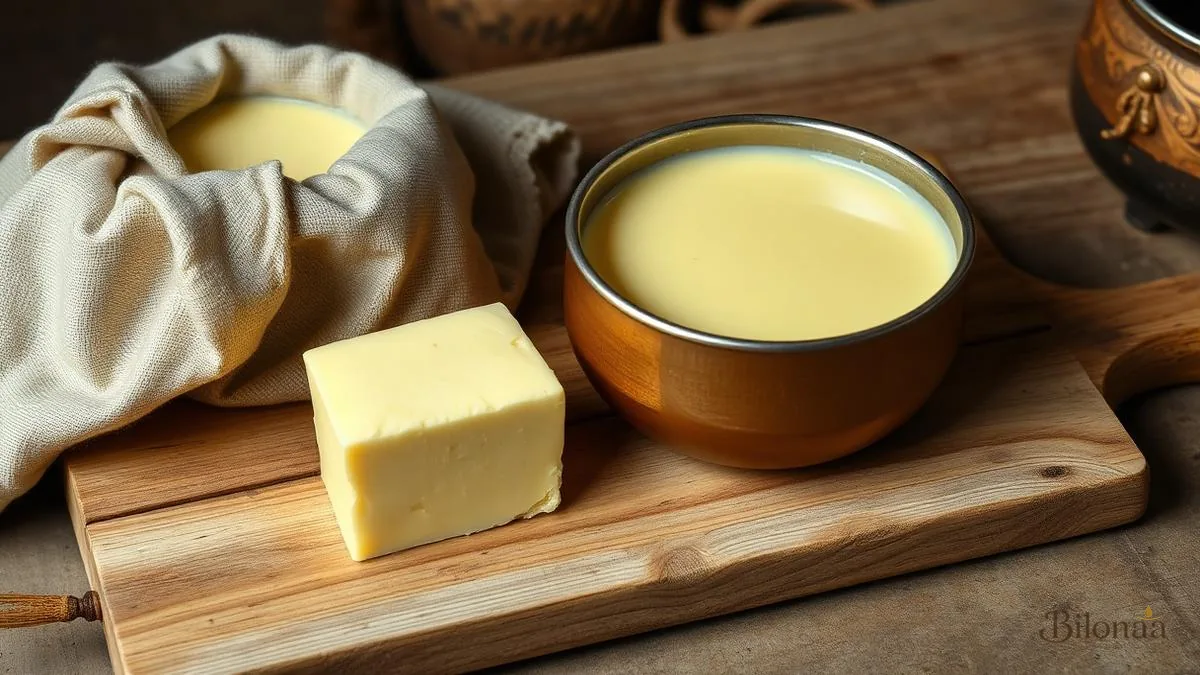
At the heart of the bilona method lies the crucial 'curd route,' a multi-stage process that begins with gently heating whole A2 cow milk, allowing it to cool, and then inoculating it with a starter culture to transform it into curd. Once solidified, this curd is churned – traditionally using a wooden bilona – in a bidirectional manner to separate the pure makkhan (butter) from the buttermilk. This butter, rich in beneficial microorganisms from the fermentation, is then slow-cooked over a low flame, carefully clarifying it into what we know as traditional, fragrant ghee. This deliberate, unhurried journey is what truly defines bilona ghee from curd.
Contrasting the bilona method with industrial cream-based ghee production reveals stark differences in process and product. Modern commercial dairies typically separate cream directly from milk using high-speed centrifuges. This cream is then aged, pasteurised, and directly heated to produce ghee. While efficient and scalable, this method bypasses the critical fermentation stage that occurs when milk is converted into curd. The absence of this curdling step means the resulting cream lacks the beneficial lactic acid bacteria and unique flavour profile that fermentation imparts, ultimately leading to a less complex and sometimes less nutritious final product.
The scientific rationale behind preferring ghee from curd is increasingly supported by nutritional studies and traditional wisdom. When milk ferments into curd, its lactose content is significantly reduced, making it more digestible for many individuals, even those with mild lactose sensitivities. Furthermore, the lactic acid bacteria involved in curd formation predigest proteins and fats, enhancing the bioavailability of nutrients in the subsequent butter and ghee. This pre-digestion contributes to a product that is not only easier on the digestive system but also potentially richer in certain conjugated linoleic acids (CLAs), traditionally linked to various health benefits.
Ayurveda provides profound insights into why ghee made from curd is considered vastly superior, traditionally revered as 'amrita' or nectar, for its medicinal and rejuvenating properties. From an Ayurvedic perspective, the curdling process adds a vital 'samskara' (processing or refinement) to the milk, transforming its qualities. It is believed that this method generates ghee that is 'laghu' (light to digest), deeply nourishing for all 'dhatus' (tissues), and more potent in balancing 'doshas' (bio-energies). This ghee is specifically lauded for its ability to enhance 'agni' (digestive fire) and support 'ojas' (vitality and immunity), making it a cornerstone of holistic well-being.
The unique flavour profile and aromatic depth of Bilonaa Ghee are directly attributable to the traditional curd-churning process. The fermentation of milk into curd introduces a complex array of flavour compounds that evolve further during the slow simmering of the butter, resulting in a rich, nutty, and subtly sweet aroma that is distinctly different from commercially produced ghee. This nuanced flavour is not just about taste; it is an indicator of the pristine quality and meticulous care invested in every batch, making it a culinary delight that elevates any dish.
The nutritional benefits of bilona ghee are considerably enhanced by the curd-based approach, offering a spectrum of goodness for the body. Unlike common misconceptions about fats, grass-fed A2 bilona ghee is a treasure trove of healthy fats, including short-chain fatty acids (like butyrate), medium-chain fatty acids, and a good balance of saturated and unsaturated fats. It is also rich in fat-soluble vitamins A, D, E, and K, which are better absorbed when consumed with fats. The presence of CLA and antioxidants, potentially elevated by the fermentation process, further contributes to its reputation as a powerful superfood.
Digestibility is a key advantage of traditional bilona ghee, making it a preferred choice for individuals seeking a gentle yet potent source of nourishment. The conversion of milk into curd significantly reduces lactose, which is often the culprit behind digestive discomfort for many. Moreover, the beneficial bacteria from the curd aid in breaking down complex proteins and fats, rendering the ghee inherently easier for the gut to process and assimilate. This natural predigestion ensures that the body can efficiently absorb the numerous nutrients without taxing the digestive system, promoting overall gut health.
Choosing A2 desi-cow milk is another critical element in Bilonaa’s commitment to quality, further distinguishing it from standard ghee. A2 milk comes from indigenous Indian cow breeds, such as the Rathi cows grazed in and around Bikaner, which exclusively produce the A2 beta-casein protein, unlike the A1 protein found in many commercial dairy breeds. Studies indicate that A2 protein is easier to digest and may be less inflammatory for some individuals. By ensuring that our bilona ghee is made solely from the milk of these well-cared for A2 desi cows, Bilonaa guarantees a product that is not only traditionally made but also inherently superior in its foundational ingredient.
The process of making bilona ghee is meticulous and time-consuming, requiring patience and dedication, which contributes to its higher value compared to mass-produced alternatives. From milking the cows, transforming milk into curd, churning the curd to extract butter, to finally slow-cooking the butter into golden ghee, each step demands direct human involvement and adherence to traditional techniques. At Bilonaa, this commitment to traditional craftsmanship ensures that every jar of ghee retains its authentic character, nutritional integrity, and the distinct flavour that only true bilona ghee can offer, rejecting shortcuts for genuine quality.
Integrating Bilonaa Ghee into your daily diet is remarkably simple and versatile, unlocking a world of culinary and health benefits. Use it for sautéing vegetables, tempering dals, or as a healthy cooking medium for everyday meals. A teaspoon stirred into warm milk or herbal tea can provide internal lubrication and energy. It's also excellent for roasting, baking, or simply drizzling over hot rotis, steaming rice, or your morning porridge, imparting a rich, nourishing flavour. Its high smoke point makes it ideal for various cooking methods without compromising its nutritional value.
Identifying authentic Bilonaa Ghee requires a discerning eye and an understanding of its unique characteristics. True bilona ghee, made from curd, will often have a granular texture, especially at slightly cooler temperatures, unlike the smooth, homogenous texture of cream-extracted ghee. Its aroma is deeply fragrant, nutty, and reminiscent of homemade butter. The colour can vary from golden to slightly yellow, depending on the cow's diet. Always look for certifications or clear indications of the traditional bilona method and A2 desi cow sourcing, which Bilonaa prides itself on, to ensure you are getting a pure, unadulterated product and not 'milawat' (adulteration).
Choosing Bilonaa Ghee means opting for not just an ingredient, but a legacy of purity, health, and tradition. Our commitment to the ancient bilona method, combined with sourcing A2 milk from free-grazing desi cows in Bikaner, ensures that every spoonful you consume is a testament to authenticity and quality. We meticulously adhere to each step of the traditional process, from transforming milk to curd, hand-churning it for makkhan, to slow-cooking, ensuring you receive a product that is as close to nature as possible, brimming with natural goodness and unique flavour.
Proper storage is essential to maintain the freshness, flavour, and therapeutic properties of your bilona ghee. Ghee is naturally stable and does not require refrigeration due to its low moisture content. Store Bilonaa Ghee in a clean, airtight container in a cool, dark place away from direct sunlight and strong odours. When stored correctly, it can last for many months, often even longer, without turning rancid. Always use a clean, dry spoon to scoop out ghee to prevent contamination and ensure its longevity.
Dispelling common myths surrounding ghee is important to fully appreciate its true value, especially when sourced and produced traditionally. One prevalent myth is that ghee is unhealthy due to its saturated fat content; however, traditional, grass-fed bilona ghee contains beneficial saturated fats and is rich in vital fat-soluble vitamins, contributing to good health when consumed in moderation. Another misconception is that 'all ghee is the same,' whereas the method of production (curd vs. cream) and the source of milk (A2 desi vs. A1 commercial) dramatically impact its nutritional profile and benefits. Bilonaa aims to educate consumers on these critical differences.
"The journey from milk to ghee via curd is not just a process; it's a profound cultural and nutritional heritage."
Bilonaa Promise
Small-batch, A2 desi-cow, traditional bilona ghee — straight to your kitchen.
100% pure, hand-churned, slow-cooked on a wood fire and packed in glass jars.
FAQs
Quick answers
What is the primary difference between bilona ghee and regular commercial ghee?
Bilona ghee is made from whole milk converted into curd, then churned to extract butter, which is slow-cooked. Regular commercial ghee typically uses cream separated directly from milk via machines, bypassing the curd fermentation stage, leading to differences in flavour, texture, and nutritional profile.
Why is the 'curd route' considered superior for ghee production?
The curd route introduces a fermentation step with beneficial lactic acid bacteria. This process predigests milk proteins and lactose, enhancing digestibility, potentially increasing beneficial compounds like CLA, and developing a richer, more complex flavour profile compared to cream-based methods.
Does Bilonaa Ghee contain lactose?
Due to the traditional curdling process, Bilonaa Ghee contains significantly reduced lactose compared to milk. The fermentation converts most of the lactose into lactic acid, making it generally well-tolerated by individuals with mild lactose sensitivity, though it is not entirely lactose-free.
What are A2 desi cows, and why is their milk preferred for Bilonaa Ghee?
A2 desi cows are indigenous Indian breeds (like Rathi cows) that produce milk containing only the A2 beta-casein protein, which is traditionally believed to be easier to digest and less inflammatory than the A1 protein found in milk from many commercial breeds. This ensures a healthier foundation for the ghee.
How can I tell if ghee is truly made using the bilona method from curd?
Authentic bilona ghee often has a granular texture, especially at cooler temperatures, a distinct nutty aroma, and a rich, golden colour. It should display clear claims of 'bilona method' and 'from curd' on its packaging, preferably with A2 desi cow sourcing, as Bilonaa proudly showcases.
What are the health benefits of consuming bilona ghee?
Ayurveda suggests bilona ghee from curd is nourishing, aids digestion, boosts immunity, and promotes vitality. Modern nutrition points to its richness in healthy fats (like butyric acid, CLA), fat-soluble vitamins (A, D, E, K), and antioxidants, supporting overall well-being.
Educational content only — please consult a doctor for medical conditions.
Get gentle ghee notes in your inbox
One thoughtful Ayurveda + kitchen note a week. No spam. Unsubscribe anytime.
Conversation(0)
Share a thought — every comment is read before it appears.