
Buyer Guide
Buffalo Ghee or Cow Ghee in Winter: What an Indian Kitchen Should Keep
On this page
- Choosing between buffalo ghee and cow ghee becomes a lively
- Historical context shows that buffalo milk fat has long been
- Traditional production methods dictate how authentic buffalo
- Nutritional composition reveals clear differences in fat den
- Ayurvedic texts view buffalo ghee as a heavy, cooling, and d
- Winter sweet making relies heavily on buffalo ghee because i
- Cow ghee remains the undisputed daily staple for light diges
- Comparing aroma, smoke point, and grain structure side by si
Choosing between buffalo ghee and cow ghee becomes a lively debate in northern Indian households as soon as the Bikaner winter morning air turns crisp. My dadi always kept two distinct jars sitting on the wooden kitchen shelf near the chulha. One was a deep yellow, light-textured jar brought out for daily dal tadka and morning parathas, while the other was a bright, creamy white jar reserved for rich winter laddus and heavy cooking. Both fats have nourished Indian families for generations, yet they serve very different purposes once the temperature drops. Understanding how these two traditional fats interact with cold weather, seasonal digestion, and winter recipes helps you stock your kitchen pantry with confidence.
Historical context shows that buffalo milk fat has long been the powerhouse behind northern India's winter sustenance across Punjab, Haryana, and Rajasthan. In villages where winter temperatures dip close to freezing, heavy physical labour demanded dense calories that kept the body warm for long hours in the fields. Buffalo milk, naturally higher in fat content than cow milk, produced a thick curd that yielded abundant, snow-white ghee when churned. It quickly became the foundation for regional winter feasts, heavy halwas, and festive sweets like gond ke laddu and panjiri, which require a rich fat to bind dense ingredients and preserve them through the frost.
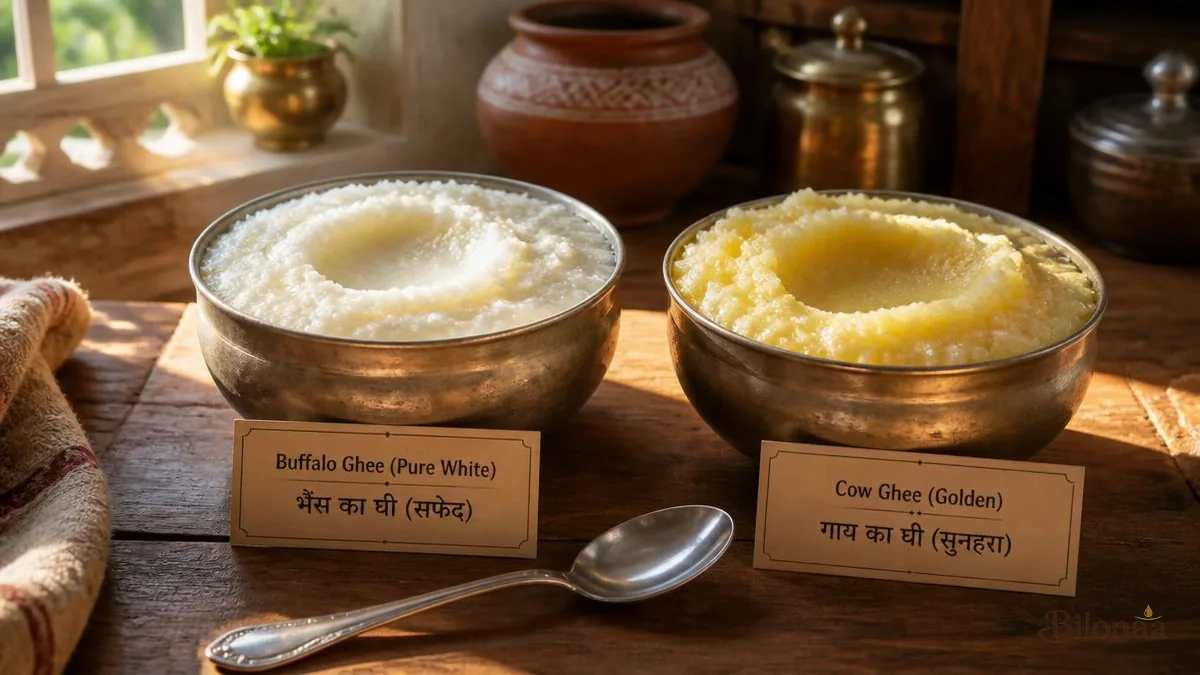
Traditional production methods dictate how authentic buffalo ghee achieves its distinctive texture and ivory appearance. The process begins by boiling whole buffalo milk, letting it settle, and culturing it overnight into thick, creamy dahi. This curd is then churned using a traditional wooden bilona to separate the fresh butter, which is slowly clarified over an open wood fire. Because buffalo milk lacks the beta-carotene found in cow milk, the resulting fat dries down to a milky white color. When cooked slowly without rushing, it develops a deep, nutty aroma and a signature coarse, daanedaar grain that holds up wonderfully in rich recipes.
Nutritional composition reveals clear differences in fat density and calorie count between buffalo and cow ghee. Buffalo fat naturally contains higher percentages of saturated fatty acids and total fat content per spoonful compared to cow ghee. A single tablespoon of pure buffalo fat offers dense energy, making it an excellent fuel source for severe cold spells when your body burns extra calories just to maintain temperature. However, this higher fat concentration also means it takes longer for the stomach to break down, which is why older generations always paired it with heavy physical work or specific digesting spices like ajwain and sonth.
Ayurvedic texts view buffalo ghee as a heavy, cooling, and deeply grounding fat best suited for specific body types and seasonal needs. In the ancient balance of doshas, buffalo fat is considered Mahat—meaning heavy—and Pitta-pacifying, making it useful for people with high metabolic heat or those needing to build physical tissue and muscle mass. Ayurveda suggests that because of its heavy nature, buffalo fat can aid peaceful sleep when consumed warm with milk at night. However, during winter, Ayurveda also cautions that individuals with low digestive fire or sluggish Kapha tendencies should consume it in moderation.
Winter sweet making relies heavily on buffalo ghee because its firm body and high smoke point create superior textures in panjiri, badam halwa, and laddu. When you fry dry fruits, edible gum, and coarse wheat flour in a heavy iron kadhai, buffalo fat handles the prolonged high heat without scorching or turning bitter. The resulting sweets do not turn greasy at room temperature; instead, they set firmly into satisfying, crumbly bites that stay fresh in brass dabbas for months. If you are planning a batch of traditional winter snacks to carry your family through January, a tin of hand-churned buffalo fat is hard to beat.
Cow ghee remains the undisputed daily staple for light digestion, morning routines, and quick kitchen tempering even in peak winter. For daily meals where you want quick nourishment without feeling sluggish, pure A2 cow ghee made from indigenous breeds like Rathi or Gir is remarkably easy on the stomach. At Bilonaa, we churn our A2 ghee from whole curd using traditional wooden bilonas in Bikaner, producing a gentle golden fat that melts almost instantly on a warm roti. Its natural beta-carotene content gives it a yellow tint and a sweet, delicate aroma that complements simple khichdi or seasonal winter saag.
Comparing aroma, smoke point, and grain structure side by side highlights why seasoned home cooks maintain both varieties in their pantry. Buffalo fat has a higher smoke point, making it exceptionally stable for deep frying mathris or searing winter kebabs without producing smoke. Its grain is typically larger and firmer, giving a pleasing crunch in baked or roasted preparations. On the other hand, cow ghee carries a distinct floral, nutty perfume that wakes up the senses as soon as a spoon touches a hot kadhai for a quick jeera tadka.
Deciding which family members benefit most from buffalo fat during cold months comes down to age and activity level. Growing children who run around outdoors, wrestlers, athletes, and adults engaged in intense physical labor thrive on the heavy energy provided by buffalo fat. It helps build stamina, supports joint lubrication against winter stiffness, and keeps hunger pangs away during long days. Conversely, elderly family members or those with sedentary desk jobs usually find that cow ghee keeps their digestion smooth and light without causing heaviness or bloating after dinner.
Debunking common myths about buffalo ghee helps clear up the widespread confusion around weight gain and heart wellness. Many people assume that eating buffalo fat instantly causes weight gain, but traditional Indian wisdom reminds us that fat quality and portion size matter far more than the animal source. Pure, unadulterated buffalo fat consumed in moderation provides fat-soluble vitamins like A and E alongside healthy fatty acids. Weight gain occurs when heavy fats are paired with refined sugar and inactive lifestyles, not from enjoying a measured spoonful of genuine ghee over home-cooked food.
Performing simple home purity checks ensures that your kitchen fat is free from synthetic milawat, palm oil, or vanaspati. Adulterated fat often leaves a sticky film on the roof of your mouth or refuses to melt uniformly at room temperature. You can test your fat by heating a spoonful in a small pan; pure buffalo fat melts quickly and turns a clear light tan without leaving thick white residue. Another easy test is adding a pinch of sugar and a drop of hydrochloric acid or iodized salt to a melted sample—if it turns pink or red, vanaspati has been added.
Pricing differences between commercial factory tins and slow-churned artisan ghee reflect genuine raw material costs and labor. Commercial buffalo fat is often produced by running high-speed industrial separators directly on raw milk, skipping the traditional curdling and bilona churning steps altogether. Authentic bilona ghee requires nearly twenty-five to thirty liters of whole milk to yield just one liter of pure fat. When you purchase slow-cooked ghee from heritage centers like Bikaner, the higher price accounts for native animal care, wood-fire heating, and time-tested hand processing that preserves natural bio-nutrients.
Storing winter fat properly preserves its daanedaar texture and prevents the delicate natural aromatics from turning stale over long months. Ghee should always be kept in dry glass jars or traditional stainless steel dolchis, away from direct sunlight and wet kitchen spoons. Water moisture is the biggest enemy of pure fat, as even a few drops can trigger mold growth or ruin the natural grain structure. During northern winters, buffalo fat will solidify completely into a firm white block, which is completely natural; simply use a dry brass knife or spoon to scoop what you need.
Bilonaa crafts pure A2 cow ghee rooted in Bikaner's desert tradition, focusing on small-batch authenticity that honors classic Indian kitchen standards. While we recognize the nostalgic place buffalo fat holds in rich winter sweet preparation, our focus remains on hand-churning A2 ghee from indigenous Rathi, Tharparkar, Gir, and Sahiwal cows. We heat the cultured butter slowly over wood fires in accordance with FSSAI standards, packing it fresh into glass jars up to 2 liters and heavy stainless steel 5-liter dolchis. This careful approach ensures your daily cooking receives cleanest, most aromatic golden fat possible.
Balancing both fats in your home allows you to cook with seasonal intelligence rather than restricting your kitchen to just one option. Use pure buffalo fat when you are preparing large batches of winter halwas, frying puri-kachori for weekend family gatherings, or making a bedtime glass of warm spice milk for family members who need deep sleep. Keep your A2 cow ghee close at hand for everyday parathas, drizzling over khichdi, seasoning dal, and soothing winter skin or nasal passages with a traditional touch of warmth.
Trusting seasonal wisdom and dadi-nani's kitchen logic ultimately guides you to make the right choice for your family's winter table. A well-stocked Indian kitchen has always adapted its ingredients to the rhythms of nature, cold winds, and daily household needs. Whether you choose the dense, comforting strength of white buffalo fat for festive baking or the light, aromatic nourishment of Bilonaa A2 cow ghee for your daily meals, using pure, traditionally processed fat is the true secret to winter wellness.
"A heavy winter pinni needs the rich body of buffalo ghee, but your morning roti tastes best with the gentle golden warmth of cow ghee."
Bilonaa Promise
Small-batch, A2 desi-cow, traditional bilona ghee — straight to your kitchen.
100% pure, hand-churned, slow-cooked on a wood fire and packed in glass jars.
FAQs
Quick answers
Is Buffalo Ghee good to consume during cold winter months?
Yes, buffalo ghee is traditionally consumed in winter because of its dense calorie content and warming nature. It provides deep energy that helps the body maintain core temperature during severe cold spells.
Which ghee is better for making winter sweets like gond laddu or gajar halwa?
Buffalo ghee is often preferred for rich winter sweets because of its high smoke point and firm texture. It binds coarse ingredients like wheat flour, dry fruits, and edible gum without turning greasy.
Does Buffalo Ghee cause more weight gain than cow ghee?
Buffalo ghee has a higher fat percentage and calorie count than cow ghee, making it heavier. However, moderate consumption paired with physical activity does not cause weight gain. Excessive intake alongside sedentary habits is what leads to weight accumulation.
Can children consume Buffalo Ghee in winter?
Active children can benefit from buffalo ghee during winter as it supports physical energy, stamina, and bone growth. However, for young toddlers or children with weak digestion, lighter A2 cow ghee is generally easier on the stomach.
Why is pure Buffalo Ghee bright white while cow ghee is yellow?
Cow milk contains beta-carotene from the plants cows graze on, giving cow ghee its natural golden yellow color. Buffalo milk lacks beta-carotene, resulting in a clean, bright white ghee when clarified.
How can I check if my Buffalo Ghee has milawat or vanaspati at home?
Melt a tablespoon of ghee in a glass jar. If it melts quickly and uniformly, it is pure. If it leaves a sticky residue or takes long to melt, it may contain palm fat or vanaspati.
How should I store Buffalo Ghee during winter to keep it fresh?
Store your ghee in a dry glass jar or stainless steel container away from moisture and direct sunlight. Always use a clean, dry spoon to avoid introducing moisture that can ruin the natural daanedaar texture.
Educational content only — please consult a doctor for medical conditions.
Get gentle ghee notes in your inbox
One thoughtful Ayurveda + kitchen note a week. No spam. Unsubscribe anytime.
Conversation(0)
Share a thought — every comment is read before it appears.