Kitchen
Matka Sanchay: What Clay Storage Does to Ghee in an Indian Summer
On this page
- Storing ghee in clay vessels represents an ancient culinary
- Clay containers interact with ambient humidity and temperatu
- Evaporative cooling inside a porous earthenware pot creates
- High ambient summer heat in Northern India can cause lipid b
- Traditional Ayurvedic texts describe storing clarified butte
- Fat absorption into unglazed earthen walls presents a signif
- Moisture ingress through porous ceramic walls accelerates hy
- Glazed earthenware solves porosity issues but introduces pot
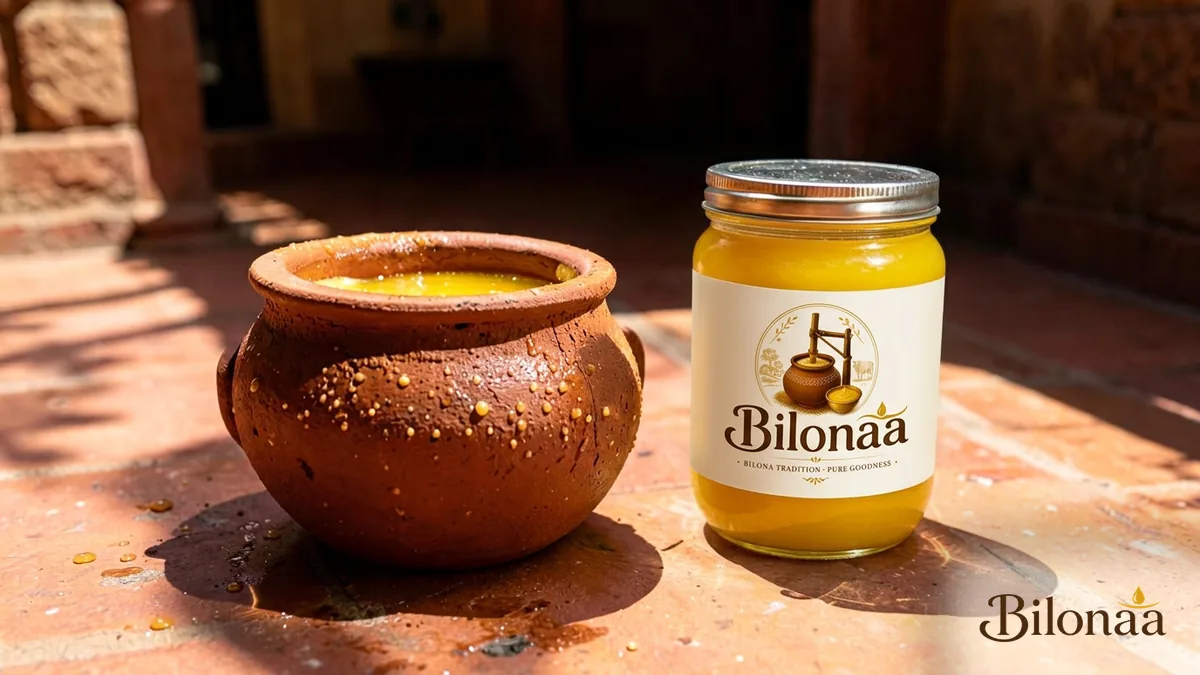
Storing ghee in clay vessels represents an ancient culinary practice rooted in traditional Indian kitchen ecology. For generations across rural households in Rajasthan and Uttar Pradesh, storing lipids in earthen pots known as matkas or handis was standard practice. These vessels were inexpensive, locally crafted, and deeply intertwined with regional cooking culture. As summer temperatures in the Thar Desert and Gangetic plains rise above 40 degrees Celsius, managing food preservation becomes a primary kitchen concern. Earthenware was prized for its thermal properties when keeping drinking water cool, leading many to assume that the same principle would protect clarified butter. However, storing fats involves entirely different chemical interactions than storing water. Understanding matka sanchay—the traditional practice of clay storage—requires examining the physical behavior of clay under heat, moisture, and lipid contact.
Clay containers interact with ambient humidity and temperature through capillary micro-porosity. Raw, unglazed earthenware contains millions of microscopic pores that allow air and liquid molecules to migrate through the vessel walls. When water is placed in a matka, it seeps into these tiny channels, reaches the exterior surface, and evaporates into dry ambient air. This phase change absorbs heat energy from the container and its contents, producing a modest cooling effect. In hot, dry climates, this evaporative mechanism can lower water temperatures by 5 to 10 degrees Celsius below room temperature. However, for evaporative cooling to function, the liquid inside must possess high latent heat of vaporization, which water does, but lipids strictly do not.
Evaporative cooling inside a porous earthenware pot creates a slight temperature differential during dry heat, but only when water is actively evaporating. Ghee is an anhydrous fat consisting of approximately 99.5 percent milk lipids, with virtually no water content remaining after thorough clarifying. Because ghee does not evaporate through clay pores, it cannot generate an active evaporative cooling process on its own. Any cooling effect observed in a ghee-filled matka relies entirely on ambient air currents moving past the dry exterior wall or external water application. At best, dense clay acts as a mild thermal insulator, slowing down sudden temperature spikes rather than actively chilling the contents.
High ambient summer heat in Northern India can cause lipid breakdown if ghee is exposed to fluctuating temperatures and ambient oxygen. Triglycerides in clarified butter begin to soften and liquefy around 32 to 35 degrees Celsius, shifting from a firm, crystalline matrix into a complete liquid state. In liquid form, unsaturated fatty acids become more vulnerable to oxidation when oxygen is present. If an unglazed clay container allows air to permeate its porous walls, atmospheric oxygen constantly contacts the warm fat. Over time, oxidative degradation generates free fatty acids, peroxides, and aldehydes, leading to unpleasant sharp odors and off-flavors commonly recognized as rancidity.
Traditional Ayurvedic texts describe storing clarified butter in earthenware, metal, or wood under specific environmental conditions depending on therapeutic intent. In classical literature such as the Charaka Samhita, ghee is categorized by its cooling (sheeta) and unctuous (snigdha) properties. Earthenware vessels were valued for their earthy origin (parthiva guna) and neutral thermal character. Ancient practitioners often recommended well-fired, clean clay pots for short-term household storage or aging specialized medicinal preparations over years. However, ancient compilers also emphasized keeping storage containers tightly sealed, stored in shaded recesses, and protected from damp conditions, recognizing that external air and moisture degrade lipid quality.
Fat absorption into unglazed earthen walls presents a significant physical trade-off during extended storage. Because unglazed ceramic material is hydrophobic toward water but absorbent toward lipids, liquid ghee readily draws into the porous silicate lattice. Over several weeks, a noticeable percentage of fat soaks deep into the matka walls, rendering that fat unrecoverable. Once trapped within the dark inner pores, this absorbed oil remains exposed to trapped oxygen and ambient heat. As the absorbed fat oxidizes and turns rancid inside the ceramic matrix, it creates a lingering stale odor that contaminates any fresh batch of ghee subsequently poured into the pot.
Moisture ingress through porous ceramic walls accelerates hydrolytic rancidity in lipids during humid monsoon months. While dry summer heat causes oxidative breakdown, high ambient humidity presents a different threat to stored fat. Water vapor present in humid air can migrate inward through unglazed clay pores. When water molecules contact triglycerides in ghee, they trigger hydrolysis—a chemical reaction that cleaves ester bonds and releases free fatty acids like butyric and caproic acid. This process alters the aroma and creates a sour taste. Unlike non-porous materials, porous clay cannot block environmental humidity from entering the storage chamber.
Glazed earthenware solves porosity issues but introduces potential chemical leaching risks if glazes contain heavy metals or improper formulations. Traditional potter glazes often utilize metal oxides to achieve low-melting vitrification and attractive colors. If raw red clay pots are coated with low-grade lead or cadmium glazes—frequently found in uncertified artisanal pottery—acidic food components or long-term lipid contact can dissolve these toxic elements into the food. Modern food-grade vitrified ceramics use lead-free, high-fired silica glazes that create an impervious glass-like barrier. Consumers interested in clay storage must ensure that any glazed container carries certified food-safe credentials.
Cleaning unglazed earthen vessels thoroughly after ghee storage remains virtually impossible using standard kitchen methods. Detergents and soaps sink directly into porous clay walls, leaving chemical residues that are extremely difficult to rinse out. Conversely, washing with hot water alone leaves trapped fat residues inside the pores, which rot over time and foster microbial growth in humid environments. Because unglazed clay cannot be sterilized with standard boiling water without risking structural fracturing, reusing an unglazed matka for multiple batches of clarified butter poses persistent hygiene challenges that increase rancidity risks.
A direct comparison of common kitchen containers highlights the structural differences between clay, glass, and metal for storing dairy fats. | Vessel Material | Porosity & Air Permeability | Moisture Barrier | Thermal Insulation | Cleaning & Hygiene | Rancidity Risk Level | | :--- | :--- | :--- | :--- | :--- | :--- | | Unglazed Clay | High (porous) | Poor (absorbs moisture) | Moderate | Very Difficult | High (trapped fat oxidizes) | | Glazed Ceramic (Food-Grade) | Zero (vitrified) | Excellent | Moderate | Easy | Low | | Clear Glass | Zero (impermeable) | Excellent | Low (requires dark shade) | Very Easy | Low (if kept away from light) | | Stainless Steel (Dolchi) | Zero (impermeable) | Excellent | Low | Very Easy | Low | Understanding these material properties helps home cooks choose appropriate vessels based on storage duration and ambient environment.
Modern scientific literature does not support the popular assumption that clay vessels automatically preserve clarified butter better than inert non-porous containers. Current laboratory research examining lipid oxidation consistently demonstrates that exposure to oxygen, light, heat, and trace moisture are the primary drivers of fat degradation. Peer-reviewed food science studies confirm that impermeable materials like glass or high-grade stainless steel preserve fat stability significantly longer than porous earthenware. While traditional lore attributes unique bio-energetic benefits to clay, empirical testing shows that unglazed clay speeds up oxidation due to continuous air exposure. Consumers should evaluate traditional practices through both cultural appreciation and verifiable food preservation science.
Glass jars provide an inert, impermeable boundary that shields ghee from humidity and environmental oxidation without reacting chemically with lipids. Unlike raw clay, glass does not absorb liquid fat or trap residual odors between uses. It can be washed at high temperatures with eco-friendly detergents and completely sterilized without degrading. Tinted or dark glass further protects delicate fats from photo-oxidation caused by direct sunlight. For those mindful of environmental impact, evaluating container materials extends to life-cycle assessments, as discussed in our analysis of [glass jar ghee carbon footprint](/blog/glass-jar-ghee-carbon-footprint).
Grain structure and texture development respond directly to cooling rates during storage, affecting the prized daanedaar texture of authentic butterfat. When liquid ghee cools slowly over 24 to 48 hours in an insulated or thick-walled vessel, high-melting saturated fatty acids crystallize first, forming distinct solid granules suspended in liquid olein. Rapid cooling in a cold refrigerator creates a uniform, flat, block-like texture. Storing ghee in a thick glass jar kept at a steady room temperature of 20 to 25 degrees Celsius encourages steady crystal formation, as detailed in our guide to [daanedaar ghee crystals science](/blog/daanedaar-ghee-crystals-science).
Bikaner's desert climate demands careful consideration of fat preservation during dry, scorching summers where temperatures routinely exceed 45 degrees Celsius. In the arid Thar region, traditional dairy keepers relied on deep subterranean cellars and shaded stone storehouses to keep dairy fats cool. Their time-tested techniques involved slow-cooking cultured butter over wood fires using the [traditional bilona method](/traditional-bilona-method) to evaporate every trace of moisture. Removing all water content during boiling was recognized as the single most critical step to prevent spoilage, long before modern chemistry explained hydrolytic rancidity.
Proper storage protocols require dark, cool, dry environments regardless of the container material chosen for daily kitchen use. To maintain freshness, ghee should always be retrieved using a clean, dry spoon to prevent introducing water droplets or food crumbs. Storing jars inside a closed pantry cupboard away from the cooking stove protects the fat from radiant heat and light. While refrigeration solidifies the fat and slows oxidation, it can introduce condensation whenever the jar is removed into warm room air, making cool pantry storage superior for daily culinary needs.
Using clay pots for short-term tabletop serving offers aesthetic and cultural value without exposing large batches of ghee to long-term spoilage risks. A small, beautifully crafted, lead-free glazed earthenware jar holding 50 to 100 milliliters of ghee can grace the dining table for daily meals. Refilling this small dish every few days from a main storage container ensures that the bulk supply remains protected in an airtight glass jar or steel dolchi. This hybrid approach honors traditional aesthetics while maintaining food safety standards.
Choosing between clay, glass, and steel ultimately depends on balancing traditional aesthetics against modern food safety principles when buying premium [bilona ghee](/bilona-ghee). While unglazed matkas evoke nostalgic connections to rural Indian heritage, their structural limitations make them unsuitable for long-term storage of high-grade [A2 cow ghee](/a2-cow-ghee). Impermeable glass jars remain the industry gold standard for preserving delicate aroma, granular texture, and nutritional fatty acid profiles across changing seasonal temperatures.
At Bilonaa, we honor time-tested dairy traditions while choosing glass packaging to preserve purity and freshness across every season. Our A2 desi cow ghee is slow-cooked on traditional wood fires in Bikaner and packed directly into recyclable glass jars and heavy stainless steel dolchis. This careful packaging ensures that every spoonful delivers the authentic aroma, rich grain, and pristine quality crafted by our artisans. We invite you to explore [our story](/about) and [shop Bilonaa ghee](/shop) to experience authentic Rajasthani bilona ghee delivered safely to your kitchen.
"Because ghee is an anhydrous fat without water to evaporate, an unglazed clay matka cannot actively chill clarified butter—making airtight glass a safer choice for summer storage."
Bilonaa Promise
Small-batch, A2 desi-cow, traditional bilona ghee — straight to your kitchen.
100% pure, hand-churned, slow-cooked on a wood fire and packed in glass jars.
FAQs
Quick answers
Does a clay pot keep ghee cool in summer like it cools water?
No. Clay pots cool water through evaporative cooling because water seeps through clay pores and evaporates into dry air. Ghee contains virtually no water, so it does not evaporate or generate an active cooling effect in a matka.
Why does ghee stored in unglazed clay pots smell stale after a few weeks?
Unglazed clay absorbs liquid fat into its microscopic pores. Trapped inside the porous ceramic walls, this fat is constantly exposed to air and heat, causing it to oxidize and turn rancid, which imparts a stale smell to fresh ghee.
Is glazed clay safe for storing ghee?
Glazed ceramic is safe only if it uses certified lead-free, food-grade vitrified glazes. Uncertified glazed pottery may contain lead or cadmium oxides, which can leach into fat over prolonged storage periods.
What is the best container material for storing ghee long-term?
Airtight, non-porous containers like dark glass jars or high-grade stainless steel dolchis are ideal. They completely block air and moisture, do not absorb lipids, and can be easily sanitized between uses.
Can I use a clay handi just for serving ghee at the dining table?
Yes. Using a small, lead-free glazed clay pot for short-term tabletop serving (3 to 5 days of supply) works well. Keep your bulk supply in an airtight glass jar and refill the clay vessel as needed.
Should I refrigerate my ghee during peak summer heat?
Refrigeration is not strictly necessary if stored in a cool, dark pantry. If you do refrigerate ghee, ensure the lid is tightly sealed to prevent moisture condensation inside the jar when brought to room temperature.
Educational content only — please consult a doctor for medical conditions.
Get gentle ghee notes in your inbox
One thoughtful Ayurveda + kitchen note a week. No spam. Unsubscribe anytime.
Conversation(0)
Share a thought — every comment is read before it appears.