
Health Benefits
Cow Ghee: Everything an Indian Kitchen Should Know
On this page
- Understanding cow ghee starts with looking at how Indian kit
- The history of cow ghee in India is rooted in ancient Vedic
- Making authentic cow ghee requires turning whole milk into c
- The science behind cow ghee reveals a unique composition of
- Ayurveda views cow ghee as a sattvic food that nurtures both
- In daily cooking, cow ghee shines because of its high smoke
- Comparing traditional cow ghee with industrial cream-process
- Understanding the difference between A1 and A2 cow ghee help
Understanding cow ghee starts with looking at how Indian kitchens have trusted it for generations. Walk into any traditional home during early winter, and the smell of hot ghee hitting a brass kadhai tells its own story. Cow ghee is not just melted butter fat; it is a deeply concentrated dairy staple obtained by simmering clarified butter. In most Indian homes, dadi-nani always insisted on using golden cow ghee over any processed oil for everyday roti, dal tadka, and khichdi. Unlike modern vegetable oils that strip away traditional flavours, real ghee adds a nutty aroma and a distinct daanedaar texture that transforms humble meals. It carries soluble fat vitamins and natural compounds that nourish from within. When made correctly, it stays shelf-stable for months without artificial additives. Knowing what goes into your jar is the first step toward reclaiming authentic taste in daily cooking.
The history of cow ghee in India is rooted in ancient Vedic kitchens and daily rituals. For thousands of years, indigenous Indian cow breeds like Rathi, Tharparkar, Gir, and Sahiwal were prized for their rich, wholesome milk. Early agrarian communities realized that raw milk spoils quickly in warm weather, leading them to ferment milk into curd and churn it into butter for preservation. Heating this butter slowly over low embers created a golden liquid that did not spoil even during long desert journeys across Rajasthan. This simple survival technique evolved into an essential culinary and sacred ingredient. Historical texts mention ghee as a symbol of prosperity, strength, and hospitality. Even today, serving a warm meal topped with a spoonful of golden cow ghee remains the highest gesture of welcome in an Indian home.
Making authentic cow ghee requires turning whole milk into curd before churning out butter. The traditional method, known as the bilona process, begins with fresh, full-cream cow milk. First, the milk is boiled and left to cool before a natural starter culture is added to turn it into thick curd overnight. Next morning, this whole curd is churned bi-directionally using a wooden bilona to separate fresh makkhan from buttermilk. This cultivated butter is then gathered and slowly simmered in an open vessel over a wood fire. As water evaporates, milk solids settle at the bottom and turn light brown, releasing that familiar, irresistible aroma. Once filtered, what remains is pure, golden fat with a natural grainy texture that factory methods using direct milk cream simply cannot recreate.
The science behind cow ghee reveals a unique composition of short-chain fatty acids. Unlike heavily processed hydrogenated fats, pure cow fat consists largely of short and medium-chain fatty acids like butyric acid. Butyric acid provides direct nourishment to the intestinal lining, which many nutritionists agree supports smoother digestion. Furthermore, cow ghee naturally contains essential fat-soluble vitamins, including Vitamin A, E, and K2, which require dietary fats for proper absorption in the human body. Its unique fatty acid profile also includes conjugated linoleic acid, traditionally linked with balanced metabolism. Because the milk solids are fully caramelized and strained out during slow cooking, pure ghee contains virtually no lactose or casein, making it comfortable for many lactose-sensitive individuals.
Ayurveda views cow ghee as a sattvic food that nurtures both body and digestive fire. In classical Ayurvedic literature, cow ghee is celebrated as a supreme Ojas builder, meaning it enhances vitality, immunity, and mental clarity. It is believed to kindle Agni, the internal digestive fire, without aggravating internal heat or Pitta imbalance. Unlike raw oils that can feel heavy on a delicate stomach, ghee acts as an effective carrier, or Anupana, drawing herbs and nutrients deep into tissue layers. Ancient vaidyas often prescribed aged cow ghee for soothing dry skin, lubricating joints, and supporting memory function. Placing a drop of warm ghee in khichdi during illness is a practice handed down precisely because it nourishes gently without burdening the stomach.
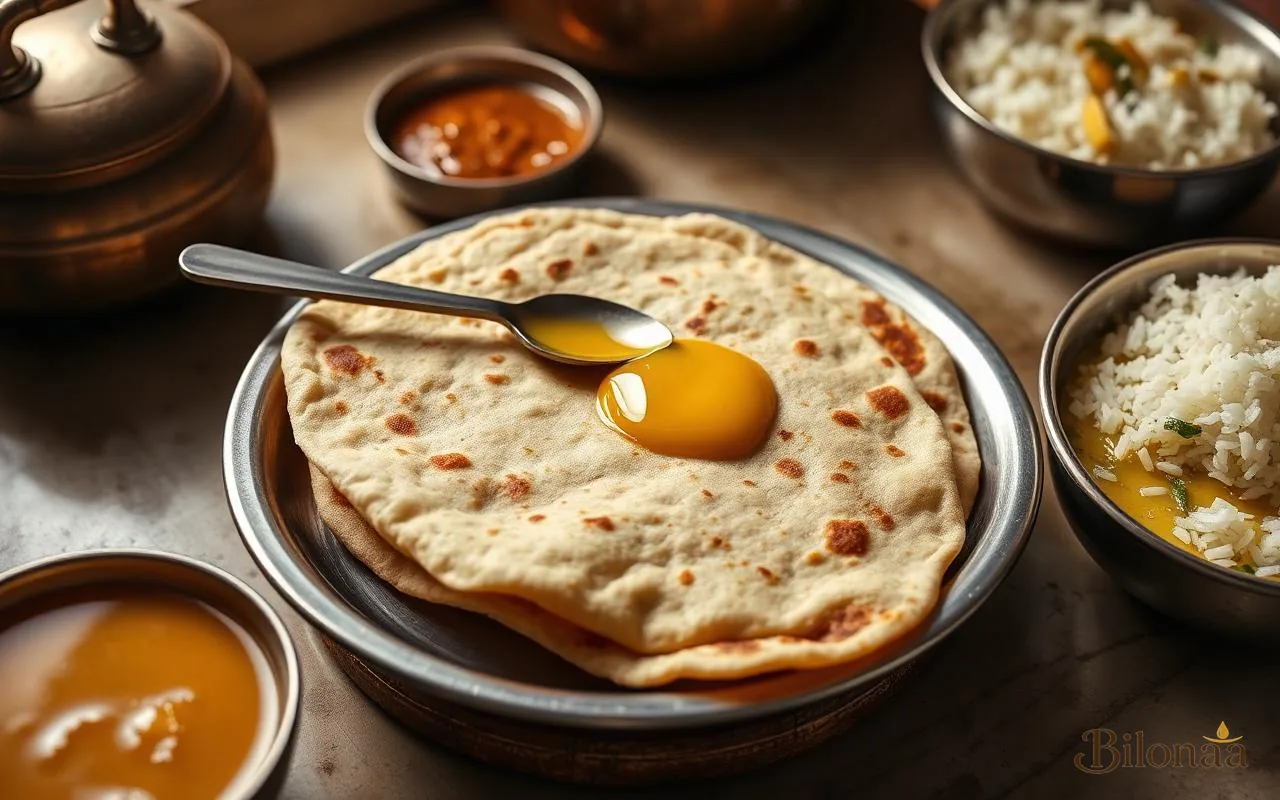
In daily cooking, cow ghee shines because of its high smoke point and rich aroma. With a smoke point near 250 degrees Celsius, it does not easily break down into harmful free radicals during high-heat cooking like deep frying or tempering. A quick tadka of cumin seeds, mustard, and green chillies crackling in hot ghee releases fat-soluble aromas that vegetable oils simply cannot match. Beyond Indian curries, you can brush it over freshly baked rotis, stir it into steaming basmati rice, or even use it to sear vegetables and mild spices. Its gentle nutty sweetness bridges spicy and earthy flavours, creating a balanced taste profile across regional cuisines from Rajasthan to Kerala. A small spoon goes a very long way.
Comparing traditional cow ghee with industrial cream-processed ghee highlights stark differences in quality. Commercial brands often skip the curd stage entirely to save time, using industrial centrifuges to separate raw cream straight from cold milk. This raw cream is then heated at very high temperatures, sometimes treated with chemical neutralizers and synthetic beta-carotene to artificially mimic the golden hue of genuine cow ghee. While cream-based ghee is cheaper and faster to produce, it lacks the complex aroma, digestibility, and daanedaar texture of curd-churned ghee. Traditional bilona ghee retains natural enzymes from the fermentation stage, resulting in a lighter feel on the stomach and a far richer, authentic fragrance that fills the whole kitchen.
Understanding the difference between A1 and A2 cow ghee helps families choose better daily nourishment. Indigenous Indian cows, often recognized by their prominent hump and loose skin folds, naturally produce milk containing only the A2 beta-casein protein. Hybrid or foreign breeds typically produce milk with the A1 protein, which breaks down into a peptide that some people find harder to digest. When ghee is made from pure A2 milk using the traditional curd-churning method, it provides a gentle, light digestive experience. Many families who previously felt heavy after consuming commercial ghee report feeling comfortable after switching back to pure A2 cow ghee made from native breeds like Gir or Rathi.
Cow ghee suits almost every age group when consumed in balanced daily quantities. Growing children benefit from its concentrated energy and healthy fats, which support physical growth and cognitive development. Active adults find that a teaspoon with lunch helps maintain energy levels and supports joint flexibility. For elders, a warm glass of milk with a half spoon of ghee at bedtime is a traditional ritual believed to soothe dryness and promote restful sleep. Even those managing modern desk lifestyles can enjoy small, regular amounts without fear, provided it replaces refined cooking oils rather than being added on top of a high-calorie, ultra-processed diet.
Several myths about cow ghee causing immediate weight gain need careful clearing. For years, flawed dietary advice blamed all saturated fats for heart issues and weight gain, leading many households to abandon traditional ghee for refined oils. However, modern nutritional understanding differentiates between harmful trans-fats and natural fats like those found in traditional cow ghee. When consumed in moderation—about one to two teaspoons per day—ghee supports satiety, preventing mindless snacking between meals. It is not ghee itself that causes weight gain, but excess caloric intake paired with a sedentary lifestyle. Replacing processed cooking fats with real, unadulterated cow ghee actually supports a well-balanced diet.
Testing the purity of cow ghee at home can be done with simple heat and light tests. With market adulteration or milawat becoming common, every home cook should know basic quality checks. Take a spoonful of ghee in a warm pan; genuine cow ghee melts instantly and turns a rich dark brown within seconds. If it takes a long time to melt or turns pale yellow, it may be mixed with vegetable fats or starch. Another quick method is the palm test: place a small dollop on your palm, and pure ghee will begin to melt naturally at body temperature. Lastly, genuine ghee forms distinct, uniform granules as it cools naturally at room temperature.
The price of pure cow ghee reflects the immense volume of milk needed for each jar. It takes roughly 25 to 30 litres of pure A2 cow milk to churn out just one single litre of authentic bilona ghee. When you calculate the cost of ethical cattle feed, hand-milking, curd fermentation, wooden churning, and slow cooking on wood fires, genuine ghee simply cannot be sold at bargain prices. Ultra-cheap commercial options are almost always produced from leftover industrial cream or blended with cheaper palm fractions. Investing in genuine, slow-crafted ghee means paying for labor-intensive heritage craft and uncompromised nutritional value for your family's daily meals.
Proper storage of cow ghee ensures that its daanedaar texture and aroma stay fresh for months. Always keep your ghee jar in a cool, dry corner of your kitchen, well away from direct sunlight and moisture. Never dip a wet spoon or finger into the jar, as moisture is the main cause of spoilage or mould growth. Pure ghee does not require refrigeration; keeping it at room temperature allows it to maintain its natural grainy texture. In cold Bikaner winters, ghee naturally solidifies into a firm, gorgeous golden block, whereas warm summer months render it soft and liquid. Both states are completely natural and indicate pure, unadulterated fat.
At Bilonaa, we craft pure A2 cow ghee in Bikaner using traditional wooden churns and slow wood fires. We source fresh milk exclusively from healthy indigenous cows—Rathi, Tharparkar, Gir, and Sahiwal—grazing in open regional pastures. Our process follows the age-old Vedic method: set into curd overnight, hand-churned with a bi-directional wooden bilona, and simmered slowly over earthen wood fires. We seal our ghee fresh in hygienic glass jars up to 2 litres, and offer a traditional stainless steel dolchi for 5-litre family orders. Certified by FSSAI under license number 22226025000262, every batch brings the unadulterated taste of Rajasthan straight into your home kitchen.
Integrating genuine cow ghee into your family recipes restores authentic taste and tradition. Whether you are drizzling it over hot dal-baati, stirring a spoon into morning khichdi, or making festive halwa, real ghee elevates every dish from ordinary to memorable. Making the switch away from processed, highly refined oils brings your kitchen back to roots that have nourished generations. It is a simple, deliberate choice for quality, flavour, and digestive well-being. By choosing authentic A2 cow ghee, you preserve an ancient culinary heritage while nourishing your loved ones with every single meal.
"It takes roughly 25 to 30 litres of pure A2 cow milk to churn out just one single litre of authentic bilona ghee."
Bilonaa Promise
Small-batch, A2 desi-cow, traditional bilona ghee — straight to your kitchen.
100% pure, hand-churned, slow-cooked on a wood fire and packed in glass jars.
FAQs
Quick answers
How can I tell if cow ghee is real or fake at home?
You can perform a quick pan test. Heat a spoon of cow ghee in a warm pan; pure ghee melts immediately and turns a rich brownish color. Adulterated ghee takes longer to melt and stays pale yellow. You can also place a little ghee on your palm—pure ghee melts gently at body temperature.
Is A2 cow ghee better than regular commercial ghee?
Yes, A2 cow ghee is made from the milk of indigenous Indian cows containing only A2 beta-casein protein. Regular commercial ghee often uses A1 milk from hybrid cows and relies on direct cream heating. A2 bilona ghee made from fermented curd is easier to digest and far richer in aroma.
Does cow ghee need to be refrigerated?
No, pure cow ghee has a very low moisture content and does not require refrigeration. Simply store it in an airtight glass jar in a cool, dry kitchen cabinet away from direct sunlight. Always use a clean, dry spoon to prevent moisture from causing spoilage.
Can lactose-intolerant people eat cow ghee?
Most lactose-sensitive individuals can enjoy pure cow ghee without issues. During the slow simmering process, milk solids like lactose and casein settle at the bottom and are completely strained out. What remains is clarified butterfat that is virtually free of milk solids.
Why does cow ghee look grainy or daanedaar?
The grainy or daanedaar texture is a natural characteristic of slow-cooked ghee made from fermented curd. As the ghee cools slowly at room temperature, fatty acid crystals bind together to form fine granules. This texture is proof of traditional processing without high-pressure industrial homogenisation.
How much cow ghee should I eat daily for health benefits?
For a healthy adult with an active lifestyle, one to two teaspoons of pure cow ghee per day is generally recommended by traditional nutrition practices. It can be drizzled over rotis, mixed into hot dal, or used for light cooking in place of refined oils.
Why is traditional bilona cow ghee more expensive?
Traditional bilona ghee requires nearly 25 to 30 litres of pure A2 cow milk to produce just one litre of ghee. The labor-intensive process of fermenting milk into curd, hand-churning makkhan, and slow-cooking over wood fires adds to the cost compared to rapid industrial methods.
Educational content only — please consult a doctor for medical conditions.
Get gentle ghee notes in your inbox
One thoughtful Ayurveda + kitchen note a week. No spam. Unsubscribe anytime.
Conversation(0)
Share a thought — every comment is read before it appears.