
Bilonaa Method
The Physics of Daanedaar: How Cooling Speed Creates Ghee Grains
On this page
- The distinctive grainy texture of traditional Indian ghee, k
- Understanding milk fat requires looking at how different tri
- Nucleation marks the critical first phase where liquid fats
- Polymorphism explains how fat molecules can arrange themselv
- Cooling velocity dictates whether ghee forms large satisfyin
- Ambient temperature gradients during the settling process si
- Incorporating a markdown comparison helps visualize how ther
- Seasonal shifts in bovine diets alter the fat profile of mil
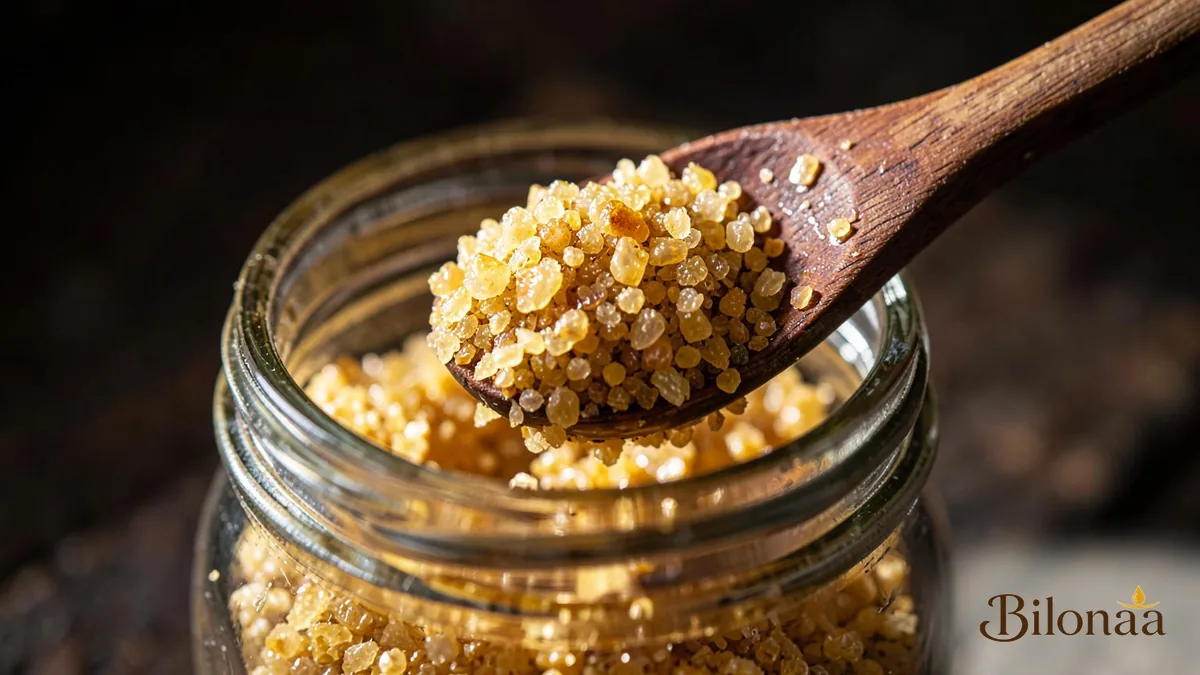
The distinctive grainy texture of traditional Indian ghee, known as daanedaar, is the result of precise lipid physics rather than a magic recipe. When butter fat melts during clarified butter production, it breaks down into a complex mixture of triglycerides. These fatty acid chains do not solidify all at once when cooled. Instead, they possess varying carbon chain lengths and degrees of unsaturation, which endows each fraction with a distinct melting point. High-melting saturated fats solidify first, while low-melting unsaturated fats remain liquid longer. When allowed to cool gradually, these solidifying fats group together to form distinct suspended crystals, creating the prized granular mouthfeel enjoyed across Indian culinary traditions.
Understanding milk fat requires looking at how different triglycerides solidify across a broad temperature range. Bovine milk fat contains over four hundred different fatty acids, though a handful of saturated and unsaturated triglycerides dominate its physical structure. Saturated fatty acids like palmitic and stearic acids have higher melting points, generally solidifying between 30°C and 60°C. Conversely, unsaturated fatty acids like oleic acid remain liquid at room temperature down to much lower thresholds. When hot liquid ghee begins to cool, the high-melting triglycerides reach their crystallization point first. If the thermal reduction occurs slowly, these molecules assemble into organized crystal lattices while swimming in a liquid matrix of unsaturated fat.
Nucleation marks the critical first phase where liquid fats organize into tiny solid seeds. For crystals to grow into visible grains, small clusters of high-melting fatty acid molecules must first spontaneously align into stable microscopic nuclei. If cooling happens too quickly, thousands of microscopic nuclei form simultaneously, freezing the fat into a smooth, homogenous paste before any single crystal can expand. Conversely, when cooling occurs slowly, only a limited number of nuclei form. These few initial seed sites then draw remaining solidifying lipid molecules out of the surrounding liquid, allowing individual crystals to grow large enough to be felt on the tongue and seen by the naked eye.
Polymorphism explains how fat molecules can arrange themselves into different crystal structures depending on cooling conditions. Triglycerides are polymorphs, meaning they can crystallize into three primary lattice forms: alpha, beta-prime, and beta. The alpha crystal form is unstable and forms under rapid chilling, yielding tiny needles that feel velvety or greasy. Beta-prime crystals are intermediate in size and stability, often found in moderately cooled fats. The beta form, however, represents the most thermodynamically stable and dense crystal structure. Slow, unhurried thermal dissipation gives high-melting triglycerides enough time to reorient themselves into stable beta-type crystal aggregates, which form the firm, distinct grains characteristic of authentic daanedaar fat.
Cooling velocity dictates whether ghee forms large satisfying grains or a smooth uniform paste. Fast industrial chilling, such as passing hot fat over scraped-surface heat exchangers, rapidly drops the temperature below the melting points of all constituent fats. This forces rapid, simultaneous crystallization, creating micro-crystals that remain suspended uniformly without separating into distinct phases. In contrast, quiescent room-temperature cooling allows a slow temperature decline over twelve to twenty-four hours. This undisturbed, gradual drop creates a thermal gradient where high-melting fractions slowly cluster into solid grains, suspended gracefully within a liquid oil phase. The ratio of liquid to solid at room temperature ultimately determines the final visual density of the grains.
Ambient temperature gradients during the settling process significantly influence the size and stability of ghee grains. If the ambient environment drops too low too quickly—such as placing hot ghee directly inside a refrigerator—the cooling curve steepens, bypassing the delicate growth window for beta crystals. Historically, Indian households allowed cooked fat to cool slowly inside insulating clay vessels or double-walled containers at room temperature. Studying [clay matka ghee storage](/blog/clay-matka-ghee-storage) reveals how porous earthenware acts as a gentle thermal buffer, slowing ambient heat loss. This sustained warm environment gives solidifying crystals hours to aggregate into robust granules rather than snapping into a solid, fine-grained mass.
Incorporating a markdown comparison helps visualize how thermal variables alter physical fat structure. | Cooling Method | Cooling Rate | Dominant Crystal Type | Visual & Tactile Result | Grain Stability | | :--- | :--- | :--- | :--- | :--- | | Flash Chilling (Industrial) | Rapid (<30 mins) | Alpha / Unstable Beta-prime | Smooth, paste-like, uniform | Low (melts quickly) | | Ambient Room Cooling | Moderate (4-8 hours) | Beta-prime | Fine to medium grain, semi-solid | Moderate | | Controlled Slow Cooling | Gradual (12-24 hours) | Beta (Thermodynamically stable) | Large, defined daanedaar grains | High (stable at room temp) | The rate at which heat leaves the container determines which crystal form dominates. Controlled slow cooling consistently yields the large, distinct grains preferred by connoisseurs, whereas rapid industrial chilling completely suppresses grain growth.
Seasonal shifts in bovine diets alter the fat profile of milk and directly impact grain formation. During rainy monsoon months, cattle feed on lush green pastures rich in fresh forage, which naturally elevates the proportion of unsaturated fatty acids, particularly oleic acid, in their milk fat. Ghee prepared from summer or monsoon milk tends to have a lower overall melting point, resulting in smaller grains and a higher liquid-to-solid ratio at room temperature. In winter, when cows consume dry fodder and oilcakes, the proportion of saturated palmitic and stearic acids increases. This higher concentration of high-melting saturated fats provides abundant building blocks for grain formation, often yielding larger, denser grains during colder months.
Breed-specific milk traits and indigenous processing methods create subtle natural variations in final texture. Indigenous Indian cow breeds—such as Rathi, Tharparkar, Gir, and Sahiwal—produce milk fat with distinct triglyceride profiles shaped by genetics and regional climate adaptations. Furthermore, using the [traditional bilona method](/traditional-bilona-method), where whole milk curd is hand-churned into butter before slow wood-fire clarification, leaves natural phospholipid residues that influence crystal nucleation. The slow, direct heating on wood fires allows water to evaporate completely without scorching the fat proteins. This gentle thermal transition prepares the liquid lipids perfectly for the slow cooling phase required to build classic daanedaar texture naturally.
It is a persistent myth that a grainy texture serves as guaranteed proof of pure ghee. While authentic clarified butter forms natural grains under slow cooling, adulterated fats can easily be manipulated to mirror this exact visual texture. Commercial fraudsters often blend cheap vegetable oils, hydrogenated fats (vanaspati), or palm stearin with low-grade butter oil. Hydrogenated fats contain high proportions of trans-fatty acids and saturated stearic chains that naturally crystallize into large, firm grains even when cooled rapidly. Consequently, assuming that a jar of ghee is unadulterated simply because it exhibits a heavy daanedaar structure is scientifically incorrect and misleading for consumers seeking genuine dairy products.
Systematic laboratory testing remains the only conclusive method for verifying fatty acid purity. Standard physical assessments like visual grain inspection or home heat tests cannot reliably detect modern adulterants like palm oil fractions, which mimic the crystallization point of milk fat. Performing professional [ghee sensory evaluation grading](/blog/ghee-sensory-evaluation-grading) helps assess aroma, mouthfeel, and clarity, but definitive purity requires chemical analysis. Gas-liquid chromatography (GLC) analyzes the precise fatty acid profile and butyric acid content unique to bovine milk fat. Therefore, while grainy texture is a delightful culinary characteristic resulting from traditional slow cooling, it must never replace rigorous laboratory validation as an indicator of authenticity.
Scientific evidence regarding lipid crystallization in dairy fats comes primarily from food physical chemistry studies rather than therapeutic trials. Researchers in lipid technology have extensively documented how triglyceride composition, cooling rates, and tempering temperatures govern crystal polymorphism in anhydrous milk fat. However, these physical laboratory studies describe structural thermodynamics rather than human health outcomes. There is no valid scientific evidence suggesting that grainy ghee offers superior nutritional benefits, faster digestion, or enhanced metabolic effects compared to smooth ghee. The physical size of fat grains is purely an aesthetic and textural outcome of temperature control, not an indicator of biological potency or health enhancement.
Traditional Ayurvedic texts recognized texture variations as natural markers of seasonal churnings without claiming grains added medicinal value. In classical Samhitas, ghee (ghrita) is praised for its lubricating, cooling, and agni-balancing properties, with specific qualities attributed to the animal source and processing care. Ancient physicians observed that ghee churned during winter (Hemanta) yielded a firmer, more granular consistency than ghee prepared during the hot months (Greeshma). They understood this as a natural response to seasonal weather and pasture variations. Crucially, traditional texts valued the purity of the milk and the cleanliness of the bilona process rather than treating the physical grain size itself as a medicinal metric.
Heating grainy ghee returns it to a clear liquid phase without altering its underlying molecular composition. If a jar of daanedaar ghee melts completely in warm summer temperatures, the crystal structure dissolves into a uniform liquid golden oil. This phase change is entirely reversible. If the melted ghee is subsequently cooled down slowly at warm room temperatures (between 22°C and 26°C), high-melting triglycerides will once again nucleate and grow into familiar grains. However, if the melted jar is rushed into a cold refrigerator, it will solidify into a smooth, grainless block. Understanding this physical reversibility helps consumers restore their preferred texture at home without compromising quality.
Storage vessel material plays a subtle thermal role in guiding slow heat dissipation. When freshly clarified hot ghee is poured into containers, the thermal conductivity of the vessel influences the cooling curve. Non-porous materials like glass or stainless steel maintain steady, uniform heat retention when kept in ambient domestic pantries. Storing high-quality [A2 cow ghee](/a2-cow-ghee) in inert dark glass jars shields the fat from light oxidation while allowing heat to radiate away at a steady, natural pace. This controlled dissipation supports optimal crystal formation inside the jar, preserving both the delicate volatile aromas and the structural integrity of the natural fat grains over long shelf lives.
Commercial industrial processing often sacrifices natural grain development in favor of rapid homogenised output. Large-scale dairy factories prioritize high-speed bottling and standardized product appearance, often using continuous chillers that instantly freeze the fat mixture into a uniform paste. This mechanical rapid cooling prevents the slow lipid phase separation necessary for daanedaar texture. In contrast, batch-processed [bilona ghee](/bilona-ghee) crafted in small artisanal kettles relies on ambient, undisturbed cooling cycles. By allowing hot clarified fat to cool naturally over many hours without mechanical agitation, small-batch producers honor the thermodynamic principles required to develop rich, authentic fat grains naturally.
Quality grading frameworks evaluate grain uniformity alongside aroma and moisture content. Official food standards, such as Indian AGMARK and FSSAI regulations, set strict benchmarks for moisture content—requiring less than 0.3 percent—to prevent microbial growth and rancidity. Low moisture is essential for grain formation, as residual water droplets disrupt triglyceride crystal lattices and cause premature spoilage. When reviewing technical specifications or checking consumer [FAQs](/faq), buyers learn that clean, dry fat with low free fatty acids crystallizes far more predictably, producing resilient grains that maintain their texture throughout the product's shelf life.
At Bilonaa, we respect the natural thermodynamic cycle required to yield classic daanedaar ghee in our Bikaner facility. Made from the curd of A2 milk sourced from Rathi, Tharparkar, Gir, and Sahiwal cows, our butter is hand-churned in wooden bilonas and slow-cooked over wood fires. We allow the warm clarified fat to settle slowly in glass jars and steel dolchis, giving high-melting triglycerides the time they need to crystallize into distinct, beautiful grains naturally. If you appreciate honest craftsmanship and traditional textures, we invite you to [shop Bilonaa ghee](/shop) and experience the authentic results of patience, tradition, and physical science brought together in every jar.
"Grain formation in ghee is a triumph of lipid thermodynamics—where slow, patient cooling allows high-melting fats to form stable, golden crystal grains naturally."
Bilonaa Promise
Small-batch, A2 desi-cow, traditional bilona ghee — straight to your kitchen.
100% pure, hand-churned, slow-cooked on a wood fire and packed in glass jars.
FAQs
Quick answers
What gives ghee its grainy (daanedaar) texture?
Ghee's grainy texture is created when milk fat cools slowly. Ghee consists of various triglycerides with different melting points. High-melting saturated fats crystallize first into solid grains, while lower-melting fats remain liquid, forming visible, suspended crystals.
Is a grainy texture guaranteed proof of pure ghee?
No, graininess is not a proof of purity. Grain texture is a physical crystallization phenomenon. Adulterated ghee made with hydrogenated vegetable fats or palm stearin can also be manipulated to form dense grains under controlled cooling conditions.
Why does my ghee become smooth and liquid in summer?
In warm summer temperatures above 30°C, the high-melting fat crystals melt back into a liquid phase, causing the grains to dissolve. Additionally, summer milk contains slightly higher levels of unsaturated fats, which naturally produce smaller grains.
How can I restore the daanedaar texture of melted ghee at home?
Gently warm the ghee until it melts completely into a clear liquid. Then, place the jar in a warm room (around 22°C–26°C) and let it cool undisturbed for 12 to 24 hours. Avoid refrigerating it, as rapid cooling prevents grain formation.
Does grainy ghee have higher nutritional value than smooth ghee?
No. The graininess of ghee is purely a physical crystal structure resulting from cooling rates and lipid composition. It affects mouthfeel and culinary appeal but does not alter the nutritional content, fatty acids, or health benefits of the ghee.
Why does industrial ghee often look smooth instead of grainy?
Industrial ghee production uses high-speed mechanical chilling to fast-pack products. Rapid cooling forces all fats to solidify simultaneously into microscopic alpha crystals, creating a uniform, smooth paste rather than distinct beta crystal grains.
What ambient temperature is ideal for developing ghee grains?
An ambient temperature between 20°C and 26°C is ideal for slow crystallization. This temperature range allows high-melting saturated fatty acids to slowly nucleate and grow into stable beta crystals over a 12 to 24-hour settling period.
Educational content only — please consult a doctor for medical conditions.
Get gentle ghee notes in your inbox
One thoughtful Ayurveda + kitchen note a week. No spam. Unsubscribe anytime.
Conversation(0)
Share a thought — every comment is read before it appears.