Tradition
Ghee in Indian Festivals: From Diya to Prasad, Season by Season
On this page
- Festivals in an Indian home are defined by the golden aroma
- Sacred rituals specify pure cow ghee because ancient scriptu
- Spring arrives with Makar Sankranti where til-gud and ghee p
- Holi brings the indulgence of rich gujiya dough bound and fr
- Summer and monsoon festivals like Raksha Bandhan rely on hom
- Ganesh Chaturthi makes modaks the center of devotion with st
- Navratri fasting rules require pure fat sources that provide
- Karva Chauth sargi meals depend on calorie-rich preparations
Festivals in an Indian home are defined by the golden aroma of melting ghee in the kitchen. Long before guests arrive or decorations go up, the house fills with the comforting scent of roasting besan, crackling nuts, and sweet batter hitting hot fat in a thick kadhai. Ghee is not just a cooking ingredient during these times; it is the very heart of our cultural celebrations. From the first morning offering at the altars to the final late-night feast with cousins, every ritual and dish revolves around this traditional fat. Our dadi-nani always insisted that a festival without the rich scent of warm, authentic ghee felt incomplete and hollow.
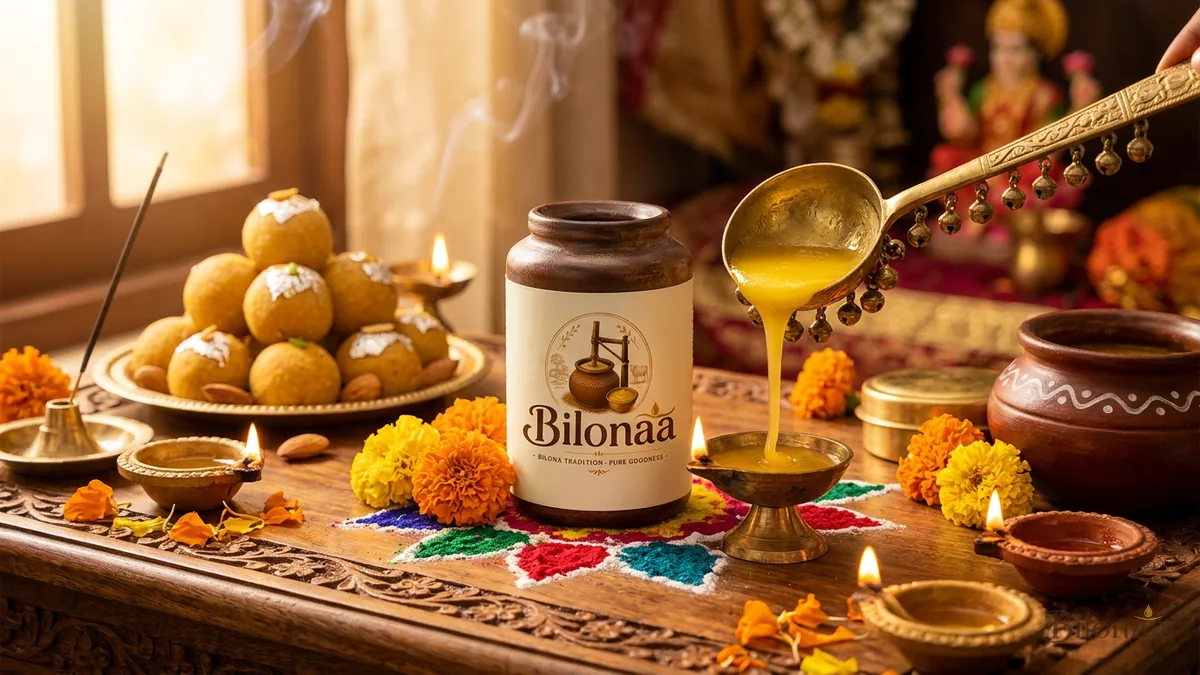
Sacred rituals specify pure cow ghee because ancient scriptures view it as the ultimate medium of purity and divine energy. When we light a brass diya during evening prayers or offer samagri into a havan fire, cow ghee acts as a pure fuel that burns cleanly without dark smoke. Ayurveda suggests that burning genuine ghee purifies the immediate atmosphere and creates a serene environment for reflection. In temple traditions and home shrines, substitute fats or refined oils are traditionally avoided for prasad because only unadulterated cow fat represents sattvic energy. Lighting a wick fed by real fat carries an intention of devotion and gratitude that standard oils simply cannot match.
Spring arrives with Makar Sankranti where til-gud and ghee protect the body against lingering winter chill. In northern and western states, this festival marks the Sun's northern journey, demanding foods that generate internal warmth and support digestion. Laddoos made from toasted sesame seeds and dark jaggery require a generous swirl of fat to bind them together and smooth out their earthiness. Eating a spoonful of til-gud with melted fat in the morning is a seasonal ritual many families carry out faithfully. The combination lubricates joints and provides sustained energy for a full day spent flying kites on cold rooftops.
Holi brings the indulgence of rich gujiya dough bound and fried with pure [A2 cow ghee](/a2-cow-ghee). Preparing for Holi means sitting around giant mixing bowls with family to knead crisp moid dough that gives gujiyas their signature flaking crust. The secret behind a melt-in-the-mouth gujiya is using proper fat as moyan inside the flour before deep frying. When you cook these crescent pastries on a gentle wood-fire ember or low stove flame, they absorb a subtle nutty flavor. Cheap oils leave a greasy film on the roof of your mouth, whereas genuine fat cooks clean and preserves the pastries for weeks.
Summer and monsoon festivals like Raksha Bandhan rely on homemade sweets crafted with genuine care for brothers and sisters. Before commercial sweet shops dominated city corners, sisters spent hours making ghevar, besan laddoos, or coconut burfi at home. The rich texture of authentic daanedaar sweet treats comes directly from using unadulterated fat churned from milk. Serving a piece of homemade mithai along with a tied thread symbolizes deep affection and nutritional care. Using pure ingredients ensures that festive treats feel light on the stomach rather than heavy or sticky.
Ganesh Chaturthi makes modaks the center of devotion with steaming ghee poured over warm outer layers. Whether you prepare ukadiche modak with steamed rice flour or crispy fried wheat modaks, the dish is unfinished until a golden stream of fat is drizzled over the top. Steam rises from the hot dumpling, melting the fat instantly into the sweet coconut and jaggery filling inside. This simple addition softens the outer casing and balances the sweetness of the jaggery. Families who take pride in their festive cooking know that a dry modak fails to honor the beloved deity properly.
Navratri fasting rules require pure fat sources that provide long-lasting sustenance during long prayers and garba nights. Nine days of fasting mean avoiding daily grains and relying on buckwheat, kuttu, sabudana, and amaranth. These fast-friendly ingredients can be dry or difficult to digest unless cooked with high-quality fat in a heavy kadhai. Sabudana khichdi cooked with a mild cumin tadka in real ghee keeps hunger away without causing sluggishness or acidity. Many families find that fasting meals cooked in clean, ancestral fats offer steady physical energy needed for late-night garba dances.
Karva Chauth sargi meals depend on calorie-rich preparations to keep fasts comfortable through the day. The pre-dawn Sargi meal eaten by women before sunrise must sustain them without food or water until the moon rises at night. A bowl of warm roasted seviyan cooked in milk and fat, along with stuffed parathas brushed with soft ghee, provides dense nutrition. The healthy fats slow down digestion naturally, preventing sudden spikes and crashes in blood sugar levels. Eating a wholesome, traditional sargi ensures that the fast is observed with energy and devotion rather than physical exhaustion.
Diwali transforms ghee into light and celebration through brass diyas and trays of daanedaar mithai. As the biggest festival of the year, Diwali demands litres of pure fat for both worship and hospitality. Dozens of small terracotta and brass lamps are filled with melted fat, holding steady wicks that burn long into the night. Meanwhile, kitchen counters overflow with kaju katli, badam halwa, and mathri prepared days in advance. The distinctive, grainy texture of genuine mithai depends entirely on the quality of fat used during the roasting stage of flour or nuts.
Calculating how much ghee your household needs for the festival season prevents last-minute market rushes for subpar substitutes. A medium family of four usually requires about two litres for lighting diyas and daily puja across Navratri and Diwali combined. For festive cooking, halwa, and sweet preparation, budgeting another two to three litres ensures you never run out mid-recipe. Keeping a dedicated five-litre steel dolchi stocked in the pantry covers the entire festive stretch from Ganesh Chaturthi to Bhai Dooj smoothly. Planning your purchase ahead saves you from buying emergency jars from local grocers that might compromise on purity.
Gifting authentic [bilona ghee](/bilona-ghee) has become a meaningful alternative to commercial processed sweet boxes. Standard festive gift packs are often filled with store-bought sweets loaded with artificial preservatives, excessive white sugar, and palm oil. A handsome glass jar of hand-churned fat represents health, prosperity, and genuine respect for the recipient's household. Relatives, colleagues, and elders appreciate receiving a useful staple that nourishes their family for weeks after celebrations end. It communicates that you care about their wellness and value traditional food wisdom above cheap commercial convenience.
Adulteration or milawat surges during peak festival months when high demand strains supply chains across the country. Dishonest traders often mix cheap vegetable oils, hydrogenated fats, or synthetic aromas into commercial ghee packs to double their profits. This adulterated fat alters the taste of your prasad, smokes excessively in diyas, and causes heaviness or upset stomachs after festive feasts. Looking out for official FSSAI licensing, glass packaging, and transparent sourcing from trusted farmers protects your home from fake products. True festival joy comes from knowing that what you offer to God and serve to your family is completely asli.
Traditional wooden churning methods retain the natural aroma that commercial factory ghee completely loses during mass production. Industrial brands extract fat directly from raw cream using high-speed chemical separators and heat it at extreme temperatures, killing natural nutrients. In contrast, the [traditional bilona method](/traditional-bilona-method) ferments whole milk into curd before hand-churning it back and forth with a bi-directional wooden spindle. This slow process separates pure butter, which is then gently cooked over wood fires into aromatic, daanedaar fat. The resulting flavor is noticeably deeper, making your festive sweets smell like authentic village kitchens.
Cooking festival prasad in slow-crafted ghee brings back the taste remembered from dadi-nani kitchens decades ago. There is an irreplaceable comfort in watching besan turn deep golden brown while floating in warm, aromatic fat over a low flame. The natural golden color and coarse grain structure reflect gentle processing without bleaching or artificial deodorizing. When prasad is prepared with patience and pure ingredients, even a tiny morsel offered after prayers feels rich and deeply satisfying. That distinct nostalgic flavor is what transforms simple home cooking into a memorable festive experience for guests.
At Bilonaa, we craft pure A2 desi-cow ghee in Bikaner to bring genuine festive tradition directly to your home altar. Made from the milk of grass-fed Rathi, Tharparkar, Gir, and Sahiwal cows, our ghee is slow-churned in wooden bilonas and cooked over traditional wood fires. We package our product carefully in clean 500 ml, 1 ltr, and 2 ltr glass jars, alongside 5 ltr steel dolchis for heavy festival demands. If you want to elevate your festive recipes and rituals with true purity, you can easily [shop Bilonaa ghee](/shop) for your family. Read [our story](/about) to learn how we preserve Bikaner's rich dairy heritage without shortcuts or additives.
Storing your festive ghee properly ensures every spoonful remains aromatic from the first puja to the last sweet. Always store your jar in a cool, dry cupboard away from direct sunlight and moist kitchen steam. Use a clean, completely dry spoon every time you scoop out fat for cooking or lighting wicks to prevent mold growth. Ghee naturally solidifies in cold weather and melts into a golden liquid in warm months without losing its nutritional value or shelf life. If you have leftover festive fat, consult our [FAQs](/faq) for detailed advice on long-term storage and natural preservation tricks.
"Lighting a wick fed by real cow fat carries an intention of devotion and gratitude that standard oils simply cannot match."
Bilonaa Promise
Small-batch, A2 desi-cow, traditional bilona ghee — straight to your kitchen.
100% pure, hand-churned, slow-cooked on a wood fire and packed in glass jars.
FAQs
Quick answers
Why is cow ghee preferred over oil or buffalo ghee for lighting puja diyas?
Ancient Indian traditions specify cow ghee for diyas because it produces a bright, clean flame with minimal soot. Ayurveda suggests that burning cow ghee creates a sattvic atmosphere and purifies the air. Buffalo ghee and refined oils burn darker and leave heavy residue on brass lamps.
How much ghee does a family of four need for the Diwali and Navratri season?
Most families need between 3 to 5 litres for the autumn festival stretch. This covers lighting daily diyas, preparing fasting dishes like sabudana khichdi, roasting sweets like besan laddoo and halwa, and brushing warm parathas or rotis for guests.
Can I use the same ghee for lighting diyas and cooking festive sweets?
Yes, as long as the ghee is pure cow ghee without added salt or spices. However, it is good hygienic practice to keep a smaller separate jar dedicated strictly to puja rituals, avoiding contamination from wet kitchen hands or spice spoons.
How can I tell if festival-bought ghee is adulterated with milawat?
Adulterated ghee often leaves a greasy coating on your tongue, lacks a natural daanedaar texture, or smells like synthetic butter. Pure bilona ghee melts quickly at body temperature in your palm and has a warm, nutty aroma when heated gently in a pan.
Why is A2 bilona ghee considered better for heavy festival sweets?
A2 bilona ghee is made from fermented curd churned with wooden spindles, making it easier on digestion compared to industrial cream-extracted ghee. Festival sweets are rich and dense; using bilona ghee helps prevent that uncomfortable heavy or bloated feeling after feasting.
What is the best way to present ghee as a festive gift?
Presenting ghee in a clean glass jar tied with a simple ribbon or packed inside a traditional brass dolchi makes an elegant gift. It stands out against generic sweet boxes, offering recipients a pure, health-conscious staple they can use over weeks.
How long does pure A2 cow ghee stay fresh after opening during festivals?
Pure A2 cow ghee naturally stays fresh for up to 12 months at room temperature without refrigeration. Just keep the container tightly closed in a cool, dark place and always use a dry wooden or stainless steel spoon to handle it.
Educational content only — please consult a doctor for medical conditions.
Get gentle ghee notes in your inbox
One thoughtful Ayurveda + kitchen note a week. No spam. Unsubscribe anytime.
Conversation(0)
Share a thought — every comment is read before it appears.