
Kitchen
Ghee in Summer vs Winter: How Much, How to Store, What Changes
On this page
- Pure ghee changes its physical texture naturally with every
- Understanding why ghee melts completely into liquid gold dur
- Winter cold turns authentic butterfat into a rich daanedaar
- Liquid ghee in summer is a natural behavior and not a sign o
- Ayurveda views ghee through Ritucharya or seasonal dietary r
- Adjusting your daily intake of ghee during peak summer and h
- Increasing ghee consumption during cold winter months fuels
- Managing ghee texture transitions during the damp monsoon se
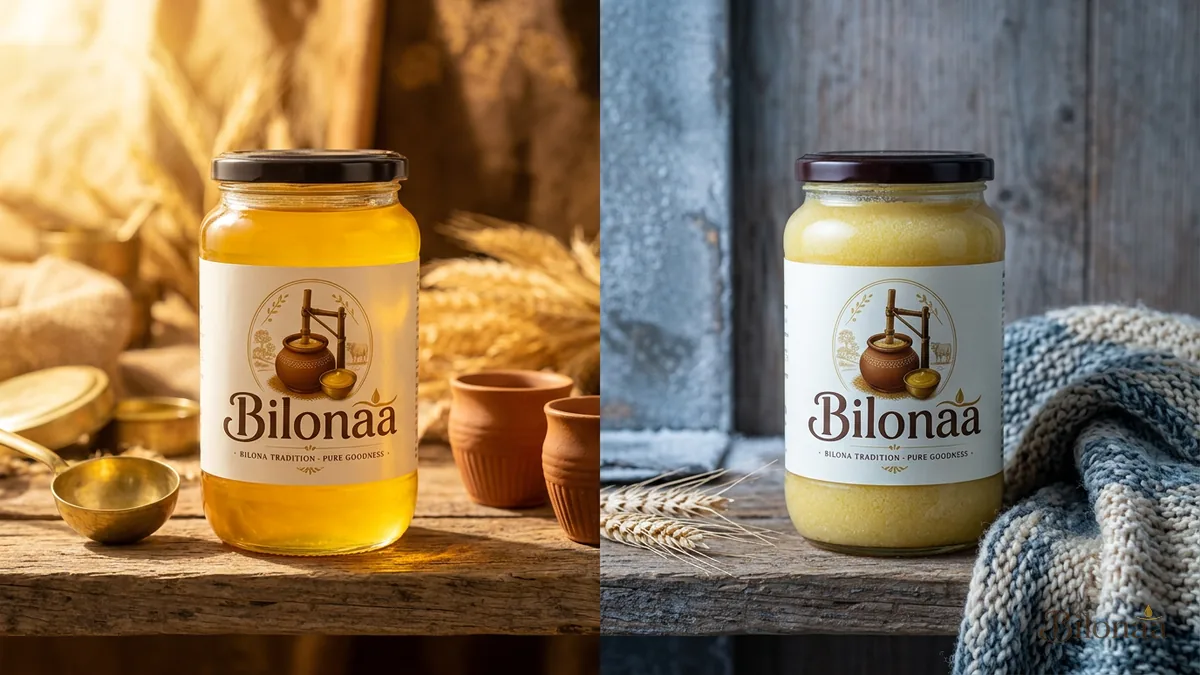
Pure ghee changes its physical texture naturally with every changing season in India. If you grew up in an Indian household, you probably remember dadi-nani keeping the ghee jar near the stove in winter and in a cool cupboard during peak May heat. One month it dips out smooth with a heavy spoon, and a few months later it pours like warm sunlight straight from the jar. Many people panic when their jar of ghee turns into complete liquid during June or sets rock hard in January. They worry if the jar has gone bad or if someone mixed bad oils into it. The truth is exactly the opposite: pure cow ghee has a low melting point that directly reflects the temperature of your kitchen.
Understanding why ghee melts completely into liquid gold during hot summer months comes down to simple physics. Milk fat consists of complex fatty acids that begin softening around 30 degrees Celsius and melt completely between 32 and 35 degrees. In most parts of India, indoor kitchen temperatures during summer comfortably cross 38 or 40 degrees. When you buy authentic [A2 cow ghee](/a2-cow-ghee), the entire jar will naturally liquefy under this heat. You might see fine grain particles settling at the bottom while clear yellow oil sits on top. This separation is entirely natural and happens because different fat crystals melt at slightly different temperatures inside the jar.
Winter cold turns authentic butterfat into a rich daanedaar solid texture that looks almost like tiny golden beads. As ambient kitchen temperatures drop below 20 degrees Celsius, the saturated fatty acid molecules in ghee slowly pull together and solidify. The slow cooling process allows distinct fat crystals to form, creating that prized semi-solid, granular consistency every Indian kitchen loves. When you scoop winter ghee onto warm parathas or a bowl of hot dal, it melts instantly upon contact with heat, releasing a deep nutty aroma. This natural hardening in cold weather proves that no artificial liquid emulsifiers were added to keep the fat artificially flowing.
Liquid ghee in summer is a natural behavior and not a sign of spoilage or adulteration. A lot of modern buyers are used to processed vegetable oils that remain thin liquids all year round regardless of weather. Because of this, seeing a jar turn entirely clear and runny during July leads to unnecessary worry about milawat. However, true butterfat from desi cows is deeply temperature sensitive. As long as your ghee smells sweet and nutty without any sour or rancid odor, liquid summer ghee is completely safe and healthy to eat. It retains all its nourishing fat-soluble nutrients whether it is liquid, soft, or solid.
Ayurveda views ghee through Ritucharya or seasonal dietary rhythms throughout the twelve months of the year. Ancient texts explain that human digestion changes with external weather, requiring us to adjust how much heavy fat we eat. During summer or Sharad ritu, when Pitta dosha naturally rises in the body, Ayurveda suggests using moderate amounts of pure ghee to cool internal heat and soothe the digestive tract. Using [bilona ghee](/bilona-ghee) made from indigenous cow milk helps maintain internal moisture when dry heat sucks energy from the body. It acts as a soothing lubricant for the gut without overloading your metabolic fire when appetite is naturally lower.
Adjusting your daily intake of ghee during peak summer and humid months keeps your meals light and digestible. When the sun is scorching outside, heavy and oily food can make you feel sluggish and dull. In hot weather, one to two teaspoons of raw ghee added over simple khichdi, steamed rice, or summer rotis is usually enough for a healthy adult. You can also mix a small spoonful of warm ghee with crushed mishri and milk as a traditional cooling evening drink. Avoid deep frying heavy dishes in large quantities of fat during May and June, keeping your daily tadka light and gentle on the stomach.
Increasing ghee consumption during cold winter months fuels body heat and keeps your digestion humming along strongly. Winter brings strong digestive fire, known in Ayurveda as Jatharagni, which allows the body to break down heavy, rich foods easily. Cold winds and dry outdoor air also dry out our skin, joints, and internal tissues. This is the traditional season for cooking rich pinnis, badam halwa, panjiri, and gajar ka halwa loaded with pure cow fat. A generous spoonful of ghee melted over bajra rotis, sarson saag, or mixed vegetable soups provides long-lasting energy and keeps your body comfortably warm from within.
Managing ghee texture transitions during the damp monsoon season requires extra attention to moisture control. High humidity levels during the rainy season do not harm the ghee fat itself, but airborne moisture can enter an open jar and cause premature spoiling. Water is the primary enemy of pure fat; even two drops of water from a wet spoon can trigger mold growth or sour odor inside the jar over time. Always practice strict kitchen hygiene during July and August by using a clean, completely dry wooden or steel spoon. Keep the lid sealed tight immediately after serving to protect the authentic flavor from damp kitchen air.
Storing pure ghee safely in Indian kitchens without needing refrigeration is surprisingly easy once you know the basic rules. Pure clarified butterfat has virtually all milk solids and water removed, which means it stays shelf-stable at room temperature for over a year. Putting your jar inside a refrigerator actually ruins the delicate texture, making it rock hard and trapping condensation inside when brought out. Store your ghee jar in a cool, dark kitchen cupboard away from direct sunlight and away from the hot gas stove kadhai area. A steady, shaded pantry spot keeps the fat stable through both sweltering heat and chilly downpours.
The intense heat of Bikaner summer reveals how real bilona ghee responds under extreme desert conditions. In Rajasthan, where summer temperatures regularly cross 45 degrees Celsius, kitchen pantries get remarkably warm. Under this intense heat, pure fat unmasks itself completely without any room for artificial hiding. Ghee made using the [traditional bilona method](/traditional-bilona-method) will separate cleanly into liquid top layers and rich granular sediment at the bottom. Bikaner grandmothers never worry about this liquid state; they simply give the jar a gentle shake or stir before drizzling it over hot churma, knowing that authentic fat always yields to desert sun.
Why vegetable fat additives and palm oil do not show this natural seasonal shift comes down to industrial processing. Commercial fake ghee or adulterated blends often contain palm oil, hydrogenated fats, or chemical emulsifiers designed to maintain a uniform texture regardless of room temperature. These artificial mixtures stay deceptively semi-solid during hot summers or refuse to form distinct natural grains in deep winter. When you notice your ghee staying unnaturally firm on a 40-degree July afternoon, that stiff texture is often a red flag for added paraffin or vegetable fats. Real fat responds dynamically to every drop or rise in room temperature.
Selecting the right container material preserves aroma and fresh taste through summer heat and winter cold. Glass jars are ideal for small to medium family sizes because high-grade glass is non-reactive, odorless, and completely impervious to ambient humidity. Plastic containers should be avoided entirely because warm liquid ghee in summer can leach chemicals from low-grade plastic and ruin the pure taste. For larger family stocks, traditional stainless steel dolchis work exceptionally well, protecting the fat from light and keeping it cool. Clean glass or steel containers ensure that seasonal melting and solidifying happen safely without absorbing off-flavors from the container.
Traditional cooking techniques adjust ghee usage based on hot and cold weather to maximize nutritional absorption. In winter months, traditional recipes call for browning spices like cumin, ginger, and garlic in hot ghee to generate internal body warmth and stimulate circulation. In summer cooking, ghee is best added raw at the very end of cooking, poured over hot rotis, steamed dal, or cooked vegetables rather than burnt at high temperatures. Adding raw ghee to warm food preserves delicate essential fatty acids and creates an easy-to-digest meal that nourishes the body without causing sluggish digestion during humid weather.
How the traditional bilona method creates fat structures that react naturally to temperature is a fascinating craft. Unlike industrial factory ghee made by separating cream with high-speed centrifuges and rapid heating, bilona ghee starts with fresh curd made from grass-fed cow milk. Reading [our story](/about) explains how hand-churning curd with a bi-directional wooden bilona creates whole-fat curd butter. Slow-cooking this cultured butter over gentle wood fires allows fat crystals to develop slowly and naturally. This traditional process yields complex fat chains that melt smoothly into liquid in summer and form magnificent, uniform daanedaar grains when winter arrives.
Choosing authentic small-batch ghee from Bilonaa brings traditional Bikaner quality into your daily family kitchen. Prepared in Bikaner, Rajasthan under strict FSSAI standards, Bilonaa crafts pure A2 desi-cow bilona ghee from Rathi, Tharparkar, Gir, and Sahiwal cows. Slow-cooked over traditional wood fires and churned with wooden bilonas, every batch delivers the rich aroma and natural seasonal texture changes of true asli ghee. Packed safely in 500 ml, 1 ltr, and 2 ltr glass jars or traditional 5 ltr steel dolchis, it stays pure without preservatives. You can [shop Bilonaa ghee](/shop) to taste real, unadulterated butterfat made the age-old way.
Embracing the seasonal nature of pure ghee helps you enjoy its full culinary and health benefits all year long. Instead of fearing a liquid jar in summer or a firm jar in winter, see these changes as natural proof of authentic quality. By adjusting your daily intake with the seasons and following basic storage practices, you ensure your family gets the best nutrition every single day. If you have more questions about handling ghee during heavy monsoons or winter crystallization, visit our detailed [FAQs](/faq) page for expert guidance. Pure ghee is a living food that connects your kitchen directly to nature's changing cycles.
"When your ghee turns liquid in summer or sets solid in winter, nature is giving you proof of purity, not spoilage."
Bilonaa Promise
Small-batch, A2 desi-cow, traditional bilona ghee — straight to your kitchen.
100% pure, hand-churned, slow-cooked on a wood fire and packed in glass jars.
FAQs
Quick answers
Why did my ghee turn completely liquid during summer?
Pure ghee melts completely between 32°C and 35°C. Since ambient room temperatures in Indian summers easily cross 35°C, pure butterfat naturally converts into clear liquid gold. This is a clear sign of purity, not spoilage. Simply stir it gently or place it in a cool spot if you prefer a thicker consistency.
Is solid, grainy ghee in winter a sign of added palm oil?
No, it is actually the opposite. Pure A2 cow ghee naturally hardens and forms fine granules (daana) when kitchen temperatures drop below 20°C in winter. Saturated fatty acids crystallize slowly into small grains. Fake or adulterated ghee made with palm oil or emulsifiers often fails to form these distinct natural fat crystals in cold weather.
Should I store ghee in the fridge during hot summer months?
Refrigeration is not required or recommended for pure bilona ghee. Keeping ghee in the fridge hardens it unnaturally and introduces moisture condensation whenever the jar is opened at room temperature. Moisture causes ghee to spoil or turn rancid. Storing your jar in a dry, dark kitchen cupboard away from direct sunlight is completely sufficient.
How much ghee should an adult consume daily in summer versus winter?
Ayurveda suggests adjusting quantity with the seasons. During hot summer months, 1 to 2 teaspoons daily added to warm rotis or dal is sufficient, as digestion is naturally lighter. In cold winter months, when metabolic fire (Jatharagni) is stronger, 2 to 3 teaspoons daily helps maintain body heat, skin hydration, and joint mobility.
How do I prevent ghee from spoiling during humid monsoon months?
Monsoon humidity introduces airborne moisture that can spoil pure fats. To safeguard your ghee, always use a completely dry, clean steel or wooden spoon. Never dip wet fingers or wet cutlery into the jar, and ensure the lid is screwed back tightly after every single use to block moisture ingress.
Why does liquid summer ghee have a layer of grains at the bottom?
Cow ghee contains various fatty acids, each with a slightly different melting point. In mild summer heat, lower-melting-point fats turn liquid top oil, while higher-melting-point fats remain as solid granules at the bottom. Giving your jar a gentle stir blends these natural crystalline layers back together smoothly.
Does temperature change affect the nutrition or shelf life of pure ghee?
No, natural melting in summer and solidifying in winter does not alter the nutritional profile, essential fatty acids, or shelf life of pure clarified butter. As long as the ghee is kept free from water contamination and direct sunlight, its quality and taste remain pristine for up to 12 to 18 months.
Educational content only — please consult a doctor for medical conditions.
Get gentle ghee notes in your inbox
One thoughtful Ayurveda + kitchen note a week. No spam. Unsubscribe anytime.
Conversation(0)
Share a thought — every comment is read before it appears.