Buyer Guide
Ghee Smoke Point: Is A2 Ghee Good for High-Heat Cooking?
On this page
- Understanding the Ghee Smoke Point is crucial for anyone kee
- Deciphering What A2 Ghee Actually Means involves understandi
- The Traditional Bilona Method significantly impacts ghee's f
- Comparing Ghee to Other Common Cooking Oils reveals its supe
- Exploring the Science Behind Ghee's High Smoke Point unveils
- Ayurveda's Perspective on Ghee as a Cooking Medium has alway
- Utilizing A2 Ghee for High-Heat Cooking opens up a world of
- Understanding How Frying with Ghee differs from other oils i
Understanding the Ghee Smoke Point is crucial for anyone keen on healthy cooking, as it defines the temperature at which a fat begins to break down, burn, and produce harmful free radicals and a bitter taste. For culinary fats, this point is a critical indicator of their stability and suitability for different cooking methods, such as sautéing, frying, or baking. A higher smoke point suggests greater heat stability, allowing the fat to maintain its nutritional integrity and flavor profile even under intense heat, which is a key consideration for health-conscious individuals and professional chefs alike.
Deciphering What A2 Ghee Actually Means involves understanding its origin from specific cow breeds and traditional processing methods. A2 ghee is derived from the milk of indigenous Indian cows, often referred to as 'Desi' cows, which predominantly produce the A2 beta-casein protein, believed by many to be more digestible than the A1 protein found in milk from many Western breeds. The 'bilona' method refers to the ancient, hand-churned technique of making ghee, where curd (dahi) is churned to butter, and then slowly heated to produce ghee, preserving its unique nutritional profile and aroma, distinguishing it significantly from industrially produced ghee.
The Traditional Bilona Method significantly impacts ghee's final composition and smoke point by preserving delicate compounds that contribute to its stability. Unlike modern industrial methods that extract butter directly from cream using high-speed machines, the bilona process involves a slower, more artisanal approach. This careful, low-heat preparation ensures that more of the milk solids are separated meticulously, resulting in a purer, more clarified fat. This meticulous process helps create a ghee with fewer impurities, which are often the first components to burn, thus inherently boosting the ghee's heat resistance.
Comparing Ghee to Other Common Cooking Oils reveals its superior heat stability, due to its low moisture content and lack of milk solids, which are typically found in butter. While butter's smoke point is relatively low (around 302°F or 150°C), making it unsuitable for high-heat cooking, ghee, essentially clarified butter, boasts a much higher smoke point, typically ranging from 450°F to 485°F (232°C to 252°C). This significantly elevates ghee above popular oils like extra virgin olive oil (375°F/190°C) and even coconut oil (350°F/175°C) for applications requiring intense heat.
Exploring the Science Behind Ghee's High Smoke Point unveils its unique fat composition, primarily comprising saturated fats, which are highly stable under heat. Unlike polyunsaturated fats that have multiple double bonds, making them prone to oxidation at high temperatures, saturated fats possess single bonds, rendering them less reactive to heat. Furthermore, the meticulous clarification process removes water and milk solids (proteins and sugars), which are the primary culprits responsible for lowering the smoke point and promoting burning. This purification enhances ghee’s thermal stability, making it ideal for robust cooking.
Ayurveda's Perspective on Ghee as a Cooking Medium has always highlighted its exceptional virtues, considering it a foundational element for health and longevity, especially for cooking. Ancient Ayurvedic texts extol ghee as 'ghrita,' a sattvic (pure) food that balances all three doshas – Vata, Pitta, and Kapha. It is traditionally believed to enhance 'Agni' (digestive fire), improve assimilation of nutrients, and nourish the body's tissues (dhatus). Its high smoke point aligns perfectly with Ayurvedic cooking principles that often involve sautéing or light frying to prepare medicinal and highly digestible foods, without compromising the food's essence or nutritional value.
Utilizing A2 Ghee for High-Heat Cooking opens up a world of culinary possibilities, from traditional Indian dishes to international cuisines, ensuring flavor and health are never compromised. Its high smoke point makes it perfectly suited for deep frying Indian sweets like jalebi or pakoras, stir-frying vibrant vegetables, and searing meats to perfection بدون burning or producing acrid fumes. Even for baking, where consistent high heat is required, A2 ghee provides a rich, nutty flavor and a desirable texture to breads, cookies, and other baked goods, proving its versatility beyond just pan-frying.
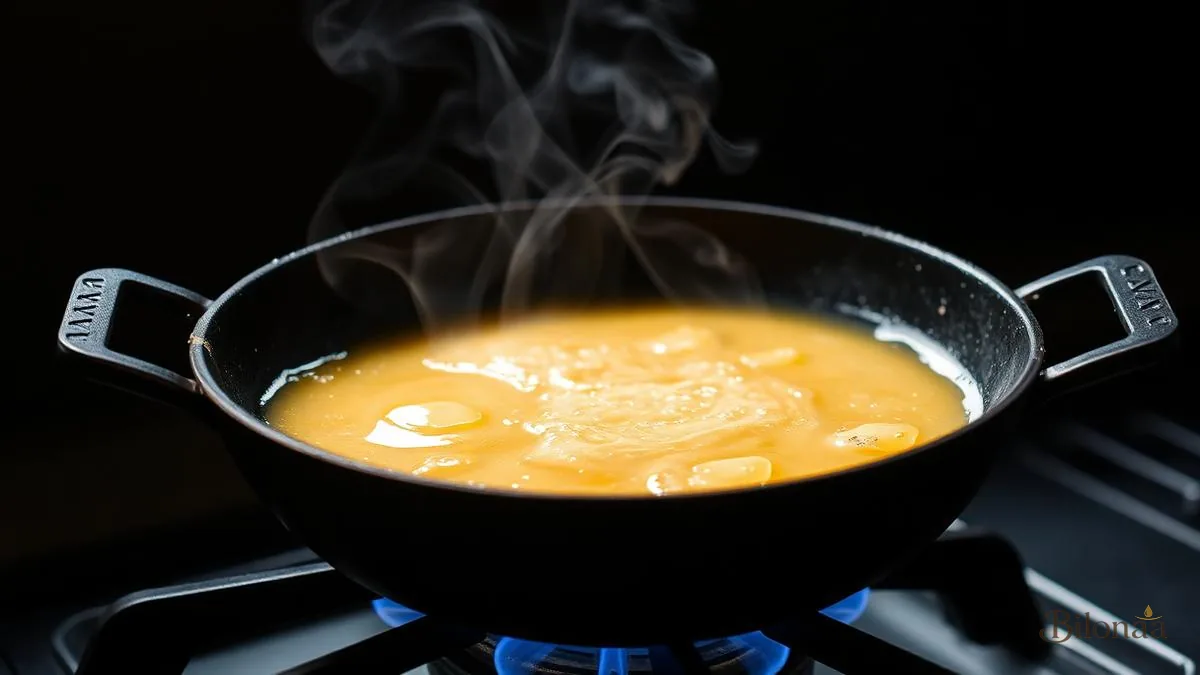
Understanding How Frying with Ghee differs from other oils involves appreciating its nuanced contribution to flavor and texture. When you fry with ghee, it imparts a distinct, rich, slightly nutty aroma and a golden crispness to foods that other oils cannot replicate. Because the milk solids are removed, it doesn't brown as quickly as butter, allowing for even cooking and a beautiful caramelization on food surfaces without the risk of burning. This makes it an ideal medium for preparing dishes where both uniform cooking and a superior flavor profile are paramount, enhancing dishes from dosas to sautéed greens.
Bilonaa Ghee, sourced from the revered Bikaner region of Rajasthan, exemplifies the pinnacle of pure A2 desi-cow bilona ghee, ensuring a stellar smoke point and unparalleled quality. Our commitment to the traditional bilona process means the ghee is made from curd, hand-churned, and slow-cooked to perfection, removing all moisture and milk solids. This artisanal approach not only preserves the vital nutrients and rich aroma but also guarantees an exceptionally high smoke point, making our ghee a perfectly stable and healthy choice for all your high-heat culinary adventures.
Dispelling Common Myths about Ghee's Suitability involves addressing misconceptions, especially those concerning its fat content and cooking versatility. One prevalent myth suggests that ghee is unhealthy due to its high saturated fat content, however, studies indicate that these unique short-chain fatty acids are metabolized differently, providing quick energy and supporting gut health. Another myth is that ghee burns easily; on the contrary, its high smoke point makes it one of the most stable fats for high-temperature cooking, unlike butter. It's untrue that ghee only tastes good in Indian food; its subtle, rich flavor enhances a vast array of global dishes.
Identifying Factors Influencing Ghee's Smoke Point helps consumers make informed choices about quality and usage. The purity of ghee plays a paramount role; contaminants or residual milk solids can significantly lower the smoke point. The clarity and color are good indicators: a clear, golden liquid suggests minimal impurities. Production method is also key; traditionally churned bilona ghee, which thoroughly separates milk solids and water, generally boasts a higher smoke point than ghee produced by industrial processes. The cow's diet and breed (A2 desi cows) further contribute to the overall quality and stability of the fat.
Making the Right Choice: A2 Desi Ghee vs. Regular Ghee boils down to purity, digestibility, and nutritional value. Regular ghee, often made from A1 milk and industrial processes, might contain more impurities and lack the traditional richness. A2 desi ghee, however, comes from native Indian cows (A2 milk) and is made using the laborious bilona method, ensuring a product that is not only traditionally believed to be easier to digest but also nutritionally superior. This translates to a more stable fat with a higher smoke point, offering a healthier and more flavorful cooking experience, especially for high-heat applications.
Proper Storage of Ghee to Maintain Its Smoke Point is straightforward but crucial for long-term freshness and stability. Ghee is remarkably shelf-stable due to its low moisture content; it doesn't require refrigeration and can be stored in a cool, dark place away from direct sunlight and strong odors. Always ensure it's kept in an airtight container to prevent oxidation and absorption of external smells, which can degrade its quality and potentially lower its smoke point over time. If stored correctly, ghee can last for many months, sometimes even a year, without losing its beneficial properties.
Recognizing the Health Benefits of Cooking with Ghee beyond its smoke point reveals a wholesome profile deeply valued in traditional medicine. Ghee is rich in fat-soluble vitamins (A, D, E, and K), essential for various bodily functions including immunity and bone health. It contains butyrate, a short-chain fatty acid beneficial for gut health and reducing inflammation, and conjugated linoleic acid (CLA), linked to aiding weight management and cardiovascular health. Its easily digestible nature means nutrients are efficiently absorbed, making it a powerful addition to a balanced diet, far surpassing a mere cooking fat.
Ensuring Authenticity: What to Look for When Buying A2 Ghee involves careful scrutiny of labels and understanding sourcing practices. Prioritize brands that explicitly state 'A2 Desi Cow Ghee' and clearly outline their production method, preferably 'bilona' or 'hand-churned.' Look for certifications from reputable food safety organizations if available. Understand the source of the milk – indigenous Indian breeds are key. A genuinely pure ghee will typically have a grainy texture and a distinct, rich aroma. Beware of products that are excessively cheap or have vague descriptions, as these might indicate adulteration or inferior processing.
Incorporating Ghee into Your Daily Diet is easy and delicious, extending beyond just high-heat cooking. A spoonful of ghee can be stirred into hot rice, dal, or porridge, enhancing flavor and nutritional value. It makes a wonderful spread for parathas or toast, offering a healthier alternative to butter or margarine. In traditional Indian households, it's often drizzled over cooked vegetables or used in tempering (tadka) for curries, adding a layer of rich aroma and providing essential fats. Its versatility means it can become a staple in almost any meal.
Considerations for Specific Dietary Needs when using ghee are important, though ghee's naturally low lactose and casein content generally make it suitable for many with dairy sensitivities. Since the clarification process removes most milk solids, individuals with lactose intolerance or mild dairy allergies often find ghee perfectly tolerable. However, those with severe dairy allergies should exercise caution or consult a healthcare professional. Although healthy, it is a calorie-dense fat, so moderation is key for those managing caloric intake or with specific dietary restrictions related to fat consumption, like always consult with your doctor.
Looking to the Future of Healthy Fats, A2 bilona ghee stands out as an enduring choice, bridging ancient wisdom with modern dietary needs. As more people seek out natural, minimally processed foods, ghee’s reputation as a stable, nutrient-rich cooking fat continues to grow. Its unique blend of flavor, high smoke point, and array of health benefits ensures its place not only in traditional kitchens but also within contemporary healthy eating paradigms. The emphasis on ethical sourcing and traditional preparation, like Bilonaa's commitment, further underscores its rising prominence in the health and wellness sphere for years to come.
Embracing A2 bilona ghee in your kitchen is not just about healthy cooking, but also about connecting with a rich culinary heritage, improving digestive wellness, and enjoying the pure, authentic flavors that only this golden elixir can provide. Its exceptional smoke point guarantees culinary success even at high temperatures, while its profound health benefits contribute to overall well-being. By choosing authentic, traditionally made ghee, you’re not just picking a cooking fat; you’re investing in a lifestyle that values purity, taste, and tradition, much like our offerings at Bilonaa.
"The unique composition of pure, traditional A2 bilona ghee grants it an impressive smoke point, making it a superior choice for various culinary applications, even at high temperatures."
Bilonaa Promise
Small-batch, A2 desi-cow, traditional bilona ghee — straight to your kitchen.
100% pure, hand-churned, slow-cooked on a wood fire and packed in glass jars.
FAQs
Quick answers
What is the smoke point of A2 ghee?
Pure A2 ghee typically has a high smoke point, ranging from 450°F to 485°F (232°C to 252°C). This makes it one of the most stable cooking fats for high-heat methods like frying, sautéing, and baking without breaking down or producing harmful compounds.
Is A2 ghee better for frying than other oils?
Yes, A2 ghee is often considered superior for frying due to its high smoke point and stable saturated fat profile. It resists oxidation better than many vegetable oils and imparts a rich, nutty flavor, enhancing the taste of fried foods without burning.
How does the bilona method affect ghee's smoke point?
The traditional bilona method, by meticulously removing all milk solids and moisture through slow-churning and heating, results in a purer, more clarified fat. This increased purity directly contributes to a higher smoke point, making bilona ghee exceptionally stable under heat.
Can I use ghee for deep frying?
Absolutely! Ghee's high smoke point makes it an excellent choice for deep frying. It maintains stability at high temperatures, ensuring that the food cooks evenly and develops a beautiful, crisp texture without absorbing excessive oil or developing off-flavors.
Does A2 ghee have health benefits for cooking?
Beyond its high smoke point, A2 ghee offers numerous health benefits. It's rich in fat-soluble vitamins (A, D, E, K), vital for immunity and bone health. It contains butyrate for gut health and CLA, traditionally believed to aid metabolism, making it a nourishing cooking medium.
How can I ensure the A2 ghee I buy has a high smoke point?
To ensure a high smoke point, look for A2 ghee specifically marketed as 'bilona' or 'desi cow ghee,' indicating traditional preparation and pure ingredients. A clear, golden color and grainy texture at room temperature are also good indicators of high quality and purity, like Bilonaa's guarantee.
Educational content only — please consult a doctor for medical conditions.
Get gentle ghee notes in your inbox
One thoughtful Ayurveda + kitchen note a week. No spam. Unsubscribe anytime.
Conversation(0)
Share a thought — every comment is read before it appears.