Buyer Guide
Glass, Weight and Distance: What a Lower-Carbon Ghee Supply Chain Would Take
On this page
- Evaluating the environmental footprint of food packaging req
- Glass container production is inherently energy-intensive du
- The substantial weight of glass introduces a noticeable carb
- Comparing primary packaging materials for edible fats reveal
- High-density polyethylene and other plastics drastically low
- Tinplate containers offer a lightweight metallic alternative
- Integrating recycled cullet into glass manufacturing dramati
- Waste recovery in India relies heavily on informal systems,
Evaluating the environmental footprint of food packaging requires looking beyond the retail shelf to the entire material lifecycle. From raw material extraction and furnace processing to transit logistics and end-of-life disposal, every packaging choice carries distinct resource demands. For delicate pantry staples like clarified butter, selection usually centers on stability and food safety. However, applying lifecycle thinking reveals that packaging decisions are rarely simple binary choices between good and bad materials. Instead, brands and consumers navigate a complex balance of heat energy, shipping mass, stability, and regional waste management infrastructure.
Glass container production is inherently energy-intensive due to the high temperatures needed to melt raw silica sand, soda ash, and limestone. Industrial glass furnaces must reach operating temperatures of roughly 1,500 degrees Celsius, requiring continuous combustion of natural gas or heavy fuel oil. This thermal processing generates primary carbon dioxide emissions both from burning fossil fuels and from the chemical carbonate reaction during raw material melting. Because these high-heat requirements cannot be easily electrified with current technology, the upfront carbon footprint of virgin glass remains high per unit of finished weight compared to lightweight polymers or thin-gauge aluminum.
The substantial weight of glass introduces a noticeable carbon penalty during long-distance road and rail transport. Glass jars weigh significantly more than plastic tubs or foil-laminated pouches of equivalent volume, which increases the gross payload mass of delivery vehicles. When freight moves across broad geographical regions—such as shipments traveling from rural processing centers in Rajasthan to coastal urban hubs—the fuel required to move that extra packaging weight accumulates linearly. Higher diesel consumption directly translates into elevated greenhouse gas emissions for every kilometer traversed during distribution.
Comparing primary packaging materials for edible fats reveals clear trade-offs between weight, chemical reactivity, and recycling infrastructure. While no single option completely eliminates environmental impact, understanding these comparative properties helps contextualize why specific materials are chosen for traditional foods. | Packaging Material | Manufacturing Energy | Transport Weight | Chemical Inertness | Recycling Infrastructure in India | | :--- | :--- | :--- | :--- | :--- | | Glass Jars | High (Thermal) | Heavy | Exceptionally High | Moderate to High (Informal networks) | | HDPE / PET Plastic | Low to Moderate | Very Light | Low to Moderate (Leaching risks) | High (PET), Low (Multi-layer) | | Tinplate Steel | Moderate | Light | Moderate (Requires inner coating) | High (Scrap metal markets) | | Stainless Steel (Dolchi) | High (Upfront) | Heavy (Durable) | Very High | High (Long-term reuse) |
High-density polyethylene and other plastics drastically lower transit weight but introduce potential chemical migration and persistent waste concerns. Polymer containers require significantly lower melting temperatures during manufacturing, resulting in a lower initial embodied carbon footprint per container. Their lightweight nature also optimizes transport fuel efficiency across express delivery networks. However, fats like clarified butter interact differently with polymers over extended storage periods. Micro-plastic leaching, phthalate migration, and gas permeability make plastic less ideal for long-term lipid stability, creating a fundamental tension between transit fuel efficiency and food purity.
Tinplate containers offer a lightweight metallic alternative that shields lipids from light while maintaining high recycling rates. Steel coated with a thin layer of tin provides structural rigidity without the heavy tare weight of thick glass. Furthermore, tinplate is fully opaque, protecting light-sensitive fats from photo-oxidation. Scrap metal markets in India actively recover tin and steel, supporting high end-of-life recycling rates. However, tin containers often require internal lacquers or synthetic linings to prevent oxidation at the seams, introducing potential chemical contact points that some traditional purists prefer to avoid.
Integrating recycled cullet into glass manufacturing dramatically reduces the energy demands of high-heat furnaces. Cullet—crushed waste glass—melts at significantly lower temperatures than virgin raw materials. For every ten percent of cullet added to a glass furnace formulation, energy consumption drops by approximately two to three percent, which correspondingly decreases furnace carbon emissions. Increasing the proportion of recycled content in jar production represents one of the most direct mechanisms for lowering the upfront embodied carbon of glass packaging, provided local collection systems can supply clean, sorted material.
Waste recovery in India relies heavily on informal systems, resulting in variable recycling efficiency across urban and rural zones. Waste pickers and local scrap dealers, known as kabadiwalas, aggregate glass, metal, and plastic from households and commercial districts. While dense urban centers often maintain robust scrap collection channels for heavy glass jars, smaller municipalities and rural regions may lack efficient aggregation. Intact glass jars frequently find domestic reuse, but broken or contaminated glass often ends up in municipal landfills where its high weight adds to solid waste bulk without decomposing.
Closed-loop refillable container systems offer substantial carbon savings in theory, though local washing logistics present practical hurdles. In a true circular model, glass containers are collected after use, sanitized at industrial temperatures, and refilled multiple times before recycling. While this model eliminates repeated manufacturing emissions, it introduces a secondary supply chain requirement. Reverse logistics, pressurized hot water washing, chemical detergents, and regional collection depots require substantial water and thermal energy inputs. Unless a brand operates within a concentrated urban radius, the emissions from shipping empty jars back to a central facility can offset the theoretical carbon savings of reuse.
Traditional storage vessels like unglazed earthen pots provided low-carbon local solutions, though long-distance transport poses physical limits. Historically, rural kitchens stored clarified fats in clay vessels that maintained stable internal temperatures through natural thermal inertia. As discussed in our analysis of [clay matka ghee storage](/blog/clay-matka-ghee-storage), porous earthen pots perform well for immediate local consumption. However, their fragility, porous structure, and weight make them unsuitable for sealed commercial transit across modern freight networks without extensive secondary protective packaging.
Express courier services for direct-to-consumer delivery generate significantly higher carbon emissions per package than bulk freight distribution. When an individual jar is shipped via express air or light commercial vehicle transport, the carbon footprint per unit increases dramatically compared to palletized truck transport sent to regional distributors. Individual parcel fulfillment also requires extra protective secondary packaging—such as corrugated paper, bubble wrap, or molded pulp inserts—to prevent glass breakage during sorting and last-mile transit, adding to the total material footprint of the delivery.
Current lifecycle assessment data for packaging materials remains mixed and highly sensitive to regional energy grids and transit distances. Environmental researchers consistently note that no single packaging material achieves the lowest carbon score across all operational contexts. Studies evaluating European or North American supply chains often yield different results than studies set in South Asia due to variations in grid electricity carbon intensity, freight vehicle efficiency, and municipal waste sorting protocols. Consequently, claiming that any specific packaging material is definitively more sustainable requires narrow, context-specific boundary assumptions that may not hold true across diverse shipping routes.
Constructing a transparent direct-to-consumer model requires candid communication about the environmental realities of logistics. Many brands use terms like eco-friendly or carbon-neutral as marketing shorthand, masking the unavoidable carbon trade-offs involved in moving physical goods. As highlighted in our perspective on [d2c food trust transparency](/blog/d2c-food-trust-transparency), clear accounting means acknowledging where a business model creates environmental impact rather than projecting an idealized, zero-emission supply chain that does not exist under current industrial conditions.
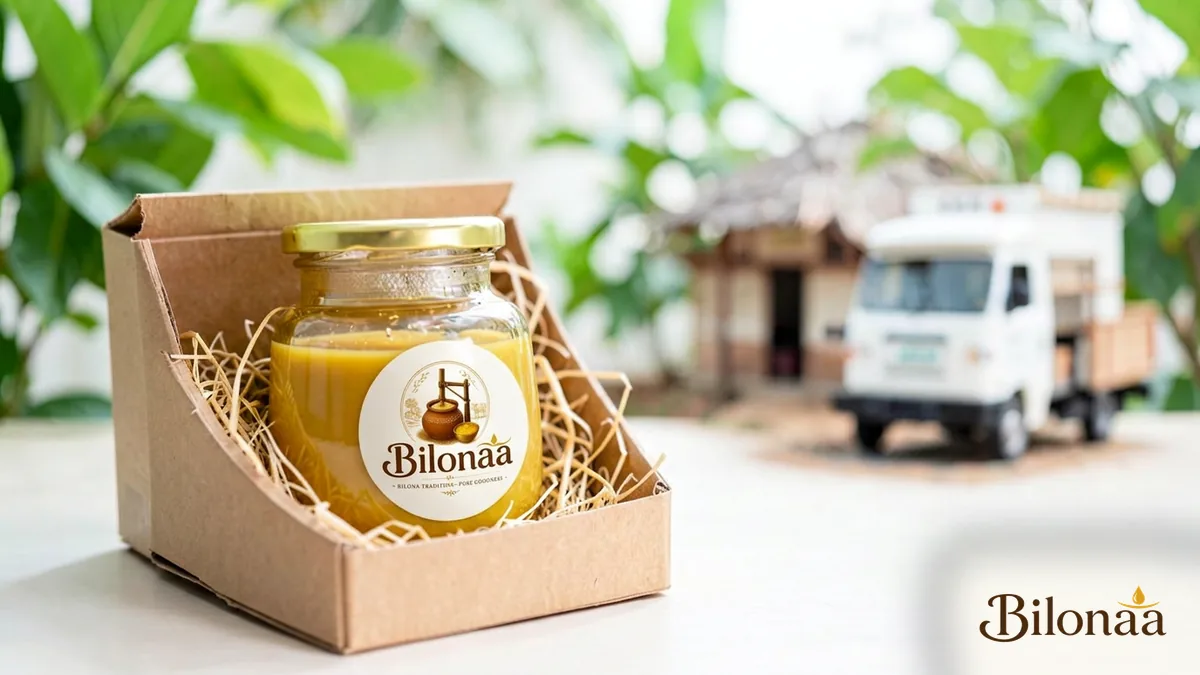
Bilonaa explicitly makes no claims of carbon-neutral shipping and holds no formal third-party emissions certifications. The brand processes traditional clarified butter in Bikaner, Rajasthan (FSSAI 22226025000262), and ships glass-packaged products across India using standard logistics networks. While glass jars are selected to ensure product integrity and chemical safety, the brand does not pretend that heavy glass traveling over long transit distances is free from carbon emissions. Recognizing these physical limits is essential to maintaining honest communication with readers and customers.
The decision to use inert glass jars stems from a priority to preserve the chemical purity of [a2 cow ghee](/a2-cow-ghee) without synthetic liners. Clarified fat prepared from indigenous cow breeds like Rathi, Tharparkar, Gir, and Sahiwal contains complex fatty acids that can absorb volatile compounds from synthetic container linings over time. Glass provides an absolute barrier against moisture, oxygen, and leaching, ensuring that the taste, aroma, and lipid structure remain uncompromised throughout its shelf life without relying on chemical preservatives.
Slow-cooked fats prepared using the [traditional bilona method](/traditional-bilona-method) require stable ambient storage conditions to prevent oxidation. Churning cultured curd with wooden churners and heating the resulting butter over open wood fires creates a distinct granular fat structure. Exposing this delicately crafted fat to light or air accelerates lipid peroxidation, leading to off-flavors. While heavy glass jars increase transport mass, their total barrier protection safeguards the time-intensive labor invested during rural small-batch production.
Extending the functional lifespan of glass jars and steel containers through domestic reuse helps offset their initial manufacturing impact. When households clean and repurpose glass jars for storing spices, lentils, or preserves, they displace the need for purchasing new single-use containers. For larger household quantities, multi-liter stainless steel containers—such as a 5-liter steel dolchi—offer an exceptionally long operational lifespan. Readers interested in practical household container options can explore our range when they [shop Bilonaa ghee](/shop) in various functional sizes.
Considering the full lifecycle of traditional foods encourages a balanced view of material safety, product longevity, and transport footprint. Choosing glass packaging represents a conscious choice to prioritize food purity and end-of-life recyclability despite the clear trade-offs in shipping weight and manufacturing heat. By understanding these supply chain dynamics, conscious consumers can make informed choices about how their food is crafted, contained, and delivered. We invite you to learn more about our process and explore our traditional [bilona ghee](/bilona-ghee) packaged thoughtfully for your kitchen.
"Glass offers unmatched chemical purity for fat storage, yet its manufacturing energy and freight weight require an honest assessment of supply chain trade-offs."
Bilonaa Promise
Small-batch, A2 desi-cow, traditional bilona ghee — straight to your kitchen.
100% pure, hand-churned, slow-cooked on a wood fire and packed in glass jars.
FAQs
Quick answers
Why is glass heavier to ship than plastic or tin containers?
Glass requires structural wall thickness to withstand mechanical shock during transport, making it significantly heavier than thin-walled plastic or tinplate. This extra weight increases gross freight mass, consuming more fuel per unit shipped over long distances.
Does glass packaging guarantee a lower overall carbon footprint than plastic?
Not necessarily. While glass is highly recyclable and chemically inert, its high manufacturing heat requirements and transport weight give it a higher initial carbon footprint than lightweight plastic. The overall impact depends on transport distance and local recycling efficiency.
Does Bilonaa offer carbon-neutral delivery?
No. Bilonaa explicitly makes no claims of carbon-neutral shipping and holds no third-party carbon offset certifications. Courier delivery relies on standard road and air transport, which inevitably generates carbon emissions.
How does glass preserve ghee quality compared to plastic?
Glass is non-porous and chemically inert, meaning it does not react with fats or leach synthetic chemicals over time. It creates a complete barrier against oxygen and moisture, protecting the flavor, aroma, and fatty acid profile of ghee without needing chemical liners.
Can glass jars be recycled effectively across India?
Yes, glass recycling operates across India largely through informal waste management networks, such as scrap collectors (kabadiwalas). Intact glass jars are also frequently reused in households for dry spice storage.
What is the benefit of buying ghee in larger sizes like steel dolchis?
Larger stainless steel containers, like a 5-liter steel dolchi, significantly reduce the packaging-to-product ratio. Stainless steel is extremely durable, virtually unbreakable during transport, and designed for decades of household reuse, minimizing long-term packaging waste.
Educational content only — please consult a doctor for medical conditions.
Get gentle ghee notes in your inbox
One thoughtful Ayurveda + kitchen note a week. No spam. Unsubscribe anytime.
Conversation(0)
Share a thought — every comment is read before it appears.