
Cow Breeds
Grass Fed Ghee in India: What Free Grazing Actually Changes
On this page
- Understanding what true grass fed ghee means in the Indian a
- Open pasture grazing has been the backbone of Indian dairy h
- The diet of a cow directly dictates the subtle chemical comp
- Turning grass-fed milk into authentic ghee requires the time
- Slow simmering over an open wood fire brings out the classic
- Modern scientific analysis highlights a clear difference in
- Fat-soluble vitamins accumulate naturally in the butterfat o
- Ayurveda places immense emphasis on the diet, environment, a
Understanding what true grass fed ghee means in the Indian agricultural context requires looking beyond imported marketing terms. In western dairy farming, grass fed often refers to cows turned out onto lush green pastures for a few months a year between grain-feeding cycles. In traditional Indian animal husbandry, however, free grazing was simply the normal way to raise indigenous cattle. Native breeds like Rathi, Tharparkar, Gir, and Sahiwal walked miles every day through open scrublands, forest edges, and fallow fields. They fed on wild herbs, native grasses, dry shrubs, and fallen pods rather than uniform commercial feed pellets. When milk comes from cows living this unhurried life, the ghee derived from it carries a distinctly complex aroma, a deeper natural color, and a texture that industrial processing can never replicate.
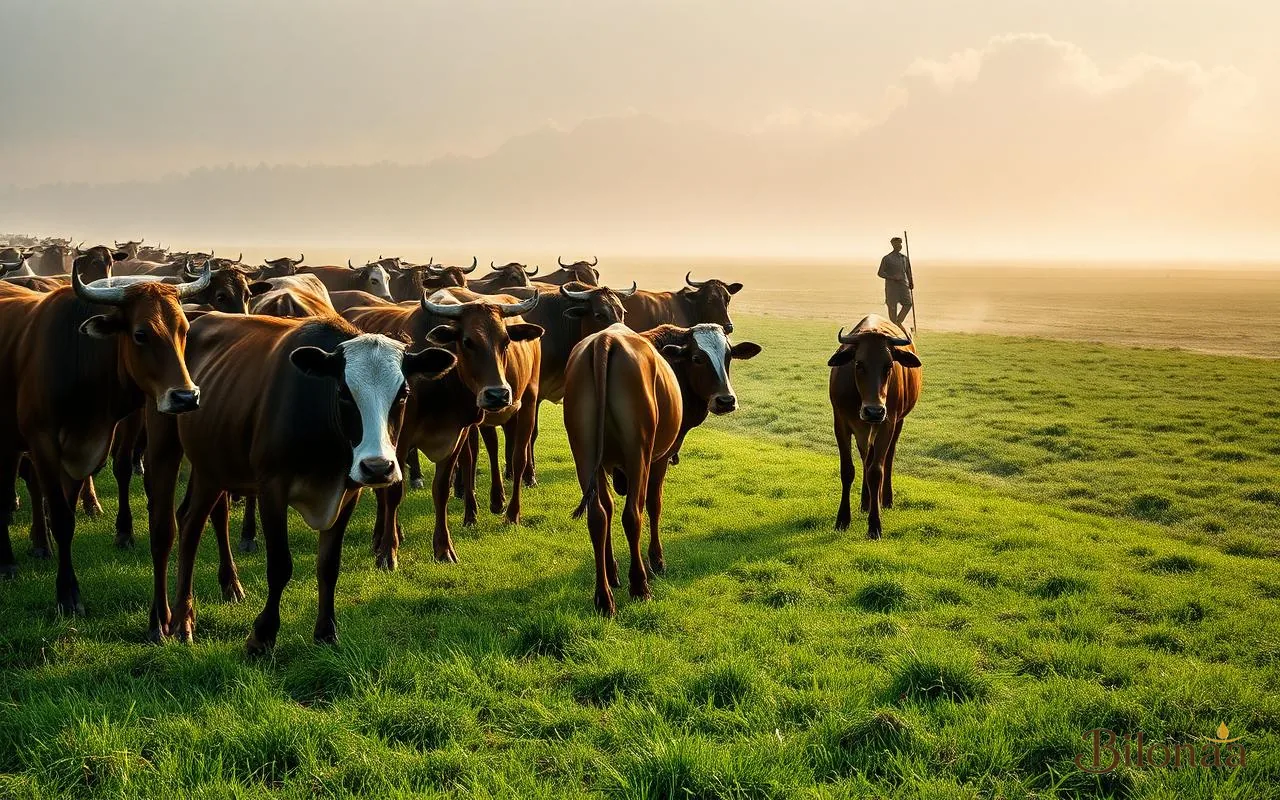
Open pasture grazing has been the backbone of Indian dairy husbandry for thousands of years before factory farming arrived. In regions like Bikaner in Rajasthan, pastoral communities understood that keeping cows active and foraging across arid pasturelands maintained herd health without modern synthetic supplements. The old elders always insisted that a cow walking under the open sun produces milk that is lighter on the stomach and richer in character. Dadi-nani stories often reminded us that milk gathered after the monsoon rains had a sweet fragrance because cows were eating young seasonal sprouts. This seasonal grazing cycle created a rhythm where every batch of butter and ghee naturally reflected the land and weather of that specific month.
The diet of a cow directly dictates the subtle chemical composition and physical traits of her milk fat. When cattle are confined to stalls and fed high-protein maize, soy concentrates, and brewery waste, their milk fat becomes uniform, heavy, and pale. Conversely, when cows roam freely and graze on varied vegetation, they ingest natural carotenoids, trace minerals, and diverse plant compounds. These organic molecules pass straight into the milk fat globules, giving raw butter a rich hue and a deeply complex fatty acid profile. The natural beta-carotene from green plants is what gives pasture-based cow ghee its characteristic soft yellow warmth without any added colors or chemicals.
Turning grass-fed milk into authentic ghee requires the time-tested wooden bilona churning method rather than quick cream separators. Industrial plants strip cream from raw milk using high-speed centrifuges and boil it directly, leaving behind milk solids and creating a greasy oil. The traditional method begins by boiling whole A2 milk, setting it into curd overnight, and then slowly churning that curd clockwise and counter-clockwise with a wooden bilona. This gentle hand-churning separates the makkhan while keeping the fat structure intact and allowing subtle fermented sour-aromatic notes to develop. The cultured butter is then gathered by hand, washed in cold water, and prepared for slow simmering.
Slow simmering over an open wood fire brings out the classic daanedaar texture and deep nuttiness that define true Indian ghee. When the fermented butter sits in a heavy iron kadhai over a gentle chulha flame, the water slowly evaporates while the milk solids brown lightly at the bottom. This patience is essential because rushing the temperature scorches the fat and ruins the delicate aromatic compounds derived from pasture grazing. A skilled maker knows the exact moment to pull the kadhai off the fire—when the foam settles, the aroma fills the room, and the liquid turns a clear golden color. Once cooled naturally, the ghee forms those distinctive, crisp grains that melt instantly when touched.
Modern scientific analysis highlights a clear difference in fatty acid balance between grain-fed cattle and those on open pasture. Research shows that milk fat from pasture-raised cows contains significantly higher levels of Conjugated Linoleic Acid, a naturally occurring fatty acid that many nutritionists study for its role in metabolic health. Additionally, grass-fed dairy offers a far better balance of Omega-3 to Omega-6 fatty acids compared to grain-fed alternatives, which tend to be heavily skewed toward Omega-6. This natural fatty acid profile makes pasture-based ghee far easier to digest for everyday home cooking while providing sustained energy without heavy sluggishness.
Fat-soluble vitamins accumulate naturally in the butterfat of cows that spend their days foraging under open sunlight. Ghee made from free-grazing herds acts as a rich natural source of Vitamin A, Vitamin E, and Vitamin K2, which play key roles in nutrient absorption and overall vitality. Vitamin K2, in particular, is relatively scarce in modern diets but is consistently present in butterfat from pasture-fed ruminants. When you temper your dals or vegetables in this traditional fat, these fat-soluble vitamins help your body absorb the micronutrients present in spices and leafy greens far more effectively.
Ayurveda places immense emphasis on the diet, environment, and state of mind of the cow when evaluating ghee for everyday wellness. Ancient texts suggest that milk harvested from contented cows that wander freely in nature possesses sattvic qualities, bringing clarity, digestive warmth, and strength to the body. According to traditional Ayurvedic thought, ghee made via the curd-bilona process nourishes the agni or digestive fire without aggravating pitta when consumed in sensible quantities. It has long been used as a carrier for herbs because pure butterfat penetrates deeply into tissues, helping carry nourishment where the body needs it most.
Bringing grass fed ghee into your everyday kitchen brings a rich aroma to routine meals without requiring complex recipes. A simple hot phulka brushed with a few drops of golden bilona ghee turns soft and fragrant, staying pliable for hours. When you splatter cumin seeds or mustard in hot ghee for a dal tadka, the fat captures the essential oils of the spices and distributes them evenly throughout the dish. Because pure bilona ghee has a high smoke point around two hundred and fifty degrees Celsius, it remains stable during deep roasting, pan-frying, or frying festive sweets without breaking down into toxic free radicals.
A side-by-side comparison reveals stark differences between authentic grass-fed bilona ghee and industrial grain-fed alternatives sold in cartons. Market ghee produced from direct cream separation often looks smooth, waxy, or pasty, lacking the distinct granular feel that comes from curd fermentation. The aroma of commercial grain-fed ghee can be flat or artificially sweetened, whereas grass-fed bilona ghee smells toasted, slightly tangy, and deeply rich right out of the jar. Furthermore, industrial ghee frequently uses mixed milk from high-yield crossbred cows fed on feedlots, missing the unique A2 beta-casein protein structure native to Indian indigenous breeds.
Indian desi cow grass-fed ghee offers distinct advantages over imported pasture butter oils that have gained popularity in health circles recently. Foreign butter oils are usually produced from European or American cow breeds like Holstein-Friesian, which carry the A1 milk protein profile that many Indian stomachs find difficult to digest. Importing these products also means consuming fat that was processed months prior, shipped across oceans, and stored in plastic containers. Freshly made ghee from native Indian breeds like Rathi or Tharparkar combines the benefit of the native A2 protein structure with locally adapted grazing habits that suit our regional climate and culinary traditions.
Switching to genuine pasture-raised ghee suits families seeking cleaner everyday fats and authentic regional taste in their meals. Parents looking for wholesome options for growing children often find that a small spoonful of pure ghee mixed into warm khichdi or porridge improves appetite and digestion. Active individuals and elderly family members alike benefit from the light, non-greasy nature of cultured bilona fat, which does not sit heavy on the stomach like refined vegetable oils. If your goal is to minimize processed foods and avoid hidden chemical additives or solvent-extracted milawat, moving back to traditional pasture ghee is one of the simplest dietary shifts you can make.
Persistent myths around seasonal color and texture variations often lead consumers to misunderstand pure, unadulterated ghee. Many people assume that pure cow ghee must always be bright yellow or completely uniform in consistency every month of the year. In reality, natural grass-fed ghee changes color and grain size with the seasons because a cow’s pasture changes from lush monsoon grasses to dry winter forage. During dry months, the yellow tone may soften slightly, and the grain structure might turn larger or tighter depending on kitchen temperatures. These natural shifts are not defects; they are the truest indicator that no synthetic dyes, stabilizers, or artificial flavorings were added.
Checking the purity of your ghee at home requires simple observation rather than complex laboratory equipment or chemical strips. Take a small teaspoon of ghee in your palm; pure bilona ghee will begin to melt naturally from your body heat within seconds without feeling sticky or gummy. You can also heat a spoonful of ghee in a small pan—pure grass-fed ghee melts quickly and turns a deep reddish-brown with a warm nutty aroma, whereas adulterated fat takes longer to melt and often leaves a greasy white residue. Another traditional check is observing how the ghee sets at room temperature; authentic ghee forms clear, distinct grains throughout the jar rather than settling into smooth cream.
The pricing of genuine grass-fed bilona ghee reflects the low yield and labor-intensive care of free-grazing native herds. An indigenous cow like a Rathi or Tharparkar produces significantly less milk per day compared to an industrial crossbred cow kept in a stall. Furthermore, it takes roughly twenty-five to thirty liters of pure A2 milk to produce just one liter of finished bilona ghee using the traditional curd-churning method. When you factor in ethical grazing practices, hand-churning labor, slow wood-fire cooking, and glass packaging, the cost naturally aligns with true craft production rather than factory mass manufacturing.
Storing high-quality ghee properly preserves its rich aroma and prevents premature oxidation over long months in the pantry. Pure ghee does not require refrigeration as long as it is kept in a cool, dry place away from direct sunlight and moisture. Always use a clean, dry spoon to scoop ghee, as even a few drops of water introduced into the jar can encourage mold growth over time. Traditional households often prefer storing ghee in dark glass jars or traditional heavy stainless steel containers, which protect the butterfat from light damage while keeping the natural fragrance intact for over a year.
At Bilonaa, our pasture-first approach relies on native Rathi and Tharparkar herds roaming freely across the open scrublands of Bikaner, Rajasthan. We operate under strict FSSAI license 22226025000262, adhering strictly to the ancient curd-churning process using wooden bilonas over slow wood fires. Our cows forage naturally on wild desert shrubs, seasonal grasses, and regional flora, producing rich A2 milk that we turn into small batches of deeply fragrant, daanedaar ghee. We pack our ghee exclusively in heavy glass jars for smaller sizes and sturdy stainless steel dolchi containers for five-liter quantities, ensuring no plastic leaches into your kitchen's daily fat.
Making an informed choice about your daily cooking fat comes down to respecting the bond between cow, land, and kitchen tradition. When you choose pure grass fed ghee made from indigenous A2 milk, you support sustainable pastoral livelihoods and keep ancient food traditions alive. Every jar brought into your home brings back the authentic taste of slow-cooked meals, real nourishment, and the unmistakable aroma of pure Indian dairy. It is an investment in daily well-being that connects your dinner table directly to the honest rhythm of open fields.
"When a cow grazes freely on wild seasonal herbs and native scrubland, every spoon of her ghee carries the quiet character of the soil."
Bilonaa Promise
Small-batch, A2 desi-cow, traditional bilona ghee — straight to your kitchen.
100% pure, hand-churned, slow-cooked on a wood fire and packed in glass jars.
FAQs
Quick answers
What makes grass fed ghee different from regular market ghee?
Grass fed ghee comes from cows that forage on open pastures, wild shrubs, and natural grasses rather than stall-fed grain concentrates. This creates a richer fatty acid profile, higher natural beta-carotene, and a complex aroma that industrial direct-cream ghee cannot match.
Does the color of grass fed ghee change across seasons?
Yes, natural variations in color are a mark of purity. During wet monsoon months when fresh green pasture is abundant, the ghee takes on a warmer golden yellow hue due to higher beta-carotene. In dry winter months, the tone softens naturally.
Is grass fed bilona ghee suitable for lactose-intolerant people?
Traditional bilona ghee is made by fermenting milk into curd before churning butter and simmering it slowly. This process removes virtually all milk solids, lactose, and casein, making it comfortable for many people with mild dairy sensitivities.
Why is pasture-raised bilona ghee more expensive than commercial brands?
Native cows produce modest milk yields compared to industrial breeds, and it takes nearly 25 to 30 liters of A2 milk to make one liter of bilona ghee. The manual hand-churning, wood-fire cooking, and ethical grazing costs justify the higher price tag.
How should I store grass fed ghee to keep it fresh?
Keep your ghee in a dry glass jar or stainless steel container away from direct sunlight and stove heat. Never use a wet spoon. When stored properly at room temperature, pure ghee stays fresh and fragrant for up to twelve months without refrigeration.
Can I use grass fed ghee for high-heat cooking and deep frying?
Absoloutely. Pure ghee has a very high smoke point around 250 degrees Celsius (482 degrees Fahrenheit). It remains chemically stable under high heat, making it ideal for deep frying, roasting, pan-searing, and traditional Indian tempering.
How can I verify if the grass fed ghee I bought is pure at home?
Place a small amount on your palm; pure ghee melts quickly at body temperature without feeling sticky. Alternatively, heat a spoonful in a small pan—pure bilona ghee melts fast and turns a clear dark golden brown with a rich, pleasant nutty smell.
Educational content only — please consult a doctor for medical conditions.
Get gentle ghee notes in your inbox
One thoughtful Ayurveda + kitchen note a week. No spam. Unsubscribe anytime.
Conversation(0)
Share a thought — every comment is read before it appears.