
Bilonaa Method
Hand Churned Ghee: Why the Wooden Bilona Still Beats the Machine
On this page
- Hand churned ghee represents a timeless culinary tradition w
- Indian culture has celebrated bilona churning for thousands
- Making authentic hand churned ghee begins with full-cream mi
- The physical churning stage relies on a wooden churner rotat
- Science reveals clear structural differences in the fat mole
- Ayurveda offers deep insights into why bi-directional hand c
- Comparing industrial cream-based ghee with traditional hand
- Simmering extracted makhan over a wood fire in an open kadha
Hand churned ghee represents a timeless culinary tradition where whole curd is gently churned using a wooden bilona rather than high-speed factory machines. If you grew up visiting grandparents in rural India, you might recall the rhythmic wooden sloshing sound early in the morning. That soft sound signaled fresh makhan being pulled from set curd. Unlike modern commercial methods that strip milk down with industrial centrifuges, hand churning respects the natural structure of milk fat. The process is slow, deliberate, and deeply tied to regional food heritage. What you end up with is not just yellow fat, but a deeply aromatic cooking medium full of authentic flavor. Bringing this ancient practice back into modern kitchens connects us directly with the rich food wisdom of our dadi-nani generation.
Indian culture has celebrated bilona churning for thousands of years as both a practical household chore and a spiritual art form. Traditional texts describe how milk was boiled, cooled, cultured into curd, and churned before sunrise to extract pure butter. In places like Rajasthan and Gujarat, every household took pride in its churner carved from local woods like neem or sheesham. The bi-directional churning motion created a unique balance that separated milk solids without generating destructive kinetic heat. Industrialization in the mid-twentieth century brought high-speed cream separators that replaced this morning ritual with speed and scale. Yet, despite decades of modern factory production, regional cooks always knew that machine-extracted fat lacked the soul, aroma, and delicate digestive qualities of hand churned ghee.
Making authentic hand churned ghee begins with full-cream milk naturally cultured overnight into fresh curd. Most commercial brands skip curd making entirely; they spin fresh milk through high-speed steel separators to strip away raw cream. In contrast, the traditional bilona method requires full fermentation of whole milk into rich dahi. This night-long fermentation allows beneficial lactobacillus bacteria to convert lactose into lactic acid, breaking down proteins and releasing deep flavor precursor compounds. Once the curd sets firmly, it is placed in large clay or metal vessels ready for churning. Skipping this critical curd phase might save time for large factories, but it robs the finished product of its natural probiotic heritage and distinctive sour-sweet aroma.
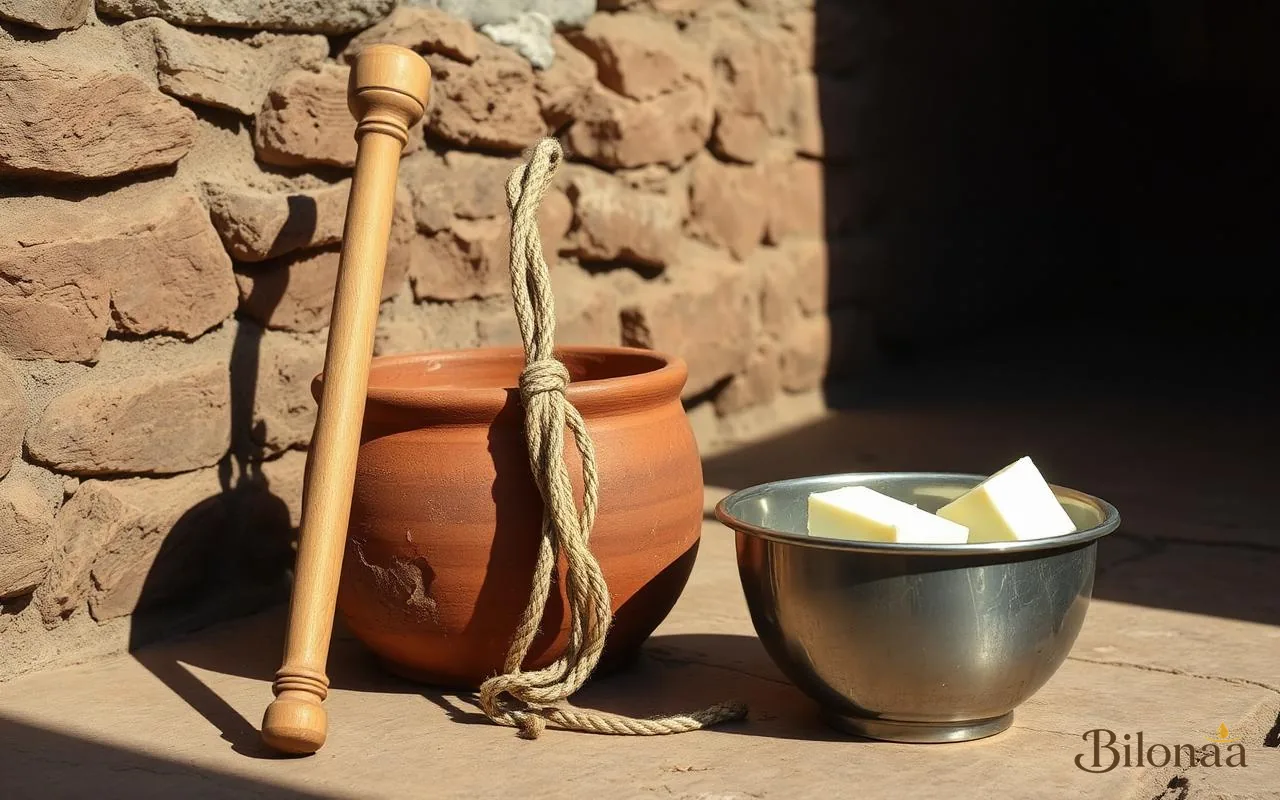
The physical churning stage relies on a wooden churner rotated clockwise and counterclockwise to gather butter grains naturally. A thick wooden rod with a carved churn head is suspended inside the vessel and worked using ropes or handles. As the wooden paddle swings back and forth, it coaxes fat molecules to clump together into golden makhan without slicing them apart. Wood is naturally porous and soft compared to stainless steel, which prevents harsh friction heat from building up during the process. Cold water is occasionally sprinkled into the pot to help the butter float to the top. This gentle, alternating motion yields soft white butter that carries subtle cultured notes, leaving behind nutrient-rich buttermilk known as matha or chaas.
Science reveals clear structural differences in the fat molecules when milk is churned slowly rather than processed with high-speed blades. Industrial separators spin raw cream at thousands of revolutions per minute, generating intense friction that shears fat globule membranes. This violent mechanical force alters the natural emulsion and can oxidize delicate fatty acids like butyric acid. Slow wooden churning, however, keeps temperatures low during fat separation. The natural fat globules stay intact until they are slowly melted over a controlled fire. This gentle handling preserves volatile aromatic compounds, short-chain fatty acids, and natural fat-soluble vitamins like A, D, E, and K, resulting in a cleaner chemical profile and superior shelf stability.
Ayurveda offers deep insights into why bi-directional hand churned ghee is considered superior for human health and digestive fire. According to classical Ayurvedic texts, churning curd in two opposing directions generates a balanced energy known as samskara that enhances digestive agni. The process converts heavy milk fat into a lighter, easily bioavailable form that carries herbs deep into body tissues. Ayurveda notes that cream-derived factory ghee tends to increase kapha dosha due to its heavy and unfermented nature. In contrast, authentic bilona ghee made from cultured A2 milk balances vata and pitta doshas, making it a soothing daily Rasayana for people of all ages and constitutions.
Comparing industrial cream-based ghee with traditional hand churned bilona ghee highlights stark differences in production speed and final quality. Modern dairies extract cream directly from cold raw milk, boil it rapidly to strip moisture, and package the yellow oil instantly. This process yields massive volumes in hours but leaves behind a flat, greasy fat with little character. Hand churned ghee, on the other hand, demands anywhere from twenty-five to thirty liters of pure milk just to produce a single liter of ghee. It takes almost two full days of fermenting, churning, and slow cooking to complete one batch. The difference is immediately obvious when you open the jar: authentic bilona ghee greets you with an intense nutty aroma that fills the entire room.
Simmering extracted makhan over a wood fire in an open kadhai is the final step that gives bilona ghee its soul. Once the butter is gathered, it is placed in a heavy iron or brass kadhai and heated gradually. Direct wood-fire heating provides a gentle, ambient warmth that gas stoves or steam jackets cannot replicate easily. As the butter melts and simmers, water evaporates slowly while milk solids settle to the bottom and caramelize gently. Experienced makers judge the exact moment of readiness by listening to the crackling sounds and watching the foam turn golden brown. The liquid is then carefully strained through traditional cloth into storage containers, leaving behind a clear, amber-gold oil ready to set into grains.
The famed daanedaar texture of genuine hand churned ghee forms naturally during the slow cooling phase without any artificial crystallization. Factory ghee often relies on rapid blast-chilling to create uniformity, resulting in a smooth, pasty product that feels waxy on the tongue. In contrast, traditional bilona ghee cools gradually at room temperature over several hours. This relaxed cooling schedule allows palmitic and stearic fatty acids to form distinct, crystalline grains surrounded by silky liquid fat. When you scoop a spoonful, you see distinct amber granules that melt instantly on contact with hot roti or rice. This beautiful texture is a natural physical sign of unadulterated fat treated with patience and care.
Using authentic hand churned ghee in daily Indian cooking transforms modest meals into rich, aromatic feasts. Just half a spoon of asli ghee swirled into hot dal tadka releases a fragrant steam that awakens the appetite immediately. Because hand churned ghee has a high smoke point around 250 degrees Celsius, it remains stable during deep frying or high-heat sauting without breaking down into toxic free radicals. Whether you are searing spices for a winter khichdi or frying semolina for halwa, the ghee coats ingredients smoothly without feeling heavy or sticky. Its natural savory undertones complement both spice-laden curries and delicate traditional sweets like besan laddu or gajar ka halwa.
Individuals with mild dairy sensitivity often report that traditionally fermented bilona ghee causes no digestive discomfort whatsoever. During the overnight fermentation process, lactobacillus bacteria consume almost all the lactose present in whole milk. Later, when the churned butter simmers in the kadhai, milk solids containing casein protein caramelize and separate completely from the clear liquid fat. Straining the warm ghee removes these solids, leaving behind a pure fat that is virtually lactose-free and casein-free. While those with severe milk allergies should always consult a physician, many families with lactose intolerance find that hand churned ghee digests effortlessly while providing rich nourishment.
Several common myths surround hand churned ghee, mostly stemming from decades of diet advice focused purely on counting calories. One prevalent myth claims that all ghee causes rapid weight gain and clogs arteries regardless of how it is processed. Modern nutritional science, however, recognizes that pure bilona ghee contains medium-chain triglycerides that the liver metabolizes quickly for clean energy rather than storing as body fat. Another myth suggests that machine-made cream ghee and bilona ghee are chemically identical because both come from cow milk. In reality, the absence of fermentation and the presence of high-heat shearing in factory ghee significantly alter its digestibility and fatty acid profile.
Performing simple kitchen purity checks can help you detect if your hand churned ghee is genuine or diluted with milawat. One quick test is the palm test: place a teaspoon of ghee on your palm; if it is pure bilona ghee, it should start melting quickly purely from your body heat. Another reliable method is the hot pan test: heat a spoon of ghee in a warm kadhai. Authentic ghee melts instantly and turns a deep brownish amber within seconds, whereas ghee adulterated with vegetable oils takes longer to melt and stays pale yellow. You can also test for starch adulteration by adding a drop of iodine to melted ghee; any purple color shift reveals hidden additives.
The higher price point of genuine hand churned bilona ghee is a direct reflection of raw milk volume, labor, and time. Producing one liter of true bilona ghee requires approximately twenty-five to thirty liters of pure, unadulterated cow milk. In contrast, commercial manufacturers use low-cost cream byproducts from large dairy operations to churn out cheap ghee in massive industrial vats. When you buy hand churned ghee, you are paying for the immense care of raising healthy pasture-fed cows, manual churning labor, wood fuel, and days of dedicated preparation. Understanding this simple math reveals that cheap ghee on supermarket shelves is almost always compromised in quality or blended with cheaper oils.
At Bilonaa, our family keeps this ancient Bikaner heritage alive by making pure A2 hand churned ghee with unhurried devotion. We collect fresh A2 milk from indigenous Rathi, Tharparkar, Gir, and Sahiwal cows that graze freely under the desert sun. Our process follows the strict dadi-nani method: boiling milk, setting fresh curd overnight, and churning it with traditional wooden bilonas. We slow-cook the makhan over wood fires in open kadhais, filling our facility with a deep, nostalgic aroma. Under our FSSAI license 22226025000262, we pack our rich daanedaar ghee in glass jars up to 2 liters and durable 5-liter stainless steel dolchis, ensuring every spoonful reaches your kitchen as pure and untouched as nature intended.
Storing your hand churned ghee correctly preserves its rich aroma and prevents premature oxidation for well over a year. Pure bilona ghee has very low moisture content, making it naturally shelf-stable without artificial preservatives or refrigeration. Store your glass jar or steel dolchi in a cool, dark kitchen pantry away from direct sunlight and stove heat. Always use a clean, dry spoon when scooping ghee, as introducing even a few drops of water can invite mold growth over time. If kept tightly sealed, your hand churned ghee will retain its lovely granular texture, sweet cultured scent, and full nutritional potency through every season.
"A machine separates fat by mechanical force, but a wooden bilona coaxes butter out through gentle rhythm and temperature balance."
Bilonaa Promise
Small-batch, A2 desi-cow, traditional bilona ghee — straight to your kitchen.
100% pure, hand-churned, slow-cooked on a wood fire and packed in glass jars.
FAQs
Quick answers
What is the main difference between hand churned ghee and regular factory ghee?
Regular factory ghee is made by spinning raw cream through high-speed steel centrifuges and boiling it rapidly. Hand churned ghee, made via the traditional bilona method, uses whole milk fermented overnight into curd. The curd is bi-directionally churned with a wooden paddle to yield soft makhan, which is then slow-cooked over wood fire to preserve nutrients and daanedaar texture.
Why does authentic bilona ghee cost more than ordinary market ghee?
It takes roughly 25 to 30 liters of pure cow milk to make just 1 liter of true hand churned ghee. Factor in overnight fermentation, manual churning with wooden bilonas, and slow wood-fire cooking, and the process becomes labor-intensive and low-yield compared to commercial cream extraction.
Can people with lactose intolerance consume hand churned ghee?
Many people with mild lactose sensitivity find traditional bilona ghee very easy to digest. Overnight fermentation converts lactose into lactic acid, and slow simmering caramelizes and removes milk solids (casein). While it is nearly free of lactose and casein, individuals with severe dairy allergies should still consult their doctor.
How can I check if hand churned ghee is pure at home?
You can perform a quick palm test: genuine bilona ghee melts quickly from body heat alone. Alternatively, melt a spoon in a warm kadhai; pure ghee turns deep amber quickly with a sweet nutty aroma, whereas adulterated ghee with vegetable fats melts slowly and stays pale yellow.
Why does hand churned ghee have a granular (daanedaar) texture?
The signature daanedaar grain develops naturally when ghee is allowed to cool slowly at room temperature over several hours. This relaxed cooling permits fatty acid molecules to crystallize into distinct grains. Machine ghee is often rapidly blast-cooled, resulting in a smooth or pasty texture.
What is the shelf life of hand churned bilona ghee?
Properly cooked bilona ghee has negligible moisture content, allowing it to stay fresh for 12 to 18 months at room temperature. Keep it in a dry glass jar or stainless steel dolchi away from direct sunlight, and always use a clean, dry spoon.
Which cow breeds produce milk best suited for hand churned ghee?
Indigenous A2 cow breeds like Rathi, Tharparkar, Gir, and Sahiwal yield milk rich in A2 beta-casein protein and balanced fat globules. Milk from these pasture-grazed desi cows produces light, highly aromatic makhan that converts into superior quality bilona ghee.
Educational content only — please consult a doctor for medical conditions.
Get gentle ghee notes in your inbox
One thoughtful Ayurveda + kitchen note a week. No spam. Unsubscribe anytime.
Conversation(0)
Share a thought — every comment is read before it appears.