
Process
How Ghee Is Filtered: The Last Step That Decides Clarity and Shelf Life
On this page
- Filtering is the crucial final stage in making pure ghee tha
- Traditional ghee making requires patience right after the mi
- Temperature control during filtration determines whether you
- Muslin cloth remains the time-tested standard for straining
- Leaving small milk solids behind in strained ghee will short
- Fine sediment at the bottom of a ghee jar is actually a norm
- Industrial factory ghee relies on high-pressure centrifuge m
- High-speed centrifugal separation strips away natural aromat
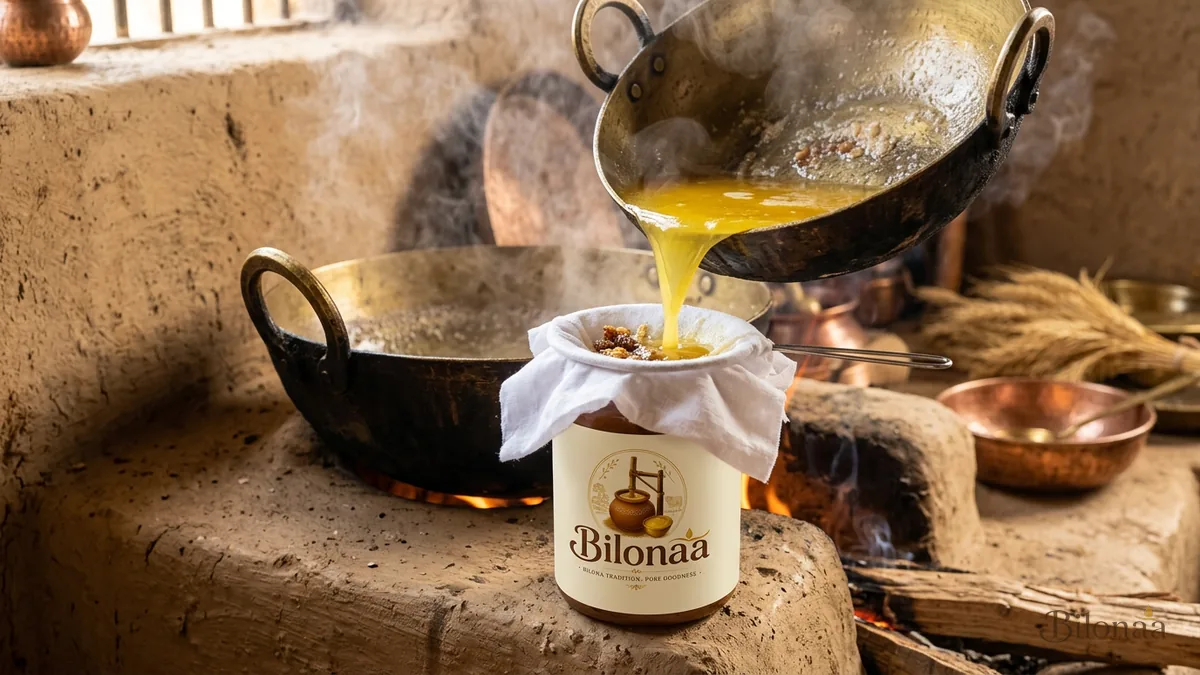
Filtering is the crucial final stage in making pure ghee that determines its aroma, texture, and natural shelf life. When butter solids cook down slowly over a flame, they transform into liquid gold and toasted milk solids called mawa or beri. If you pull the vessel off the fire too early, raw moisture stays behind, but if you leave it on too long, the milk solids burn and bitter notes ruin the batch. Filtering acts as the bridge between raw cooking and long-term storage. When done correctly, it separates every last charred particle without stripping away essential fat-soluble nutrients or rich fragrance. Many people focus only on how butter is churned, but ask any veteran halwai or home cook, and they will tell you that the straining step makes or breaks the entire jar.
Traditional ghee making requires patience right after the milk solids turn golden brown in the heavy iron kadhai. You cannot simply pour boiling liquid straight through a strainer the moment you turn off the stove flame. The hot ghee needs a short resting period so the heavier brown solids settle to the bottom of the cooking vessel naturally. This gravity settling makes the subsequent pouring smoother and prevents rapid clogging of the filter cloth. In small-batch kitchen setups, this five-to-ten-minute pause allows the liquid temperature to drop slightly from boiling point down to a safer heat. Rushing this resting phase often forces fine scorched specks through the filter weave, which spoils the visual clarity and introduces a harsh burnt flavor into your final jar.
Temperature control during filtration determines whether you get a smooth liquid or a grainy daanedaar texture later. Filtering ghee while it is scorching hot can singe natural cotton fibers, while letting it cool too much causes the saturated fats to solidify and block the strainer completely. The ideal window is when the ghee is warm, fluid, and comfortable to handle. Straining at this goldilocks temperature allows liquid fat to pass freely while catching every bit of browned curd residue. When done right as part of the [traditional bilona method](/traditional-bilona-method), proper thermal handling during filtering encourages large, uniform fat crystals to form naturally as the ghee slowly cools down inside room-temperature storage jars over the next twelve hours.
Muslin cloth remains the time-tested standard for straining artisanal bilona ghee in Indian kitchens. Unlike rigid wire mesh or modern plastic kitchen strainers that have relatively coarse openings, fine cotton muslin features a tight, soft weave that catches even microscopic toasted curd particles. Double-layering or quadruple-layering clean unbleached muslin ensures superior clarity without needing synthetic materials. Wire strainers inevitably let tiny specks of brown mawa slip into the container, which later settle as dark debris. Plastic strainers present a severe risk, as hot liquid ghee can leach unwanted microplastics or chemicals into your food. Pure cotton cloth remains unmatched because it is natural, washable, reusable, and gentle on hot fat.
Leaving small milk solids behind in strained ghee will shorten its shelf life dramatically over time. Milk solids contain proteins, sugars, and residual moisture that act as breeding grounds for oxidation and spoilage. Even a small amount of damp residue trapped inside a sealed jar will cause the ghee to develop a rancid smell within weeks. Pure milk fat by itself contains almost zero moisture, allowing high-quality [bilona ghee](/bilona-ghee) to stay fresh at room temperature for months or even years without chemical preservatives. Thorough filtration eliminates these perishable non-fat solids completely. That is why traditional cooks take extreme care during straining; they know that clean, residue-free fat is the secret to shelf-stable kitchen staples.
Fine sediment at the bottom of a ghee jar is actually a normal sign of unbleached handcrafted processing. There is a clear difference between harmful moist residue that spoils ghee and tiny dry toasted particles that pass through natural cotton cloth. In traditional wood-fired batches, tiny specks of caramelized mawa occasionally settle at the very base of the container over several weeks. These specks are dry, aromatic, and completely safe, offering proof that no harsh chemical filters were used to scrub the product. However, if the filtration was done poorly and left actual water or damp curd behind, the ghee will turn sour. Discerning buyers know how to spot the difference between natural settling and true milawat or spoilage.
Industrial factory ghee relies on high-pressure centrifuge machines and chemical bleaching to clear out all solids quickly. Large commercial brands process thousands of liters of butter every hour, making slow hand-straining through cloth impossible. They pass liquid fat through high-speed mechanical separators that strip out every single particle in seconds. While this creates a uniform, water-clear liquid, it also subjects the fat to intense friction and mechanical stress. Furthermore, some large processors use clay bleaching or deodorizing treatments to remove any dark color or strong odors resulting from mixed-quality milk sources. The resulting product lacks the rich character and soul of traditional small-batch ghee.
High-speed centrifugal separation strips away natural aromatic compounds that give traditional ghee its distinctive scent. When factory equipment aggressively spins and filters raw fat, it strips out tiny lipid-bound flavor molecules alongside the curd solids. This leaves commercial ghee smelling flat, dull, or overly neutral, often requiring synthetic flavor additions to mimic authentic aroma. In contrast, gentle cloth filtration allows natural aromatic esters and fat-soluble vitamins to remain intact within the liquid fat. The subtle nutty fragrance of slow-cooked butter solids stays infused in the oil. That is why hand-filtered ghee fills the entire kitchen with a deep, comforting scent the moment you melt a spoonful over hot roti.
Golden clarity in warm liquid ghee naturally transforms into a rich daanedaar grain as it cools at room temperature. Many people confuse the color of warm liquid ghee with its final quality. Freshly filtered ghee from grass-fed cows displays a rich golden hue due to natural beta-carotene present in fresh green fodder. Pale, chalky white ghee often signals heavy industrial processing or milk sourced from stall-fed animals lacking natural green pasture diets. As properly filtered golden liquid rests inside glass jars, the triglyceride molecules align slowly to create that coveted sandy, grainy texture. Clean filtering ensures these grains form smoothly without gritty burnt specks interrupting the rich, melt-in-the-mouth feel.
The choice of storage container right after filtering plays an equally major role in preserving fresh flavor. Pouring freshly strained hot ghee straight into cheap plastic tubs can ruin an otherwise perfect batch. Hot fat absorbs volatile compounds from plastic walls, giving the ghee an off-flavor and introducing harmful contaminants. Glass jars or food-grade stainless steel containers are the only recommended choices for hot filtered ghee. Glass does not react with fat, allows you to observe the natural settling process, and preserves delicate aromas for months. Using clean, bone-dry glass containers ensures that your investment in pure [A2 cow ghee](/a2-cow-ghee) remains protected against moisture and external kitchen odors.
Moisture is the absolute biggest enemy of freshly filtered ghee during the bottling and storage stage. Even if your filtering cloth was perfectly dry, pouring warm ghee into a jar that has even a single drop of residual water will ruin the entire batch. Water triggers hydrolysis, splitting fat molecules into free fatty acids that create a sharp, unpleasant smell. Professional artisanal ghee makers ensure that every funnel, vessel, filter cloth, and jar is thoroughly sterilized and completely dried in sunlight or warming ovens before use. At home, always make sure your wooden spoons and glass storage jars are completely moisture-free before transferring or scooping your freshly filtered ghee.
Old-fashioned dadi-nani wisdom always emphasized letting warm ghee settle in a quiet corner of the kitchen without stirring. Once the hot liquid is strained into its final storage jar, moving or shaking the container while it cools disturbs crystal growth. Traditional homes would cover the jar mouth with a light cloth or loose lid, allowing steam to escape while keeping ambient dust out. Leaving the jar undisturbed at room temperature for twelve to twenty-four hours lets the fat solidify into rich, uniform granules. Rushing this cooling phase by putting hot ghee into a refrigerator destroys the grainy texture, turning it into a hard, greasy block instead of soft daanedaar ghee.
Different desi cow breeds like Rathi and Tharparkar naturally yield distinct hues during the final filtering stage. Cows grazing on open pastures in arid regions like Bikaner produce milk fat rich in natural pigments and A2 beta-casein protein. When this butter is churned and simmered, the resulting liquid ghee exhibits a vibrant, warm yellow tone that shines brightly through the filtering cloth. Gir and Sahiwal cow butter also show rich golden shades, whereas buffalo milk ghee remains pale white. Observing the natural color and aroma as warm ghee passes through fine cotton filter cloth gives an experienced ghee maker immediate feedback on the health and diet of the herd.
At Bilonaa in Bikaner, we filter our hand-churned batch ghee using multi-layer cotton cloth right after slow wood-fire cooking. We follow traditional methods strictly, sourcing milk from free-grazing Rathi and Tharparkar cows. Our process uses wooden bilonas to churn curds into makhan, which is then slow-cooked in iron kadhais over open wood fires. Once the cooked ghee reaches perfection, we strain it carefully through unbleached cotton cloth to remove all mawa residue while keeping its asli aroma intact. We pack our ghee in clean glass jars (500 ml, 1 ltr, 2 ltr) and sturdy 5 ltr steel dolchis under FSSAI license 22226025000262. You can explore [our story](/about) or [shop Bilonaa ghee](/shop) to sample authentic desert-crafted ghee.
Choosing properly filtered artisanal ghee ensures your daily tadka delivers pure taste without any burnt residues. When you splash clean ghee into a hot pan for tempering cumin, mustard seeds, or hing, it resists smoking because there are no leftover milk solids to scorch instantly. Improperly filtered ghee containing leftover mawa will smoke quickly and leave dark burnt specks across your dals and curries. Pure, clear ghee has a higher smoke point and a clean, buttery taste that lifts everyday home cooking. Investing in properly filtered bilona ghee means enjoying authentic flavor without bitterness or smoke in your favorite Indian dishes.
Checking for natural settling and authentic aroma helps you spot genuinely filtered asli ghee every single time. Real ghee should smell comforting and toasted, never greasy, sour, or chemical-like. When inspecting your jar, look for a uniform daanedaar texture with a warm golden tone and zero water droplets trapped inside. If you have any questions about how traditional filtering compares to factory processing or how to store your jars properly at home, check out our helpful [FAQs](/faq) section below. Learning these subtle details empowers you to choose pure, honest food for your family every day.
"Filtering is the bridge between raw cooking and long-term storage; when done right, it separates charred particles without stripping away essential aroma."
Bilonaa Promise
Small-batch, A2 desi-cow, traditional bilona ghee — straight to your kitchen.
100% pure, hand-churned, slow-cooked on a wood fire and packed in glass jars.
FAQs
Quick answers
Why is cotton muslin cloth preferred over metal strainers for ghee?
Cotton muslin cloth has a much tighter weave than steel wire mesh. It catches tiny toasted curd particles (mawa) that slip through metal strainers. Removing these fine solids prevents premature spoilage, keeps the ghee clear, and ensures a smooth daanedaar texture as it cools.
What happens if you filter ghee while it is too hot?
Filtering ghee at boiling temperature can scorch cotton filter cloths or melt plastic funnels. Extremely high heat can also force microscopic burnt specks through the cloth weave, introducing bitter off-notes into your jar and clouding its golden color.
Is dark sediment at the bottom of a ghee jar a sign of spoilage?
Not necessarily. In traditional hand-filtered ghee, tiny dry specks of caramelized mawa may pass through cloth and settle at the bottom over time. As long as the ghee smells sweet and nutty without sourness, these specks are safe and show the ghee is unbleached.
Does filtering ghee remove all lactose and casein?
Thorough filtration combined with proper wood-fire cooking separates almost all milk solids, including lactose and casein, from the liquid fat. Ayurveda suggests and many lactose-sensitive individuals find that well-strained bilona ghee is easy on digestion because non-fat solids are completely removed.
How does commercial factory ghee filtering differ from traditional cloth straining?
Factories use high-speed centrifuge machines and chemical bleaching agents to clarify raw fat rapidly. This mechanical processing strips away natural aroma molecules and vitamins, resulting in a flat-smelling pale ghee, whereas cloth straining preserves authentic flavor and natural golden color.
Can a wet filter cloth ruin a fresh batch of ghee?
Yes, water is the single biggest cause of ghee spoilage. Filtering warm ghee through a damp cloth introduces moisture, which causes fat molecules to break down into free fatty acids. This leads to rancidity and a sour smell within a few weeks.
Why should filtered ghee be stored in glass or steel instead of plastic?
Warm liquid ghee easily absorbs chemical odors and compounds from plastic containers. Food-grade glass jars and stainless steel dolchis are non-reactive, non-porous, and completely protect the pure flavor, granular texture, and natural shelf life of freshly filtered ghee.
Educational content only — please consult a doctor for medical conditions.
Get gentle ghee notes in your inbox
One thoughtful Ayurveda + kitchen note a week. No spam. Unsubscribe anytime.
Conversation(0)
Share a thought — every comment is read before it appears.