Indian cooking & food culture
How to Make Ghee Tadka Without Burning the Spices
On this page
- Why Spices Burn Even When the Ghee Looks Fine
- Get Everything Ready Before Heating the Ghee
- How to Make Ghee Tadka: A Simple Dal Method
- Step 1: Warm the ghee gently
- Step 2: Add the whole spices
- Step 3: Finish with hing and optional chilli powder
- Step 4: Transfer promptly
- The Right Spice Order Depends on Your Ingredients
- Mustard seeds and jeera
- Garlic and curry leaves
- Hing, turmeric and red chilli powder
- Read the Colour, Sound and Smell
- What to Do When Tadka Goes Wrong
- Adapt the Tadka to Everyday Dishes
- Conclusion
A spoonful of ghee, a pinch of jeera and a brief sizzle can change the character of a simple dal. But the gap between fragrant and burnt is small. One moment the garlic is pale gold; the next, the chilli powder has darkened and the kitchen smells sharp rather than inviting.
If you are learning how to make ghee tadka, remember this: warm the ghee gently, add ingredients according to how quickly they cook, and move the pan off the heat before delicate spices burn. You do not need smoking ghee or a dramatic flame. You need everything ready and your attention on the pan.
Why Spices Burn Even When the Ghee Looks Fine
Tadka briefly heats spices in fat, bringing their aroma into the ghee before it joins the dish. Whole seeds, sliced garlic and fine spice powders do not cook at the same speed. Treating them as one batch is a common reason for a bitter result.
Ghee can withstand substantial cooking heat, but that does not mean the spices sitting in it can. Fine chilli powder can scorch while the ghee itself shows no smoke. Jeera can also turn black along the hottest part of a thin pan before the rest has browned.
Heat continues working after you switch off the burner. A heavy pan holds warmth, while an electric hob may remain hot for some time. Move the pan to a heatproof surface when necessary; simply turning the control down may not stop the cooking quickly enough.
Get Everything Ready Before Heating the Ghee
Keep your cooked dal, kadhi or khichdi ready before starting a finishing tadka. Open spice containers, measure small quantities and slice the garlic first. Searching for hing while jeera is sizzling is an easy way to miss the right moment.
Use a small, stable tadka pan or saucepan with a handle that stays secure in your hand. A light-coloured interior makes changes in garlic and spice colour easier to see. Choose a burner that fits the base, and keep a gas flame from curling around the sides.
The pan and spoon should be dry. Wash curry leaves ahead of time and pat them thoroughly dry, as surface water causes hot ghee to splutter. Fresh leaves still contain moisture, so add them carefully, keep your face back and have a splatter screen handy.
For around three cups of cooked dal, one tablespoon of ghee is a useful starting quantity, adjusted to your recipe and preference. Use a small enough pan for the ghee to collect around the spices rather than spread into a barely visible film.
How to Make Ghee Tadka: A Simple Dal Method
This basic tadka suits plain cooked moong, masoor or toor dal. Have three cups of hot, seasoned dal ready. For the tadka, set out one tablespoon ghee, half a teaspoon jeera, one small dried red chilli with its stalk removed, a small pinch of hing and, optionally, a quarter teaspoon red chilli powder.
Step 1: Warm the ghee gently
Put the ghee in the dry pan and heat it over a low-to-medium flame. Let it melt fully and become fluid. There is no need to wait for smoke, and melted ghee alone is not a reliable sign that it is hot enough.
Drop in one or two jeera seeds. They should begin to sizzle with small bubbles around them. If they sit quietly, warm the ghee a little longer. If they darken almost immediately, take the pan off the burner and let it cool before proceeding. Never test hot ghee with water.
Step 2: Add the whole spices
Add the remaining jeera and stir gently. Let the seeds sizzle and deepen slightly in colour. Then add the dried red chilli and turn it in the ghee briefly. Look for a toasted aroma and a slight deepening of the chilli's colour, not black patches.
Use these cues rather than a fixed number of seconds. Pan thickness, burner strength and the amount of ghee all affect timing. If the seeds are colouring too quickly, lift the pan off the heat instead of trying to finish everything in a rush.
Step 3: Finish with hing and optional chilli powder
Turn off the heat and move the pan away from the hot burner. Stir in the pinch of hing. If using red chilli powder, let the fiercest sizzling settle before adding it, then stir briefly. Residual heat is usually enough to bloom the powder; if the ghee is still extremely hot, it can burn even off the flame.
Step 4: Transfer promptly
Carefully pour the tadka into the hot dal, keeping the pan close to the surface without dipping it in. Expect some sizzling and keep your face away from the steam. Stir through, or leave a little tadka visible on top for serving. Do not leave the finished spices sitting in the hot pan while you fetch the dal.
The Right Spice Order Depends on Your Ingredients
Whole spices generally go in before powders, but there is no single sequence for every Indian tadka. Mustard seeds need enough heat to pop, garlic needs time to cook gently, and ground spices need only brief contact with hot fat.
Mustard seeds and jeera
For a tadka using both, start with mustard seeds. Allow them to begin popping, using a splatter screen if needed, then lower the heat before adding jeera. Waiting until after the jeera has browned to add mustard can leave you choosing between burnt jeera and under-tempered mustard.
Garlic and curry leaves
For a garlic-forward tadka, warm thin, evenly sliced garlic in ghee over low heat until it starts turning pale gold, then add jeera and watch closely. Alternatively, briefly sizzle jeera first, lower the heat and add garlic. In either method, stop before the garlic becomes deep brown because it will continue colouring in the hot fat.
Add well-dried curry leaves carefully after the whole seeds have tempered, keeping the heat low. Let their initial spluttering settle before proceeding. Avoid dropping a wet handful into a tiny pan of hot ghee.
Hing, turmeric and red chilli powder
Use small quantities and add them near the end. For a finishing tadka, off-heat addition is often easier to control, especially for red chilli powder. When preparing a curry base instead, ground spices may be followed promptly by tomatoes or another moist ingredient according to the recipe.
Read the Colour, Sound and Smell
A good tadka gives you several signals together. Jeera sizzles and turns a little darker, mustard seeds pop, garlic moves from opaque white towards pale gold, and the aroma becomes rounded and toasted. None of these requires visible smoke.
Burning smells sharp, acrid or irritating rather than pleasantly spicy. Blackened jeera, very dark garlic edges and chilli powder that rapidly turns brown are warning signs. Dried red chillies can deepen in colour normally, but they should not become charred.
Do not lean over the pan to check its aroma, especially when using chillies. Watch from a comfortable distance with the kitchen ventilated. If the ghee begins smoking, stop heating and move the pan off the burner safely.
What to Do When Tadka Goes Wrong
If the spices have clearly burnt, do not pour the tadka into your food. Let it cool safely, discard it and start again in a clean, dry pan. Removing blackened seeds does not reliably remove the bitter flavour already carried into the ghee.
If the tadka tastes flat rather than burnt, the spices may not have heated sufficiently, or they may have lost aroma during storage. Next time, check for an active but controlled sizzle and use spices that still smell fresh. More heat is not always the answer.
If garlic burns while other ingredients remain underdone, slice it more evenly and reduce the flame. If powders repeatedly scorch, keep them out of the pan until it is off the burner and has cooled slightly. You can also omit chilli powder from the tadka and use it earlier in the dal's cooking.
Adapt the Tadka to Everyday Dishes
For gentle moong dal or khichdi, jeera and a little hing may be enough. You do not need every spice in the dabba. A restrained tadka lets the ghee's own aroma remain noticeable without overwhelming the dish.
For kadhi, try mustard seeds, jeera, dried red chilli and curry leaves, following the staged order above. Add the finished tadka to the prepared kadhi rather than leaving the spices frying while the kadhi finishes cooking.
For chaach or a curd-based accompaniment, let the prepared tadka cool until warm before stirring it in. Unlike a hot dal, a chilled dairy dish does not need a sizzling-hot finish.
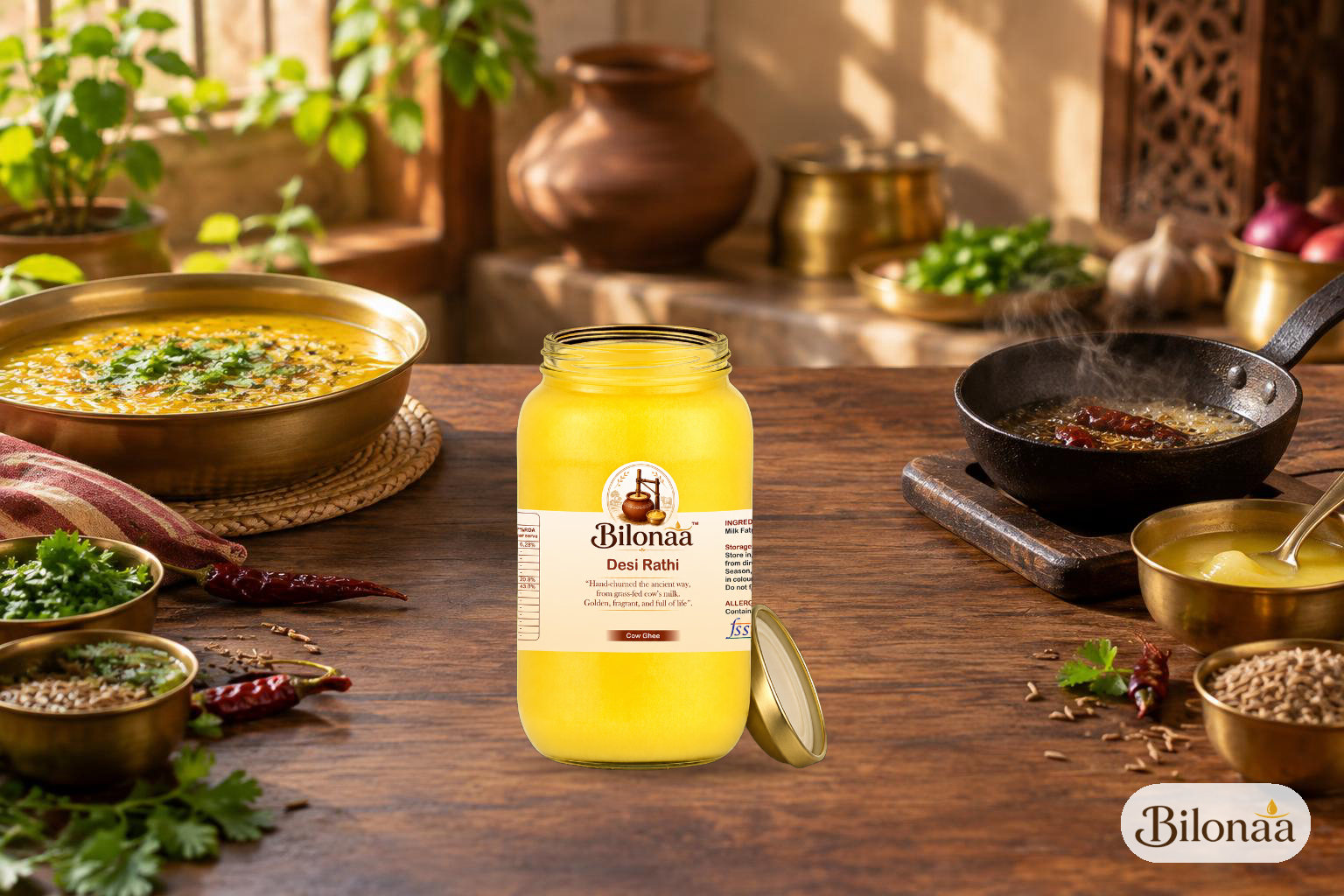
Traditionally made ghee is a flavour choice, not protection against burning. Bilonaa makes traditionally churned bilona A2 desi cow ghee in Bikaner, Rajasthan; whichever ghee you use, the same careful heat control applies. A2 and bilona describe different aspects of the product, not a special temperature setting for tadka.
Conclusion
The most useful tadka habit is to stop chasing high heat. Prepare everything first, let whole spices sizzle without blackening, cook garlic gently and give powders only brief contact with hot ghee. Transfer the finished tadka promptly, before residual heat takes it too far.
Practise with a simple jeera tadka on your next dal, then add other ingredients as you become comfortable with their cues. If traditionally churned desi cow ghee belongs in your kitchen routine, explore Bilonaa's ghee range for your next everyday meal.
Bilonaa Promise
Small-batch, A2 desi-cow, traditional bilona ghee — straight to your kitchen.
100% pure, hand-churned, slow-cooked on a wood fire and packed in glass jars.
FAQs
Quick answers
Should ghee be smoking hot before adding spices for tadka?
No. Start with warm ghee and test it with one or two jeera seeds. They should sizzle without immediately turning dark. Smoking ghee is unnecessarily hot for this method and can scorch delicate ingredients quickly.
When should I add red chilli powder to ghee tadka?
Add it near the end, after moving the pan off the burner and allowing the strongest heat to settle. Stir briefly and transfer the tadka promptly. Off-heat ghee can still be hot enough to burn powder, so watch for rapid darkening.
Can I save a tadka with burnt jeera?
If the jeera is blackened and smells acrid, it is better to discard the cooled tadka and start again. Picking out the seeds will not reliably remove bitterness from the ghee.
Can I make tadka directly in the pot instead of a separate pan?
Yes. Many dishes begin by tempering spices in the cooking pot before other ingredients are added. A separate pan is useful for a finishing tadka because you can watch the small batch closely and check it before adding it to the food.
Is bilona ghee less likely to burn spices than other ghee?
The bilona method does not make spices burn-proof. Burning depends mainly on pan temperature, cooking time, ingredient size and the order of addition. Use the same careful technique with traditionally churned ghee.
Educational content only — please consult a doctor for medical conditions.
Get gentle ghee notes in your inbox
One thoughtful Ayurveda + kitchen note a week. No spam. Unsubscribe anytime.
Conversation(0)
Share a thought — every comment is read before it appears.