
Buyer Guide
How to Store A2 Ghee: Shelf Life, Jar Tips and Freshness
On this page
- Understanding the significance of proper storage for A2 desi
- Defining A2 desi-cow ghee elucidates why its storage demands
- Recognising the various factors that influence ghee's longev
- The traditional wisdom behind ghee storage, passed down thro
- Delving into the optimal temperature range for A2 ghee stora
- Selecting the right container for your A2 ghee is arguably t
- Pondering the shelf life of A2 desi-cow ghee stored correctl
- Recognizing the tell-tale signs of rancid ghee is essential
Understanding the significance of proper storage for A2 desi-cow ghee begins with appreciating its intrinsic value as more than just a cooking fat but a revered superfood in Indian culture and Ayurveda. This golden elixir, carefully crafted through the traditional bilona process, is celebrated for its unique flavour profile, superior nutritional benefits, and therapeutic properties, making its preservation paramount. Just as we invest in sourcing the purest A2 ghee, like that offered by Bilonaa, understanding how to maintain its pristine quality ensures we reap its full potential for health and vitality.
Defining A2 desi-cow ghee elucidates why its storage demands particular attention due to its specific composition derived from indigenous Indian cow breeds. Unlike commercial ghee made from A1 milk, A2 ghee contains A2 beta-casein protein, which is traditionally believed to be easier to digest and offers distinct health advantages. Furthermore, authentic A2 desi-cow ghee is produced using the ancient Bilona method, a slow, labour-intensive process that involves churning curdled milk into butter before simmering it into ghee. This process retains a higher content of beneficial fatty acids, fat-soluble vitamins, and antioxidants, which can degrade if not stored correctly.
Recognising the various factors that influence ghee's longevity is crucial for effective storage, as its shelf life is not uniform but rather dependent on several environmental elements and the quality of the ghee itself. Key factors include exposure to light, heat, air, and moisture, all of which can accelerate oxidation, leading to rancidity and a loss of flavour and nutritional value. The purity and traditional preparation methods also play a significant role; asli (pure) ghee, especially Bilona ghee, inherently possesses a longer shelf life due to its minimal moisture content and unique fatty acid structure.
The traditional wisdom behind ghee storage, passed down through generations, offers practical insights rooted in centuries of use, emphasizing simplicity and natural principles. Our dadi-nani's (grandmothers') methods weren't just about convenience but about understanding ghee's delicate nature. They instinctively knew that keeping ghee away from direct sunlight and in cool, dark places was essential. The use of earthenware pots or dark glass jars, sealed tightly, wasn't merely for aesthetics but served a functional purpose, shielding the ghee from light and air, the primary culprits of degradation.
Delving into the optimal temperature range for A2 ghee storage reveals that consistency is key to maintaining its quality and a semi-solid, granular texture. While ghee can be stored at room temperature, ideally between 18°C to 25°C (64°F to 77°F), extreme fluctuations should be avoided. In warmer climates or during summer months, storing ghee in a cooler, darker spot, like a pantry or cupboard away from heat-generating appliances, becomes even more critical. There's no need to refrigerate ghee under normal conditions, as refrigeration can alter its texture, making it hard and less spreadable, though it does extend its shelf life considerably.
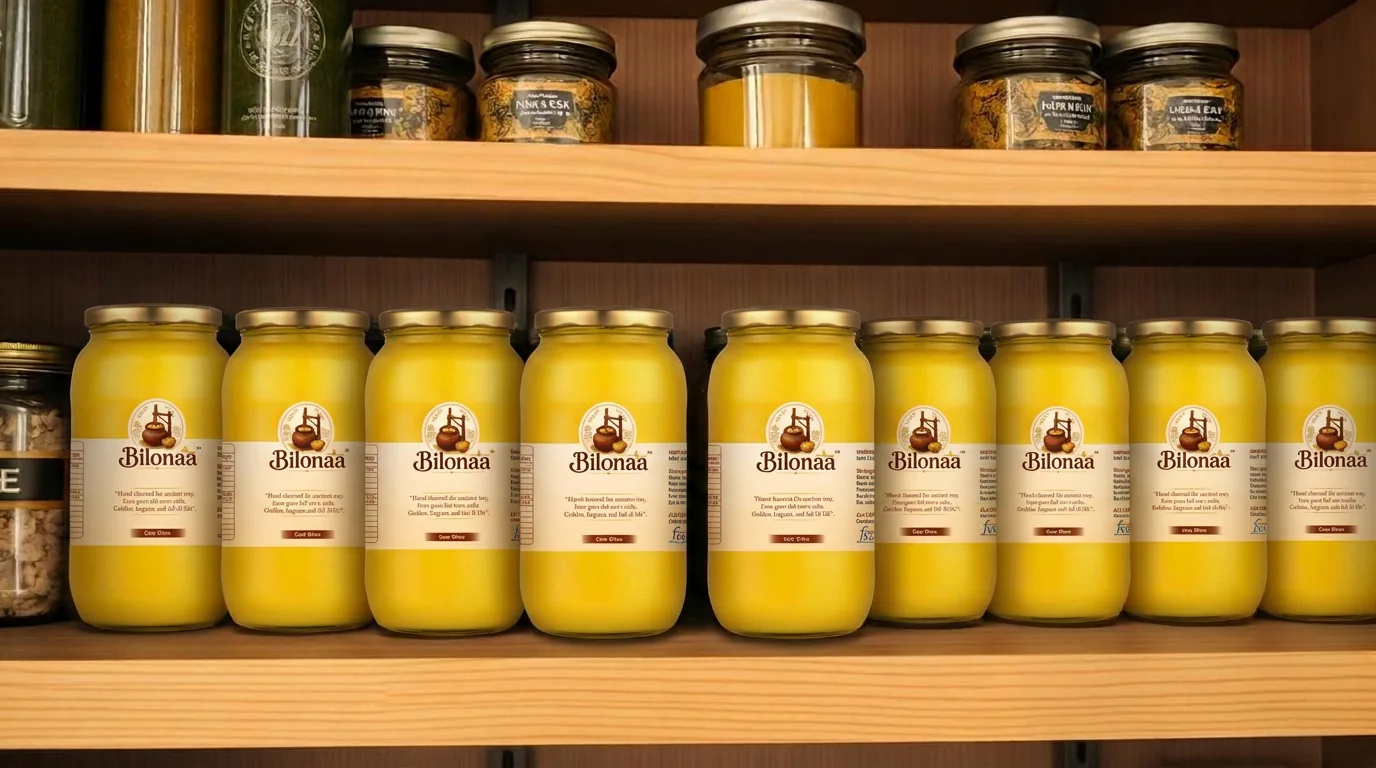
Selecting the right container for your A2 ghee is arguably the most crucial step, as the material and design directly impact its preservation against light and air. Glass jars, particularly dark amber or cobalt blue ones, are highly recommended over plastic because they prevent chemical leaching and offer superior protection from UV light. While sturdy, ceramic or stainless steel containers also work well, ensuring they are opaque to block light. Regardless of the material, the container must be airtight to prevent any exposure to oxygen, which causes oxidation and can lead to rancidity, thus preserving its freshness and purity.
Pondering the shelf life of A2 desi-cow ghee stored correctly brings good news, as it is remarkably stable and can last for extended periods, making it a valuable pantry staple. Generally, pure A2 bilona ghee, when stored in an airtight, dark container away from heat and direct sunlight, can remain fresh and flavourful for 6 to 12 months at room temperature. Refrigeration can further extend this to 18-24 months or even longer, though it may solidify and become harder to spoon. Always check for changes in aroma, colour, or taste before use, irrespective of the stated shelf life.
Recognizing the tell-tale signs of rancid ghee is essential for food safety and ensuring you only consume ghee at its best, preventing any unpleasant experiences. The most evident sign is a distinct, unpleasant, sour, or chemical-like odour, a stark contrast to its natural, nutty, comforting aroma. Additionally, rancid ghee might exhibit a change in colour, becoming darker or developing a greenish tint, and its texture might become grainy or clumpy beyond its usual consistency. If you spot any of these signs, it's best to discard the ghee, as its beneficial properties would have degraded, and it may not be safe for consumption.
Considering how storing ghee in the refrigerator affects its quality and usability, it is important to weigh the benefits against the drawbacks, especially concerning its texture. While refrigeration undoubtedly extends ghee's shelf life significantly by slowing down oxidation, it also causes the ghee to solidify and become very hard. This change in consistency can make it difficult to scoop or pour, especially in colder temperatures. If you choose to refrigerate, allow the small portion you intend to use to come to room temperature for easier handling, or simply scoop out a desired amount and let it soften. It's often more practical for daily use to keep a smaller portion at room temperature.
The process of transferring and decanting ghee from a bulk container into smaller, more manageable jars for daily use is a strategic practice that further safeguards its purity and prolongs its freshness. By doing so, you minimise the frequent exposure of the entire batch to air and potential contaminants from repeated opening and closing. Always use clean, dry spoons or ladles when transferring. Ensure your smaller glass jars are impeccably clean and dry before filling them. This method reduces the chances of moisture or external elements compromising the quality of your cherished Bilonaa A2 ghee in the main storage unit.
Dispelling common myths about ghee storage helps clarify misconceptions and reinforces the correct practices for maintaining its quality, ensuring consumers make informed decisions. One prevalent myth is that ghee needs to be refrigerated immediately; in reality, pure ghee is shelf-stable at room temperature for months. Another misconception is that if ghee liquefies in warm weather, it's 'spoiled,' but this is a natural physical change and doesn't indicate spoilage unless accompanied by rancid odour or colour changes. Some also believe clarified butter and ghee are the same in terms of storage, but traditional bilona ghee's lower moisture content gives it superior shelf stability.
The role of light and air in ghee degradation is a critical aspect to understand, as these two environmental factors are the primary catalysts for oxidation, leading to a diminished product. Exposure to direct sunlight or even ambient artificial light can initiate photo-oxidation, breaking down beneficial fatty acids and fat-soluble vitamins. Similarly, oxygen in the air reacts with the unsaturated fats in ghee, resulting in oxidative rancidity, which produces off-flavours and odours. Therefore, storing ghee in dark, airtight containers and keeping them in a dark cabinet is not just a recommendation but a necessity to protect its delicate composition.
Practical tips for daily use of A2 ghee ensure that every interaction with your sacred jar maintains its purity and prolongs its life, preventing premature spoilage. Always ensure that you use a clean, dry spoon each time you dip into the ghee jar; even a tiny amount of moisture or food particles can introduce bacteria and accelerate spoilage. After use, make sure the lid is promptly and tightly sealed to minimise exposure to air. Avoid double-dipping with spoons that have touched other food items, as cross-contamination can quickly compromise ghee's freshness and introduce unwelcome flavours.
Considering Bilonaa's commitment to purity and tradition means that our A2 desi-cow ghee is inherently prepared to offer excellent shelf stability when stored properly. Our ghee is made following the authentic Bilona method, ensuring minimal moisture content and maximising its natural antioxidants, which are crucial for a long and healthy shelf life. By adhering strictly to traditional preparation, Bilonaa provides a product that not only delivers superior taste and nutrition but also boasts robust natural preservation qualities. Follow these storage tips, and your Bilonaa ghee will remain a wholesome addition to your daily diet for a long time.
Exploring specific recommendations for long-term storage of A2 ghee involves considering options beyond just the pantry, particularly for those who wish to keep larger quantities fresh for extended periods. For truly long-term preservation (over a year), refrigeration is the most effective method, despite the textural changes it induces. Alternatively, some traditionalists suggest storing ghee in cool, dark, dry cellars or root cellars where temperatures are consistently low. While freezing is also possible, it's generally unnecessary for ghee and can lead to excessive hardening, making it less convenient for regular use without prior thawing.
Understanding the impact of moisture on ghee's integrity is vital, as water is ghee's ultimate nemesis, significantly accelerating its spoilage and promoting microbial growth. Even minute amounts of moisture can break down the fatty acids, leading to hydrolytic rancidity, which manifests as a soapy or cheesy flavour. This is why it's paramount to ensure that all containers, spoons, and utensils that come into contact with ghee are completely dry. Storing ghee in a humid environment also poses a risk, making a dry, well-ventilated space preferable to maintain its optimal condition.
A quick checklist for optimal ghee storage can help you effortlessly implement these practices, ensuring your golden elixir remains pristine and potent for maximum benefit. First, use dark, airtight glass jars or opaque ceramic/stainless steel containers. Second, store ghee in a cool, dark place away from direct sunlight, heat, and moisture. Third, always use clean, dry utensils to scoop out ghee. Fourth, keep the lid tightly sealed after every use. Fifth, consider refrigerating for very long-term storage, but expect a harder texture. Lastly, always trust your senses; if it smells or looks off, it's time to discard it.
Incorporating ghee storage best practices into your daily routine is a small effort that yields significant returns, safeguarding your investment in a high-quality product like Bilonaa's A2 desi-cow ghee. By following these simple guidelines, you not only preserve the delightful nutty aroma and rich flavour but also ensure that the vital nutrients, such as fat-soluble vitamins (A, D, E, K) and beneficial fatty acids, remain intact. This conscientious approach guarantees that every spoonful contributes effectively to your well-being, just as nature and tradition intended.
"The humble earthen pot, or a dark glass jar, holds secrets to ghee's longevity and spiritual resonance."
Bilonaa Promise
Small-batch, A2 desi-cow, traditional bilona ghee — straight to your kitchen.
100% pure, hand-churned, slow-cooked on a wood fire and packed in glass jars.
FAQs
Quick answers
What is the best way to store A2 ghee?
The best way to store A2 ghee is in a dark, airtight glass jar or opaque container, kept in a cool, dark place away from direct sunlight, heat, and moisture. This method prevents oxidation and maintains its quality and flavour for months at room temperature.
Does A2 ghee need to be refrigerated?
No, A2 ghee generally does not need to be refrigerated for everyday use, as it is shelf-stable at room temperature for 6-12 months. Refrigeration can extend its shelf life further but will make it solidify and become harder to spoon.
How long does A2 ghee last when stored correctly?
When stored correctly in an airtight, dark container at room temperature, pure A2 bilona ghee can last for 6 to 12 months. If refrigerated, its shelf life can extend to 18-24 months or even longer, though its texture will be firmer.
Can ghee go bad, and how do I know if it's rancid?
Yes, ghee can go bad if not stored properly. Rancid ghee will have a distinct sour, unpleasant, or chemical-like odour, unlike its usual nutty aroma. Its colour might also darken or develop a greenish tint. If these signs are present, it's best to discard it.
Why are dark glass jars recommended for ghee storage?
Dark glass jars (amber or cobalt blue) are recommended because they effectively block UV light, a primary cause of photo-oxidation that degrades ghee's quality. They are also non-reactive and airtight, preventing chemical leaching and exposure to air, thus preserving freshness.
What impact does moisture have on ghee storage?
Moisture is ghee's enemy. Even small amounts can lead to hydrolytic rancidity, causing a soapy or cheesy flavour, and can encourage microbial growth. Always ensure that all containers and utensils used with ghee are completely dry to prevent spoilage.
Educational content only — please consult a doctor for medical conditions.
Get gentle ghee notes in your inbox
One thoughtful Ayurveda + kitchen note a week. No spam. Unsubscribe anytime.
Conversation(0)
Share a thought — every comment is read before it appears.