Buyer Guide
Buying Pure Ghee Online: How to Not Get Cheated in 2026
On this page
- Navigating the market to find pure ghee online in 2026 requi
- The traditional history of A2 desi ghee roots deeply into No
- Understanding the traditional bilona process explains why sl
- The scientific breakdown of fatty acid structures shows the
- Classical Ayurvedic texts view hand-churned A2 ghee as a sac
- Using pure bilona ghee in modern daily cooking brings out ri
- Comparing industrial factory ghee with small-batch bilona gh
- Knowing who benefits most from real A2 bilona ghee helps fam
Navigating the market to find pure ghee online in 2026 requires understanding what genuine, traditional ghee really is. Walk into any supermarket or scroll through an e-commerce platform today, and you will see dozens of shiny yellow jars claiming to be pure. But real ghee is not just yellow grease poured into plastic bottles. For generations in places like Bikaner, authentic ghee meant milk from indigenous cows cultured into dahi, churned back and forth with a heavy wooden staff, and cooked slowly over wood fire. Modern commercial processing skipped these labor-intensive steps to mass-produce cheap butter oil using high-speed centrifuges and chemicals. When you order online, cutting through the shiny marketing terms requires knowing how real ghee smells, granulates, and behaves in your kadhai. Realizing this difference is the first step toward getting actual nutritional value for your hard-earned money.
The traditional history of A2 desi ghee roots deeply into North Indian households and ancient dairy practices. Long before industrial dairies took over, our dadi-nani never bought ghee from a store counter. Every morning in desert towns like Bikaner, fresh milk from native Rathi or Tharparkar cows was boiled, set into thick curd overnight, and hand-churned before sunrise. The fresh butter gathered from this curd was then simmered gently in open brass or iron vessels. The aroma of caramelized milk solids would fill the entire lane, signalling to neighbours that a fresh batch was ready. Ghee was never treated as a fast food commodity; it was an investment in family health, crafted with patience, seasonality, and respect for the animal. Reclaiming this heritage starts with choosing authentic sources over factory shortcuts.
Understanding the traditional bilona process explains why slow-churned ghee tastes entirely different from commercial butter-oil. Factory ghee is typically made by separating cream directly from raw milk using high-speed centrifugal separators, then boiling that industrial cream at high pressure. In contrast, the Vedic bilona method starts by fermenting whole A2 milk into natural curd using a starter culture. This curd is churned two ways—clockwise and counter-clockwise—using a wooden bilona to separate sweet, probiotic-rich butter called makkhan. That makkhan is then transferred to a cast-iron or brass vessel and slow-cooked over low wood fire heat. This gentle heating allows the water to evaporate while the milk solids settle, giving the finished ghee its distinct daanedaar texture and nutty, roasted aroma.
The scientific breakdown of fatty acid structures shows the true difference between A1 and A2 milk fats. Native Indian cow breeds like Gir, Sahiwal, Rathi, and Tharparkar naturally yield milk containing the A2 beta-casein protein variant, whereas exotic or crossbred cows usually produce A1 protein. During digestion, A1 protein breaks down into a peptide called BCM-7, which many people find hard on their stomachs, causing bloating or sluggishness. On the other hand, A2 milk fat processed through curd fermentation creates a short-chain and medium-chain fatty acid profile that is gentle on digestion. Furthermore, slow cooking protects fat-soluble vitamins like A, D, E, and K from oxidative damage. Science simply confirms what traditional kitchens knew all along: the source cow and processing method dictate the biological value of the fat.
Classical Ayurvedic texts view hand-churned A2 ghee as a sacred substance meant to balance bodily doshas. Ancient writers described bilona ghee as a potent rasayana, or rejuvenating tonic, that ignites Jatharagni—the digestive fire—without aggravating Vata or Pitta. Unlike heavy raw fats that create digestive sluggishness, fermented curd ghee is considered easy to assimilate and acts as a carrier for herbal nutrients deeper into bodily tissues. Dadi-nani always advised adding a spoon of warm ghee to cooked dal or khichdi during seasonal shifts to keep joints lubricated and digestion smooth. Ayurveda specifically emphasizes that ghee made from direct cream does not hold these medicinal qualities, pointing specifically to the bi-directional curd churning process as essential for activating its balancing properties.
Using pure bilona ghee in modern daily cooking brings out rich flavours while handling high heating temperatures safely. One of the greatest practical advantages of asli ghee in the kitchen is its high smoke point, around 250°C (482°F). When you heat seed oils or refined fats for a spicy tadka in your kadhai, high heat breaks down those fragile oils into free radicals and toxic compounds. Pure ghee, composed mainly of stable saturated and monounsaturated fatty acids, resists oxidation under heat. Beyond safety, a single teaspoon melted over hot rotis, coarse bajra rotis, or morning khichdi releases a rich, caramel-like aroma that instantly brings simple home food to life. It brings back that nostalgic aroma modern kitchens lost to refined oils.
Comparing industrial factory ghee with small-batch bilona ghee reveals massive gaps in production ethics and nutrient retention. Mass-market brands rely on volume, sourcing milk from mixed breeds, extracting cream, and heating it rapidly with synthetic anti-foaming agents and artificial flavorings to ensure consistency across millions of jars. Small-batch artisans rely on traditional rhythms, working with pasture-raised native cows that graze naturally on local vegetation. Industrial ghee often sits in plastic containers for months, absorbing chemical phthalates and losing its fragile aromatic volatile compounds. Traditional bilona ghee is cooked in small batches, poured into glass jars or metal vessels, and allowed to cool slowly to form natural, coarse grains. When you buy pure ghee online, paying attention to production scale tells you everything about quality.
Knowing who benefits most from real A2 bilona ghee helps families make better dietary decisions. Growing children need dense nutrient sources and healthy fats to support brain development, hormone synthesis, and sturdy bone structure. Elderly family members often struggle with dry joints, sluggish bowel movements, or poor appetite, making a spoonful of digestible fat in warm milk or soup immensely comforting. Athletes and fitness enthusiasts use pure ghee as a clean, sustained energy source that does not spike insulin levels like refined carbohydrates do. Even individuals who are lactose sensitive often tolerate authentic bilona ghee well, because the traditional curd fermentation and slow clarification steps remove almost all traces of lactose and milk solids.
Debunking common myths about ghee helps consumers separate health facts from modern dietary panic. For decades, low-fat dietary trends villainized all saturated fats, claiming ghee causes immediate heart trouble and weight gain. Modern nutritional research now distinguishes between harmful industrial trans-fats and natural, short-chain saturated fats found in traditionally cooked butter fat. Real ghee contains conjugated linoleic acid (CLA) and butyric acid, which traditionally are believed to support gut lining health and metabolic balance when consumed in moderation. Eating two teaspoons of asli ghee daily does not make you gain weight; excessive refined sugars, processed carbs, and sedentary lifestyles do. Returning to balanced, traditional eating patterns helps strip away false dietary fears.
Performing simple purity tests at home can help you spot milawat or adulterated jars quickly. Adulteration in cheap ghee often involves vegetable oils, palm oil, hydrogenated fats (vanaspati), or animal tallow. A quick test involves heating a tablespoon of ghee in a pan; genuine ghee melts instantly and turns a rich dark brown, while adulterated ghee takes longer to melt and stays pale yellow. You can also place a spoonful of ghee in a glass jar in the refrigerator; pure ghee solidifies uniformly, whereas mixed oils separate into distinct, uneven layers. Another reliable test is adding a few drops of iodine to melted ghee—if it turns blue, starch or sweet potato starch has been added to fake the daanedaar texture.
Looking into the price logic behind authentic ghee explains why genuine bilona product cannot be suspiciously cheap. It takes roughly 25 to 30 liters of pure A2 cow milk to produce just one single kilogram of authentic bilona ghee using the curd-churning method. If fresh native cow milk costs anywhere between 60 to 90 rupees per liter at the farm level, the raw milk cost alone for one kilo of ghee easily exceeds 1500 to 2000 rupees. Add the labor of wood-fire cooking, hand churning, glass packaging, and transport, and the true cost becomes crystal clear. Any online seller offering pure A2 bilona ghee for 500 or 600 rupees a liter is fundamentally selling direct-cream ghee or adulterated fat. Authentic craft takes real resources.
Storing your ghee in proper glass jars or traditional stainless steel preserves its aroma for months. Pure ghee is naturally self-preserving because almost all moisture is removed during slow cooking, preventing bacterial growth without chemical preservatives. However, storing ghee in cheap plastic containers can ruin its quality, as light and reactive plastics degrade delicate fatty acids over time. Always keep your ghee in dark glass jars or stainless steel containers placed in a dry, cool kitchen cabinet away from direct sunlight. Never insert a wet spoon into the jar, as introducing water droplets can spoil the entire batch by triggering mold growth. Handled carefully, raw authentic ghee can comfortably last over a year without losing its daanedaar character.
Reading labels carefully when you shop for pure ghee online helps you spot clever marketing traps. Brands often use confusing terms like A2 Smart Ghee, Made from A2 Milk Cream, or Vedic Style to hide industrial shortcuts. Look for transparent claims that explicitly mention made from curd or traditional bilona method rather than direct cream separation. Check if the manufacturer displays an authentic FSSAI license number on the label and provides clear details about the cow breeds and farming region. Transparent brands do not hide behind generic corporate addresses; they openly tell you where their milk comes from, how their ghee is churned, and how it is packed. Clear certification and honest labeling separate real artisanal makers from clever aggregators.
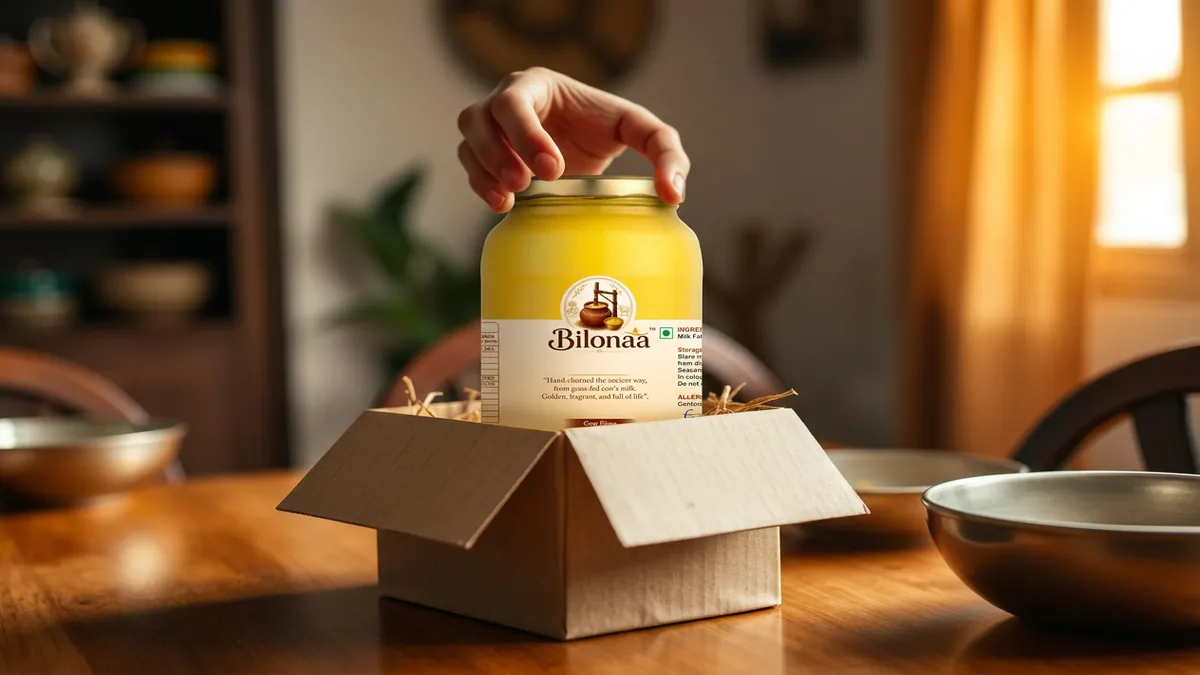
Spotting genuine small-batch makers in Bikaner gives you a direct link to authentic desert dairy heritage. In the heart of Rajasthan, brands like Bilonaa prepare pure A2 desi-cow bilona ghee from indigenous Rathi, Tharparkar, Gir, and Sahiwal cows using age-old traditions. The milk is naturally cultured into dahi, hand-churned with a wooden bilona, and slow-cooked over wood fire to preserve every bit of granular richness and natural flavor. Operating under FSSAI license 22226025000262, Bilonaa packs its fresh ghee in premium glass jars up to 2 liters and heavy stainless steel dolchi for 5-liter orders, keeping it free from plastic leaching. When you buy from traditional desert makers, you bring home a jar filled with genuine Bikaner winter mornings and uncompromised purity.
Making an informed purchase online ultimately restores that nostalgic daanedaar aroma to your morning kitchen. Shopping for pure ghee online in 2026 does not have to feel like a gamble if you know what red flags to avoid and what standards to expect. By prioritizing A2 curd-churned bilona ghee, checking packaging materials, understanding farm-level pricing logic, and testing for home purity, you protect your family from cheap market milawat. Investing in real, slow-cooked ghee is more than just a culinary choice; it is a conscious decision to support traditional dairy heritage and nourish your home with authentic goodness. Open a jar of true bilona ghee today, pour a hot spoon over your meal, and taste the timeless difference.
"Real ghee was never treated as a fast-food commodity; it was an investment in family health, crafted with patience, seasonality, and respect."
Bilonaa Promise
Small-batch, A2 desi-cow, traditional bilona ghee — straight to your kitchen.
100% pure, hand-churned, slow-cooked on a wood fire and packed in glass jars.
FAQs
Quick answers
How can I tell if ghee bought online is real A2 bilona ghee?
Check the brand's process transparency. Real bilona ghee comes from curd (dahi) churned with a wooden churner, not direct cream. It has a natural, non-uniform daanedaar (granular) texture, a deep nutty aroma, and is priced to reflect the 25-30 liters of A2 milk used per kilogram.
Why is A2 bilona ghee much more expensive than commercial factory ghee?
Commercial ghee uses high-speed machines to extract cream directly from milk, requiring less labor and time. A2 bilona ghee requires 25 to 30 liters of native cow milk for just 1 kg of ghee, cultured into curd, hand-churned, and slow-cooked on wood fire. The milk yield of native cows is naturally lower, raising production costs.
Is plastic packaging bad for storing pure ghee?
Yes. Ghee contains healthy fats that can react over time with plastic containers, leading to microplastic leaching and altered flavor. Authentic brands pack pure ghee in glass jars or traditional stainless steel containers (like a dolchi) to preserve its natural aroma and shelf life safely.
Can lactose-intolerant people consume pure A2 bilona ghee?
Many people with mild lactose sensitivity find traditional bilona ghee easy to tolerate. The fermentation process transforms milk sugars, and slow clarification removes nearly all milk solids and lactose, leaving behind almost pure fatty acids. However, those with severe dairy allergies should always consult a doctor.
What is the ideal way to perform a purity test for ghee at home?
Melt a tablespoon of ghee in a pan on medium heat. Asli ghee melts quickly and turns a rich dark golden-brown color with a distinct aroma. If it takes long to melt, turns pale yellow, or leaves heavy residue, it may contain palm oil, vanaspati, or added starches.
Does pure A2 cow ghee need to be refrigerated?
No, pure A2 ghee does not require refrigeration if kept free of moisture. Store it in an airtight glass or metal container in a cool, dry pantry away from direct sunlight. Always use a clean, dry spoon to prevent microbial contamination.
What does FSSAI certification tell me when buying ghee online?
An FSSAI license (like Bilonaa's FSSAI 22226025000262) verifies that the facility adheres to Indian food safety standards for hygiene and purity. While certification is mandatory, you should also check label details to verify traditional curd-bilona claims over industrial cream processing.
Educational content only — please consult a doctor for medical conditions.
Get gentle ghee notes in your inbox
One thoughtful Ayurveda + kitchen note a week. No spam. Unsubscribe anytime.
Conversation(0)
Share a thought — every comment is read before it appears.