Cow Breeds
Rathi Cow Milk: The Nutrition Story Behind Every Spoon of Bilonaa Ghee
On this page
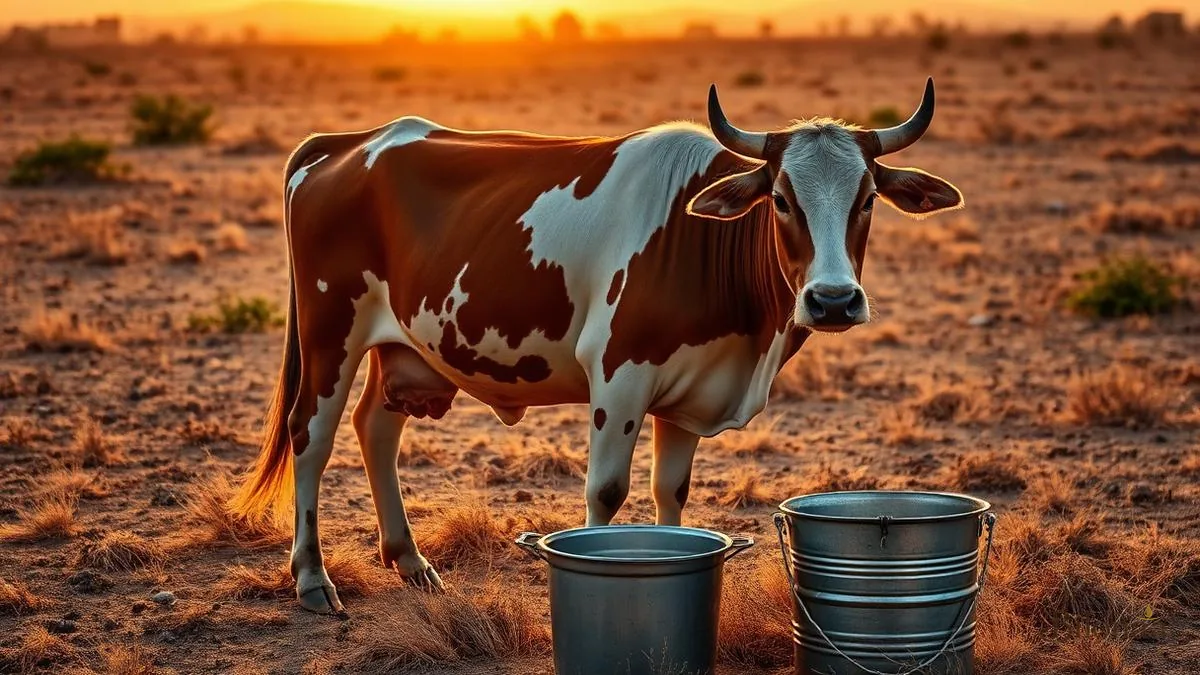
Ask any dairy farmer in Bikaner and they will tell you the same thing: Rathi milk is different. It pours thicker, sets into a firmer curd, and yields more cream per litre than most crossbred milk. That richness is not marketing — it is a direct result of breed, diet and climate working together over centuries.
A naturally high-fat, A2-protein milk
Rathi milk typically tests at 4.5–5.2% fat and 8.5–9% solids-not-fat (SNF), well above the pooled milk you find in most cities. More importantly, every drop carries only the A2 beta-casein protein — the variant Ayurveda has valued for thousands of years and that modern research links with easier digestion for many people.
Why the desert makes better milk
Rathi cows graze on sewan grass, neem, ber and mustard stubble — fibrous, mineral-rich forage that no high-yield exotic breed can survive on. This slow, varied diet is what gives the milk its deep yellow cream and its warm, nutty aroma once slow-cooked into ghee.
From milk to Bilonaa ghee — nutrition preserved, not stripped
We do not separate the cream mechanically. Instead, the whole milk is set into curd overnight, hand-churned the traditional Bilona way, and the butter is simmered on a low wood flame until it turns golden. This slow process preserves the fat-soluble vitamins A, D, E and K, along with butyric acid and CLA that Ayurveda associates with strong digestion (agni) and daily wellness.
What one spoon actually gives you
A single teaspoon (5 g) of pure Rathi A2 bilona ghee delivers roughly 45 kcal, 5 g of milk fat, a small dose of fat-soluble vitamins, and short-chain fatty acids that many families find gentler than refined oils. Taken warm on hot dal, roti or khichdi, it is one of the simplest ways to bring desi-cow nourishment back to the daily thali.
When you choose Bilonaa, you are not just buying ghee — you are keeping a heritage breed, her desert pasture, and a slow craft alive with every jar.
"Rathi milk is not richer by accident — it is richer by breed, by desert grass, and by centuries of patient care."
Bilonaa Promise
Small-batch, A2 desi-cow, traditional bilona ghee — straight to your kitchen.
100% pure, hand-churned, slow-cooked on a wood fire and packed in glass jars.
FAQs
Quick answers
How much fat does Rathi cow milk contain?
Rathi milk typically tests at 4.5–5.2% fat and 8.5–9% SNF, noticeably higher than most pooled or crossbred milk.
Is Rathi milk truly A2?
Yes. Rathi is a pure Bos indicus (desi) breed, so her milk carries only the A2 beta-casein protein — the variant traditionally valued in Ayurveda.
Why is Rathi bilona ghee more nutrient-dense?
Because we use whole A2 milk, set it into curd, hand-churn it and slow-cook the butter on a low flame — preserving fat-soluble vitamins A, D, E and K and short-chain fatty acids like butyric acid.
Educational content only — please consult a doctor for medical conditions.
Get gentle ghee notes in your inbox
One thoughtful Ayurveda + kitchen note a week. No spam. Unsubscribe anytime.
Conversation(0)
Share a thought — every comment is read before it appears.