
Kitchen
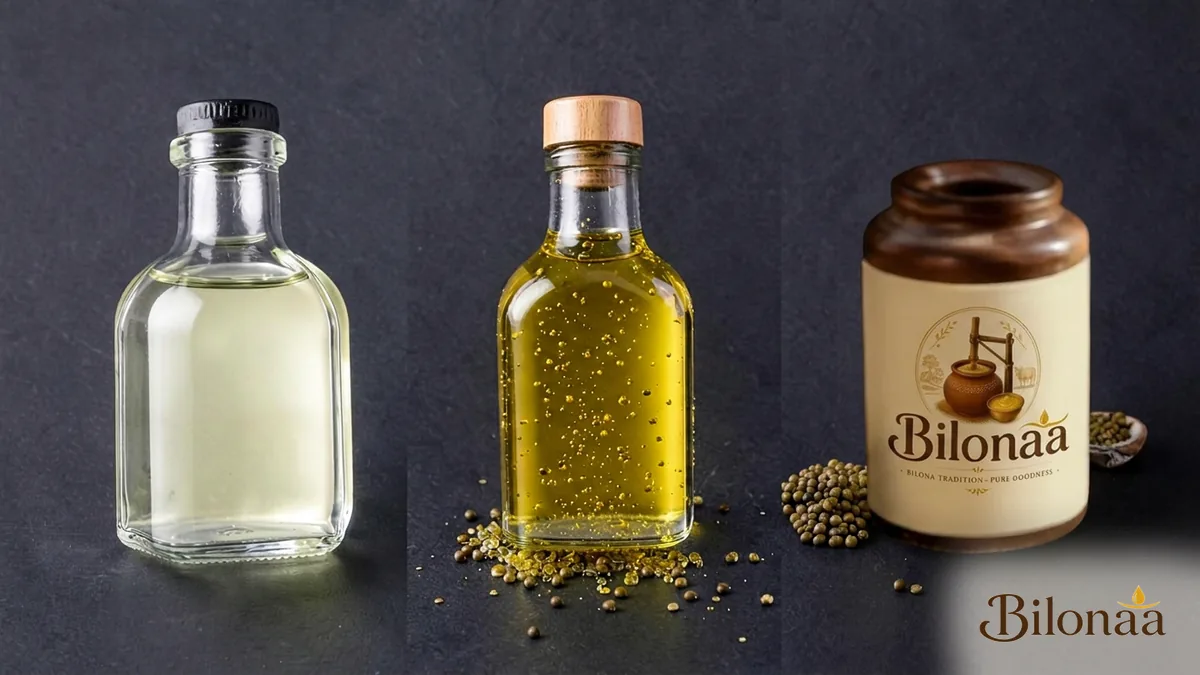
Refined Oil, Cold-Pressed Oil and Bilona Ghee: An Honest 2026 Comparison
On this page
- Kitchen fats are defined by their processing techniques, fat
- Refined oils undergo high-heat solvent extraction and bleach
- Cold-pressed oils rely on mechanical extraction at low tempe
- Traditional bilona ghee is prepared by culturing A2 milk int
- Fatty acid compositions differ dramatically between seed oil
- Polyunsaturated fatty acids in unrefined seed oils degrade q
- Thermal stability is determined by smoke point and oxidative
- High-heat cooking creates polar compounds and lipid peroxide
Kitchen fats are defined by their processing techniques, fatty acid structures, and thermal limits rather than marketing labels. Navigating the modern grocery aisle often leaves cooks choosing between industrial seed oils, traditional cold-pressed expeller oils, and clarified butter products like [A2 cow ghee](/a2-cow-ghee). Each culinary fat possesses distinct physical properties, chemical behaviors under heat, and historical applications. Rather than declaring one single fat universally superior, understanding how extraction methods alter stability, flavor, and storage life allows home cooks to make informed choices based on scientific principles and culinary requirements.
Refined oils undergo high-heat solvent extraction and bleaching to create chemically stable, neutral cooking fats. Industrial processing typically uses hexane solvents to extract maximum oil from seeds like soybean, sunflower, canola, or rice bran. The raw oil then undergoes alkali refining to remove free fatty acids, bleaching to strip natural pigments, and high-temperature deodorization above 200 degrees Celsius. This extensive refining strips away natural vitamins, polyphenols, and strong aromas, yielding a clear, neutral lipid with a high smoke point and prolonged shelf life suitable for commercial food production.
Cold-pressed oils rely on mechanical extraction at low temperatures to preserve natural seed aromatics and micronutrients. Often extracted using traditional wooden chakkis or hydraulic presses, cold-pressed oils are squeezed without chemical solvents or extreme heat inputs, keeping extraction temperatures below 45 to 50 degrees Celsius. This gentle mechanical process retains trace compounds, natural antioxidants like vitamin E, and regional flavor profiles found in mustard, sesame, or groundnut seeds. However, the retention of natural gums, free fatty acids, and moisture yields a lower smoke point and reduced thermal stability compared to refined counterparts.
Traditional bilona ghee is prepared by culturing A2 milk into curd before churning butter and slow-simmering it into clarified fat. At Bilonaa, based in Bikaner, Rajasthan, we follow the authentic [traditional bilona method](/traditional-bilona-method) using milk from indigenous cows like Rathi and Tharparkar. The milk is fermented into curd, hand-churned with a wooden bilona to isolate makkhan, and slowly cooked over open wood fires. This process removes water content and milk solids like lactose and casein, producing a heat-stable fat rich in short- and medium-chain fatty acids with a distinct nutty aroma.
Fatty acid compositions differ dramatically between seed oils, fruit oils, and cultured ruminant lipids. Fats consist of saturated, monounsaturated (MUFA), and polyunsaturated (PUFA) fatty acids, each responding differently to heat and oxygen exposure. Refined seed oils like sunflower and soybean are dominated by polyunsaturated omega-6 linoleic acid, which features multiple fragile double carbon bonds. Cold-pressed mustard or groundnut oils contain higher proportions of monounsaturated oleic acid. Ghee consists predominantly of stable saturated fatty acids, which lack double bonds entirely and resist thermal degradation under standard cooking temperatures.
Polyunsaturated fatty acids in unrefined seed oils degrade quickly when exposed to high temperatures and light. Because polyunsaturated molecules contain multiple reactive double bonds, thermal agitation breaks these bonds easily during frying or dry roasting. This breakdown initiates a oxidation cascade, producing primary oxidation products such as hydroperoxides. Over extended cooking times, these unstable compounds decompose further into volatile secondary oxidation products, including aldehydes and ketones, which alter the oil's aroma, taste, and physical texture while generating bitter off-flavors.
Thermal stability is determined by smoke point and oxidative resistance rather than smoke point alone. The smoke point is simply the temperature at which visible gaseous vapor escapes from heated fat, signalling the thermal breakdown of free fatty acids. However, an oil can possess a high smoke point yet oxidize rapidly if it contains elevated levels of polyunsaturated fats. Oxidative stability, measured by how long a fat resists chemical breakdown when exposed to heat and oxygen, provides a far more accurate gauge of safety during prolonged stovetop cooking.
High-heat cooking creates polar compounds and lipid peroxides when unstable oils are heated past their thermal limits. Reusing refined seed oils for multiple deep-frying cycles accelerates this oxidative degradation exponentially. Commercial and domestic repeated frying increases total polar compounds (TPC) within the oil medium, causing viscosity changes, foaming, and smoke point depression. While using refined oil once for light cooking presents low risk, repeatedly reheating polyunsaturated seed oils generates toxic decomposition products that absorb directly into fried foods.
A direct side-by-side technical comparison clarifies how processing methods alter cooking performance and storage life. Evaluating thermal limits, shelf stability, and ideal cooking methods highlights the distinct operational roles of refined oils, cold-pressed seed oils, and traditional bilona ghee across different culinary tasks. | Attribute | Refined Seed Oil | Cold-Pressed Seed Oil | Bilona Ghee | |---|---|---|---| | Extraction Method | Solvent (Hexane) + High Heat | Mechanical Pressing (<50°C) | Curd Churning + Wood Fire | | Dominant Fatty Acids | Polyunsaturated (PUFA) | Monounsaturated (MUFA) / PUFA | Saturated (SFA) + MUFA | | Average Smoke Point | 230°C - 250°C | 160°C - 190°C | 250°C | | Oxidative Stability | Low to Moderate | Moderate | High | | Shelf Life | 12-18 Months | 3-6 Months | 9-12 Months (Ambient) | | Primary Kitchen Use | Commercial Deep Frying | Raw Dressings, Low Heat | High-Heat Sauté, Tadka, Baking |
Refined oils excel in high-heat commercial deep frying where neutrality and low cost are the primary requirements. In industrial bakeries and restaurants, refined oils like high-oleic sunflower or refined rice bran provide a blank canvas that does not alter the food's flavor profile. Their elevated initial smoke point allows high-temperature searing without burning unrefined particulates. However, home cooks should avoid assuming that an oil's refined status makes it superior for daily home meals, as processing strips away natural antioxidant buffers that protect fats from ambient oxidation.
Cold-pressed oils perform best in low-heat finishing, salad dressings, and regional tempering where raw flavors matter. Traditional Indian cooking relies on unrefined mustard, coconut, or til (sesame) oils to impart signature pungency to pickles, curries, and dry vegetable dishes. Because cold-pressed oils retain natural antioxidants like tocopherols, they resist mild oxidation at room temperature when stored in dark glass containers away from sunlight. Heating cold-pressed seed oils past their smoke point, however, destroys these delicate flavor compounds and creates unpleasant acrid smoke.
Clarified butter withstands high cooking temperatures because milk solids and moisture are removed during simmer processing. During the traditional clarification of butter, milk solids settle and brown while water evaporates completely. This leaves pure butterfat that tolerates temperatures up to 250 degrees Celsius without burning or smoking. The structural formation of granular fat crystals in slow-cooked ghee is thoroughly detailed in our guide on [daanedaar ghee crystals science](/blog/daanedaar-ghee-crystals-science), demonstrating how controlled cooling shapes physical fat stability.
Ayurvedic literature classifies fats according to their metabolic effect, digestive ease, and seasonal suitability. Classical texts like the Charaka Samhita categorize fats (Sneha) into distinct functional groups, viewing ghee (Ghrita) as the most balanced lipid for supporting agni, or digestive fire. Cold-pressed sesame oil (Tila Taila) and mustard oil (Katu Taila) are described as warming, penetrating fats suited for specific doshic constitutions and cold seasons. Conversely, modern refined seed oils do not exist in traditional Ayurvedic frameworks, as chemical solvent extraction alters the fat's natural energetic qualities.
Modern nutritional science presents nuanced findings regarding saturated fats, linoleic acid, and lipid biomarkers. Decades of nutritional research indicate that replacing saturated fats with polyunsaturated fats can reduce low-density lipoprotein (LDL) cholesterol levels. However, recent metabolic studies distinguish between different saturated fatty acids, noting that short- and medium-chain saturated fats found in dairy lipids behave differently in human metabolism compared to long-chain industrial trans-fats. Science continues to evaluate how lipid matrices impact cardiovascular markers across varied dietary patterns.
Rigorous human research remains limited regarding long-term health distinctions between traditional fats and cold-pressed seed oils. While laboratory studies easily measure free radical formation and polar compounds in heated frying oils, long-term human cohort studies rarely isolate single fat types over decades. Many published epidemiological studies rely on self-reported dietary recalls that struggle to differentiate between cold-pressed seed oils and heavily processed refined fats. Consequently, definitive clinical statements declaring one fat type universally healthier for all human populations remain unsupported by conclusive scientific data.
Western dietary trends have renewed interest in traditional animal fats like ghee for high-heat cooking and low-carb regimens. The rise of ketogenic, paleo, and carnivore diets has led international consumers to re-examine traditional cultured fats. The integration of clarified butter into coffee and high-protein meals is explored further in our article on [ghee in western biohacking diets](/blog/ghee-in-western-biohacking-diets), illustrating how global nutrition trends are rediscovering ancient culinary fats for modern performance cooking.
Choosing the right fat depends on cooking temperature, culinary context, and realistic budget management. A practical kitchen strategy uses each fat where its physical properties shine: unrefined cold-pressed oils for raw finishes and light regional tempering, refined oils sparingly for occasional high-heat deep frying, and authentic cultured ghee for daily stove cooking, rotis, and baking. If you are looking to integrate traditional cultured fats into your daily routine, you can explore options to [shop Bilonaa ghee](/shop) directly from our Rajasthan creamery.
Exploring authentic kitchen fats involves appreciating traditional preparation methods alongside clear scientific understanding. Every cooking fat serves a purpose when used within its proper thermal and chemical boundaries. At Bilonaa, we take pride in maintaining traditional bilona churning methods to produce authentic A2 cultured ghee that honors Rajasthan's rich dairy heritage while providing home cooks with an unadulterated, heat-stable lipid for everyday meals.
"Choosing the right kitchen fat requires looking past marketing claims to understand how heat, chemical structure, and processing methods interact in the pan."
Bilonaa Promise
Small-batch, A2 desi-cow, traditional bilona ghee — straight to your kitchen.
100% pure, hand-churned, slow-cooked on a wood fire and packed in glass jars.
FAQs
Quick answers
Is refined oil completely toxic for daily cooking?
No, refined oil is not inherently toxic. High-heat refining removes free fatty acids and impurities to create a shelf-stable fat with a high smoke point. However, repeated reheating of refined polyunsaturated seed oils generates polar compounds and lipid peroxides, so avoiding reused frying oil is recommended.
Why does cold-pressed oil smoke faster than refined oil?
Cold-pressed oil retains natural plant waxes, free fatty acids, gums, and trace moisture because it is extracted mechanically without high heat or chemical neutralizing agents. These natural non-triglyceride components break down at lower temperatures, resulting in a lower smoke point between 160°C and 190°C.
Is cold-pressed oil automatically healthier than refined oil?
Not automatically. Cold-pressed oil retains natural micronutrients, polyphenols, and vitamin E lost during refining. However, its lower thermal stability means it can oxidise quickly if used for high-heat deep frying. Nutritional value depends heavily on how the oil is stored and cooked.
Can I use ghee for high-heat frying instead of seed oils?
Yes, ghee has a high smoke point of approximately 250°C because water and milk solids (lactose and casein) are removed during clarification. Its high proportion of saturated fatty acids makes it structurally stable under high temperatures, resisting oxidative breakdown during frying and searing.
What happens to oils during repeated frying cycles?
Repeatedly heating oil causes thermal and oxidative degradation, breaking down triglycerides into free fatty acids, hydroperoxides, and secondary oxidation products like aldehydes. This process increases total polar compounds (TPC), thickens the oil, lowers its smoke point, and degrades food flavor.
How long does bilona ghee last compared to cold-pressed oil?
Bilona ghee stored in a dry, glass container at ambient room temperature typically lasts 9 to 12 months because moisture and milk solids are removed. Cold-pressed seed oils, containing fragile polyunsaturated fatty acids and natural moisture, usually have a shorter shelf life of 3 to 6 months before going rancid.
Does A2 bilona ghee contain lactose or casein?
The traditional bilona process includes slow simmering and straining, which removes virtually all water content and milk solids. As a result, lab tests show pure clarified ghee contains negligible trace amounts of lactose and casein, making it suitable for most individuals with lactose sensitivity.
Educational content only — please consult a doctor for medical conditions.
Get gentle ghee notes in your inbox
One thoughtful Ayurveda + kitchen note a week. No spam. Unsubscribe anytime.
Conversation(0)
Share a thought — every comment is read before it appears.