
Bilonaa Method
Traditional Ghee Making in Villages: Why Consumers Are Returning to Roots
On this page
- Traditional ghee making in villages is not merely a process;
- Understanding what traditional ghee truly entails begins wit
- The bilona method, an ancient and laborious technique, is th
- The historical significance of traditional ghee transcends i
- The journey from milk to bilona ghee starts with boiling fre
- Once the dahi is set, the traditional method involves churni
- The collected makkhan is then gently heated over a low flame
- From an Ayurvedic perspective, traditional bilona ghee is co
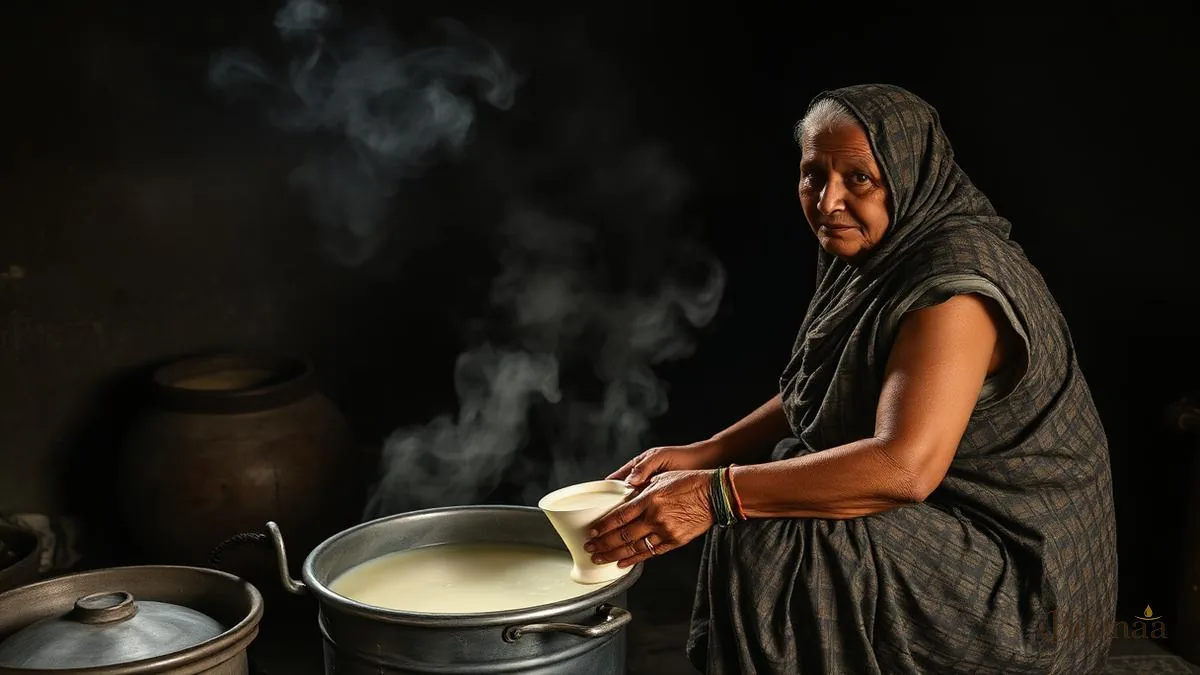
Traditional ghee making in villages is not merely a process; it's a centuries-old culinary ritual, deeply ingrained in India's cultural and nutritional fabric, representing a return to authentic, unadulterated food practices that resonate with a growing number of health-conscious consumers today.
Understanding what traditional ghee truly entails begins with its very source – the milk of indigenous Indian cows, often referred to as 'desi' cows, specifically their A2 milk, which is believed to offer distinct health advantages due to its particular beta-casein protein structure, setting it apart from commercially produced A1 milk.
The bilona method, an ancient and laborious technique, is the cornerstone of authentic traditional ghee, distinguishing it significantly from modern industrial ghee production, which often employs cream separation and high-heat processing, sacrificing many of the nuanced flavours and nutritional compounds inherent in the traditional craft.
The historical significance of traditional ghee transcends its culinary uses, as it has been revered in Ayurvedic texts for thousands of years, considered a sacred food ('satvik aahar') that promotes physical health, mental clarity, and spiritual well-being, playing a pivotal role in rituals and daily life.
The journey from milk to bilona ghee starts with boiling fresh milk, cooling it, and then inoculating it with a small amount of dahi (yogurt) to curdle overnight, transform the milk into 'full-fat' yogurt, a crucial step that initiates the fermentation process for extracting butter.
Once the dahi is set, the traditional method involves churning this yogurt vigorously, typically using a wooden churner (bilona) in a specific clockwise and anti-clockwise motion, which eventually separates the butter (makkhan) from the buttermilk (chaach), a process that is both physically demanding and patient.
The collected makkhan is then gently heated over a low flame, a slow and meticulous process that allows the milk solids to separate and caramelise slightly at the bottom, leaving behind pure, golden, granular ghee with its characteristic nutty aroma, a testament to the artisan's care.
From an Ayurvedic perspective, traditional bilona ghee is considered 'agni-enhancing' – meaning it kindles the digestive fire (Agni), aiding in nutrient absorption and assimilation, while also being a potent carrier of medicinal properties, often used in various Ayurvedic preparations to deepen their efficacy and delivery.
Modern nutritional science, while not always aligning perfectly with ancient wisdom, increasingly recognises the benefits of bilona ghee, highlighting its rich content of fat-soluble vitamins (A, D, E, K), conjugated linoleic acid (CLA), and healthy saturated fats which are crucial for hormone production and cellular health.
Key differences between traditional bilona ghee and commercially mass-produced ghee are profound; commercial methods often use industrial cream, process it at higher temperatures, and may introduce refined oils or additives, resulting in a product that lacks the vital nutrients, rich flavour, and authentic texture of village-made ghee.
The ethical sourcing of milk is another compelling reason for the resurgence of traditional ghee, as it often comes from small, local farms where cows are treated well, allowed to graze freely, and are not subjected to synthetic hormones or antibiotics, aligning with a more humane and sustainable approach to food production.
Consumers are increasingly seeking the complete transparency offered by traditional ghee makers, wanting to know the origins of their food, the methods used, and the assurance of no artificial colours, flavours, or preservatives, a stark contrast to the often opaque supply chains of large manufacturers.
Incorporating traditional ghee into daily life is wonderfully simple; it can be used for cooking, frying, seasoning, or even as a spread, enhancing the flavour of dishes while adding valuable nutrients, making everyday meals more wholesome and satisfying.
Bilonaa, for instance, prides itself on offering only pure A2 desi-cow bilona ghee, meticulously crafted in Bikaner, Rajasthan, ensuring that every jar carries the legacy of traditional village ghee making, bringing authenticity and ancestral wisdom directly to your kitchen.
Dispelling common myths about fat is essential when discussing ghee; contrary to old beliefs, healthy fats like those in traditional ghee are vital for brain health, cell function, and nutrient absorption, contributing to satiety and overall well-being rather than causing harm when consumed in moderation.
While suitable for most, individuals with specific dietary restrictions or certain health conditions should consult a healthcare professional regarding ghee consumption, though for the majority, traditional ghee is a nourishing addition to a balanced diet.
Proper storage is crucial for maintaining the quality and extending the shelf life of traditional ghee; it should be kept in an airtight container in a cool, dark place away from direct sunlight and moisture, ensuring its freshness and flavour for months, even without refrigeration.
When purchasing traditional ghee, look for labels that specify 'A2 desi cow ghee' and 'bilona method,' enquire about the source of milk, and seek out brands known for their transparency and commitment to authentic practices to ensure you are truly investing in a quality product.
The return to roots in ghee consumption signifies a deeper societal shift towards natural, wholesome foods, a rejection of industrialisation, and an embrace of time-tested traditions that connect us to our heritage and promote a more conscious way of eating and living.
This movement towards traditional foods like Bilonaa ghee represents not just a culinary preference, but a conscious choice for improved health, support for sustainable farming practices, and a reconnection with the ancestral knowledge that prioritised purity and well-being above all else.
"The journey from fresh milk to golden ghee is a meditation, a dance of science and tradition."
Bilonaa Promise
Small-batch, A2 desi-cow, traditional bilona ghee — straight to your kitchen.
100% pure, hand-churned, slow-cooked on a wood fire and packed in glass jars.
FAQs
Quick answers
What is A2 ghee and why is it preferred?
A2 ghee is made from the milk of indigenous Indian cow breeds (desi cows) which produce A2 beta-casein protein. This protein is believed to be easier to digest and offers more health benefits compared to A1 milk found in many commercial dairy products.
How does the bilona method differ from industrial ghee production?
The bilona method involves curdling whole milk into dahi, churning it to extract butter (makkhan), and then slowly simmering this butter. Industrial methods often use cream separation and high heat, which can diminish the nutritional value and flavour unique to bilona ghee.
Is traditional ghee healthier than butter or oils?
Traditional ghee is rich in fat-soluble vitamins (A, D, E, K), CLA, and healthy saturated fats which support digestion and cellular health. Unlike some refined oils, it has a high smoke point, making it suitable for cooking without producing harmful free radicals, and it's lactose and casein-free.
Can people with lactose intolerance consume ghee?
Yes, traditional ghee is generally well-tolerated by individuals with lactose intolerance. The ghee-making process removes most of the milk solids, including lactose and casein, making it a suitable dairy product for many who cannot consume milk or butter.
What are the Ayurvedic benefits of traditional ghee?
Ayurveda considers ghee a 'rasayana' (rejuvenator) that enhances digestion (Agni), improves memory, strengthens immunity, lubricates joints, and nourishes all body tissues. It is also believed to balance Vata and Pitta doshas and act as a carrier for herbs.
How should I store traditional ghee to maintain its quality?
Store traditional ghee in an airtight glass jar in a cool, dark place away from direct sunlight and moisture. There is no need to refrigerate it, as proper storage will keep it fresh and flavourful for several months, often up to a year or more.
Why are consumers returning to traditional ghee?
Consumers are returning to traditional ghee for its perceived purity, superior nutritional profile, authentic taste, and the assurance of ethical sourcing. It represents a conscious choice for healthier, less processed foods rooted in ancient wisdom and sustainable practices.
Educational content only — please consult a doctor for medical conditions.
Get gentle ghee notes in your inbox
One thoughtful Ayurveda + kitchen note a week. No spam. Unsubscribe anytime.
Conversation(0)
Share a thought — every comment is read before it appears.