A2 Science
Why A2 Ghee Is Booming in India (And What Buyers Get Wrong)
On this page
- Indian kitchens are witnessing a massive shift back to tradi
- The post-2020 health awakening triggered a complete re-evalu
- Growing awareness around widespread milk adulteration and fo
- The resurgence of Ayurveda and holistic wellness has placed
- Direct-to-consumer digital brands made authentic farm-source
- Indian families are increasingly choosing premium bilona ghe
- Global interest in Indian superfoods has created a thriving
- However, the most common misconception among shoppers is ass
Indian kitchens are witnessing a massive shift back to traditional A2 ghee in India as families rethink everyday kitchen fats. For generations, dadi-nani spoke about the strength that comes from a spoon of authentic cow ghee stirred into warm dal or rubbed over hot rotis. However, industrialization pushed cheap refined oils and mass-processed dairy products into urban homes. Today, Indian consumers are coming full circle, actively seeking out unadulterated fats that offer genuine taste and traditional nourishing properties. This shift is not just a fleeting trend; it reflects a deep-seated cultural awakening toward pure, uncompromised food sources.
The post-2020 health awakening triggered a complete re-evaluation of refined oils and commercial dairy products across urban households. People began reading ingredient labels with far greater scrutiny, questioning processed vegetable oils and high-heat extracted fats. Ayurveda suggests that authentic cow ghee acts as a natural carrier for nutrients, aiding digestion and supporting gentle joint lubrication. When families started looking for alternatives to processed cooking fats, native cow milk products naturally took center stage. This sudden pivot turned native cattle breeds back into prized sources of daily nutrition.
Growing awareness around widespread milk adulteration and food milawat has pushed urban buyers toward traceable sources. Reports of synthetic milk, starch fillers, and chemical emulsifiers in commercial dairy brands rattled consumer confidence. People wanted to know where their morning fat was coming from and how it was made. When you source [A2 cow ghee](/a2-cow-ghee) directly from farms maintaining indigenous breeds, you eliminate the risk of industrial shortcuts. Transparency in sourcing has become a non-negotiable requirement for health-conscious parents cooking for young children.
The resurgence of Ayurveda and holistic wellness has placed traditional cow ghee back on a pedestal in modern lifestyle discussions. Wellness practitioners frequently point out that A2 beta-casein protein found in native breeds like Gir, Sahiwal, Rathi, and Tharparkar is easier on human digestion than the A1 protein dominant in foreign crossbred cows. Many families find that switching to native cow dairy helps reduce feelings of heaviness and bloating after meals. This alignment between ancient Ayurvedic wisdom and modern dietary preferences has solidified the demand for authentic native dairy across Indian metros.
Direct-to-consumer digital brands made authentic farm-sourced ghee accessible to buyers across metro cities without middleman delays. Earlier, getting pure ghee meant having a trusted relative in a village or visiting a local dairy with mixed milk batches. Today, direct shipping allows small artisanal makers to send fresh batches straight from farm clusters to high-rise apartments in Delhi, Bengaluru, and Mumbai. Digital storytelling, live farm tours, and lab test certificates shared online built immediate consumer trust that traditional retail shelves could never provide.
Indian families are increasingly choosing premium bilona ghee for festive gifting and family care packages during special occasions. Ghee has always held a sacred place in Indian rituals, griha pravesh pujas, and Diwali hamper traditions. Gifting a jar of pure, aromatic ghee symbolizes wishing good health, prosperity, and longevity for loved ones. Rather than sending store-bought sweets packed with synthetic sugar, giving handcrafted [bilona ghee](/bilona-ghee) has become a thoughtful mark of care among wellness-focused families.
Global interest in Indian superfoods has created a thriving export demand for pure indigenous cow ghee among non-resident communities. The Indian diaspora living in North America, Europe, and the Middle East often struggles to find authentic kitchen staples that match the aroma of home. As international interest in Ayurvedic cooking grows, small-batch producers are shipping traditional ghee across borders. Overseas buyers willingly pay a premium for verified native cow origin, further accelerating the market growth for handcrafted Indian dairy products.
However, the most common misconception among shoppers is assuming that any A2 label automatically guarantees authentic bilona ghee. The market is flooded with jars stamped with 'A2' in bold letters, but closer inspection reveals industrial processing methods. A2 simply refers to the protein structure of the milk produced by native cows. It tells you nothing about how the butter was extracted or how the ghee was cooked. Buying industrial cream-separated ghee made from A2 milk means missing out on the essential benefits of true curd-churned preparation.
Machine-processed cream ghee is frequently mislabelled and sold under misleading traditional claims in modern grocery stores. Industrial dairies use high-speed centrifuges to blast cream out of raw milk, heat that cream directly, and package the liquid fat within hours. This shortcut skips the entire slow fermentation process required to make real dahi. Without curdling the milk first, you lose the natural probiotic bacteria activity and the deep, complex aroma that defines asli ghee. True [traditional bilona method](/traditional-bilona-method) requires patient bi-directional churning of whole curd, not mechanical cream separation.
Understanding the math behind raw milk costs explains why real bilona ghee can never be sold cheap in the market. It takes roughly 25 to 30 liters of pure native cow milk to produce just one single kilogram of authentic bilona ghee. Native cows like Rathi or Tharparkar yield limited milk daily compared to high-yield commercial breeds, making raw milk naturally valuable. When you factor in cattle feed, hand-churning labor, and slow wood-fire simmer costs, a cheap price tag on an 'A2 ghee' jar is an immediate warning sign of blending or cream-based extraction.
Natural variations in ghee colour and texture depend on seasonal forage rather than artificial standardization added in factories. Depending on whether cows graze on green monsoon pasture or dry winter fodder, the golden hue and daanedaar grain size change naturally. Industrial brands use artificial colors and temperature stabilizers to ensure every single jar looks identical year-round. Artisanal ghee makers embrace these subtle seasonal shifts, offering an unadulterated product that reflects the natural diet of the herd.
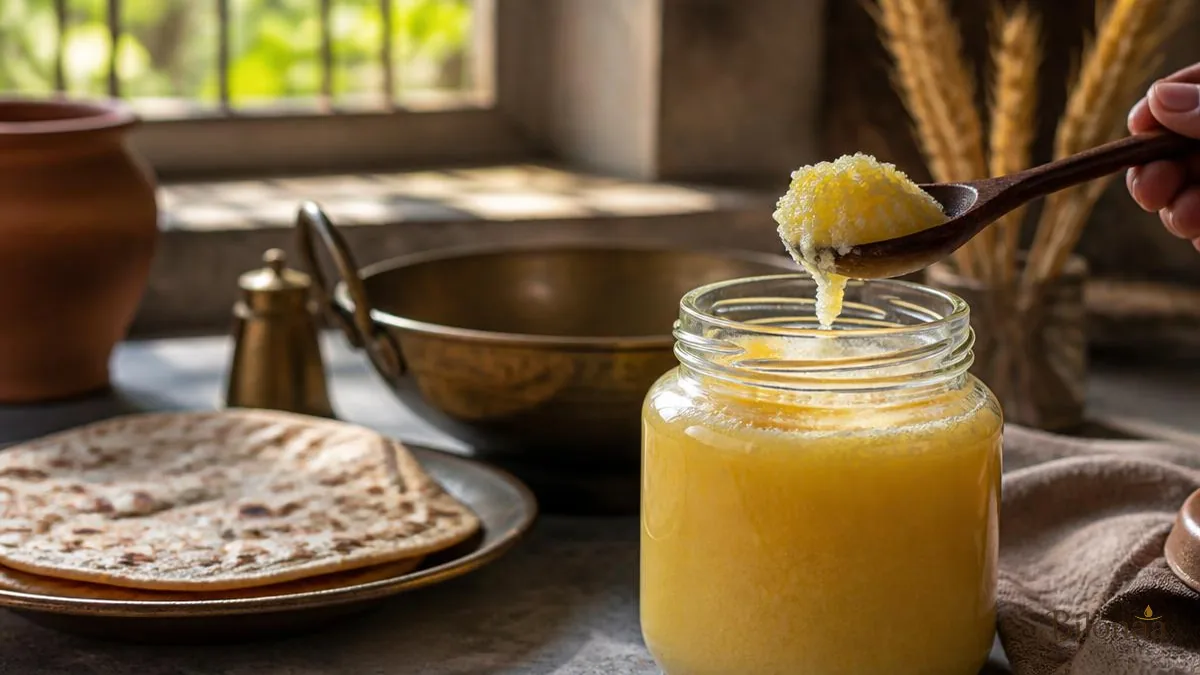
Simple home tests can help you verify the authenticity and purity of your kitchen ghee without expensive lab equipment. You can melt a spoonful of ghee in a hot kadhai; genuine ghee melts instantly and turns a rich brownish-red, whereas adulterated fat takes longer and stays pale yellow. Another age-old method is the palm test—pure bilona ghee melts at human body temperature simply from the heat of your hand. If your ghee leaves a sticky, waxy layer behind on your skin, it likely contains added vegetable oils or paraffin.
Evaluating the price per kilogram reveals the true production cost of handcrafted indigenous ghee versus factory substitutes. If fresh native cow milk costs anywhere between sixty to eighty rupees per liter at farm level, the raw material cost alone for one kilo of ghee exceeds eighteen hundred rupees. Adding wood fuel, glass packaging, and transit, high-quality bilona ghee naturally commands a price between two thousand and twenty-eight hundred rupees per kilo. Products selling for half that price are mathematically incapable of being genuine bilona ghee.
Proper storage in glass or traditional steel containers preserves the natural aroma and shelf life for months without chemical preservatives. Traditional ghee is naturally low in moisture, allowing it to stay shelf-stable at room temperature for over a year if kept dry. Storing fat in cheap plastic containers can lead to chemical leaching and spoils the delicate, nutty fragrance over time. Using a clean, dry spoon every time you dip into the jar prevents spoilage and keeps the texture perfectly daanedaar.
At Bilonaa, we churn pure A2 milk from native Rathi and Tharparkar cows using time-tested Rajasthani methods in Bikaner. Our process follows the traditional cycle: whole A2 milk is boiled, cultured overnight into rich curd, churned using a wooden bilona, and then slowly simmered over wood fire in small batches. We package our ghee under FSSAI license 22226025000262 in glass jars up to 2 liters and heavy steel dolchis for 5-liter orders to preserve pure taste. If you want to taste true Bikaner heritage, you can explore our range and [shop Bilonaa ghee](/shop) directly from our farm kitchen.
Making an informed decision about your daily kitchen ghee requires looking beyond slick marketing labels and understanding true craftsmanship. When you read [our story](/about), you realize that real food requires patience, fair wages for dairy farmers, and respect for native livestock. Investing in genuine bilona ghee is an investment in your family's daily health and a vote to support traditional Indian agriculture. To clear up common doubts about sourcing, storage, and usage, you can browse our detailed answers in our [FAQs](/faq) section.
"True bilona ghee isn't made in a factory overnight; it takes thirty liters of pure native cow milk, patient curdling, and slow wood-fire cooking to yield a single kilogram."
Bilonaa Promise
Small-batch, A2 desi-cow, traditional bilona ghee — straight to your kitchen.
100% pure, hand-churned, slow-cooked on a wood fire and packed in glass jars.
FAQs
Quick answers
What is the main difference between A2 ghee and regular commercial ghee?
A2 ghee comes exclusively from native Indian cow breeds like Rathi, Gir, and Tharparkar containing A2 beta-casein protein. Commercial ghee often uses milk from crossbred cows or buffaloes, extracted quickly via mechanical cream separators rather than traditional curd churning.
Why is authentic bilona ghee significantly more expensive than industrial ghee?
It takes 25 to 30 liters of whole native cow milk to yield just 1 kg of bilona ghee. The process involves curdling whole milk, hand-churning with a wooden bilona, and slow cooking on wood fire, making production labor-intensive and raw material heavy.
How can I test if my A2 ghee is pure at home?
Drop a spoon of ghee into a hot kadhai. Pure bilona ghee melts immediately and turns a deep golden brown. Alternatively, place a pinch on your palm; genuine ghee melts quickly at human body temperature without leaving a sticky, waxy residue.
Does A2 ghee turn yellow naturally, or is color added?
The yellow hue in cow ghee comes naturally from beta-carotene in cow milk, which varies depending on green pasture feeding during monsoon or winter. Pure ghee has natural seasonal variations in color and texture and never uses artificial colors.
How long does hand-churned bilona ghee last without preservatives?
Authentic bilona ghee has virtually no moisture content and lasts easily for 12 to 18 months at room temperature. Keep it in a dry, cool place away from direct sunlight and always use a clean, dry spoon.
Why should bilona ghee be packed in glass jars or steel dolchis?
Glass and food-grade stainless steel do not react with warm ghee or leach harmful microplastics. Bilonaa uses glass jars for smaller quantities and traditional steel dolchis for 5-liter orders to keep the taste, texture, and aroma intact.
Can lactose-intolerant people digest traditional A2 bilona ghee?
During traditional curd churning and slow heating, milk solids (lactose and casein) separate completely and are strained out. Ayurveda suggests that many people sensitive to dairy can comfortably digest pure bilona ghee.
Educational content only — please consult a doctor for medical conditions.
Get gentle ghee notes in your inbox
One thoughtful Ayurveda + kitchen note a week. No spam. Unsubscribe anytime.
Conversation(0)
Share a thought — every comment is read before it appears.